
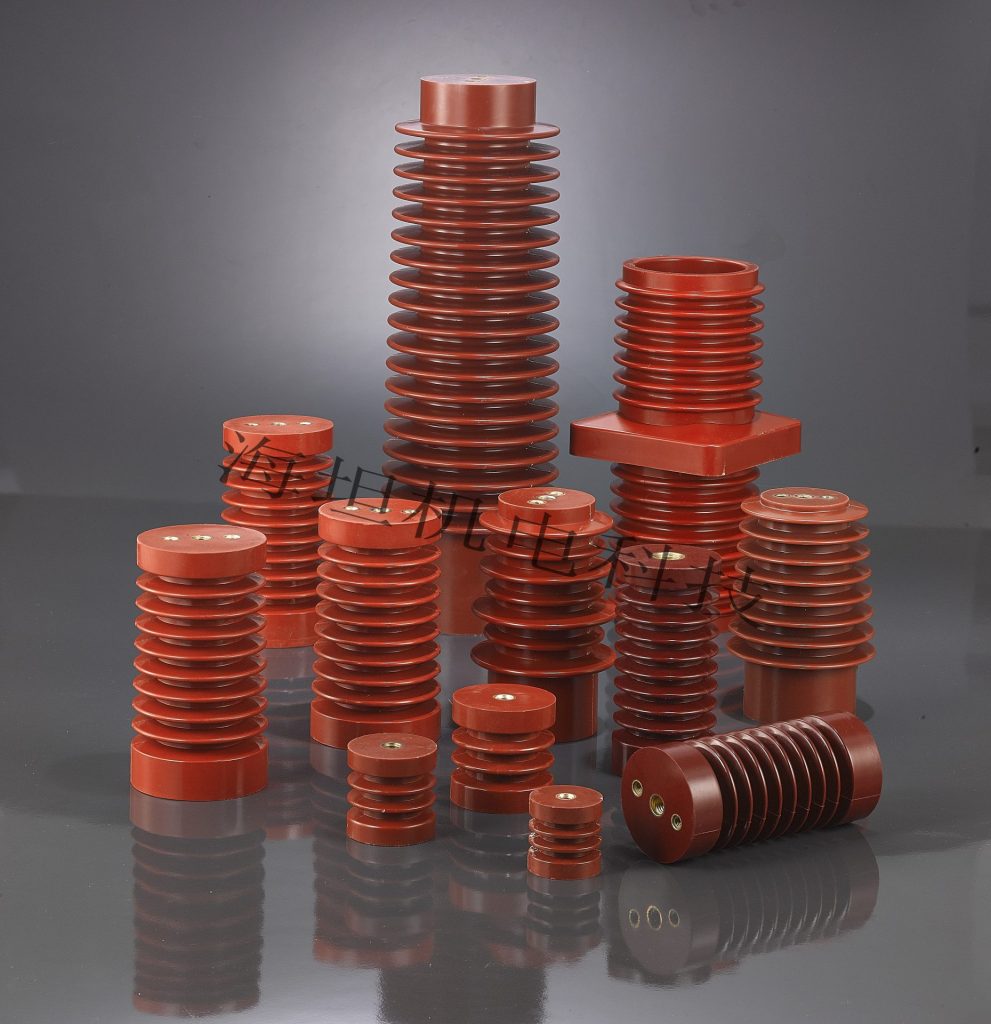
Applications of Standoff Epoxy Busbar Support Insulators in Power Transformers
مدونة | غرفة الأخبار | مارس 05,2026
مقدمة
Power transformers are essential components in modern electrical networks, enabling efficient voltage conversion and reliable power distribution. Inside these systems, busbars are used to carry and distribute large electrical currents between internal components. To ensure safe and stable operation, busbars must be firmly supported and electrically insulated from the transformer structure.
Standoff epoxy busbar support insulators are widely used in transformer assemblies for this purpose. With their high mechanical strength, excellent dielectric properties, and strong thermal stability, these insulators play a critical role in maintaining system safety and reliability.
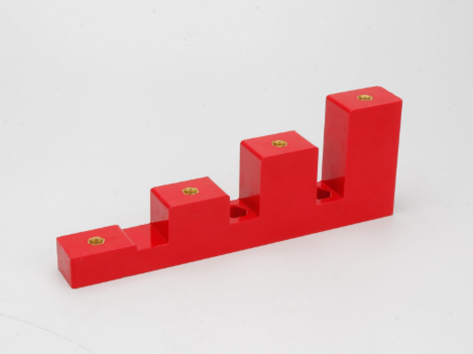
Supporting Internal Busbar Structures
One of the most common applications of standoff epoxy busbar support insulators is supporting internal busbars inside power transformers.
Busbars are often made of copper or aluminum and carry high electrical currents. Without proper support, they may shift due to vibration, thermal expansion, or electromagnetic forces.
Standoff epoxy insulators help by:
Firmly fixing busbars in position
Maintaining proper spacing between conductive components
Preventing unwanted movement during operation
By stabilizing the busbar structure, these insulators ensure that the transformer operates safely under both normal and fault conditions.
Maintaining Electrical Insulation Between Conductive Parts
Transformers operate under medium- or high-voltage conditions, which means that reliable insulation is essential to prevent electrical failures.
Standoff epoxy busbar support insulators are designed to:
Electrically isolate busbars from grounded metal structures
Maintain safe creepage and clearance distances
Reduce the risk of electrical leakage or short circuits
The high dielectric strength of epoxy materials ensures that electrical energy flows only along intended paths, improving the safety and reliability of the transformer system.
Withstanding Mechanical Stress During Short Circuits
During short-circuit events, extremely large currents can flow through busbars in a very short time. These currents generate powerful electromagnetic forces, which may cause busbars to bend, vibrate, or shift.
In such situations, standoff epoxy insulators provide critical mechanical support by:
Absorbing mechanical stress
Preventing busbar displacement
Maintaining conductor alignment
This helps protect the transformer from internal damage and reduces the risk of system failure.
Insulating Busbars in Transformer Connection Areas
Standoff epoxy busbar support insulators are also commonly used in busbar connection points and terminal sections within transformers.
In these areas, busbars connect to components such as:
Tap changers
Circuit breakers
External connection terminals
Switchgear interfaces
The insulators provide both structural support and electrical isolation, ensuring safe operation even in compact transformer designs.
Enabling Compact Transformer Design
Modern power equipment is increasingly designed to be more compact and space-efficient, especially in urban substations and industrial installations.
Standoff epoxy busbar support insulators make compact layouts possible because they:
Combine strong insulation with high mechanical strength
Allow precise positioning of busbars
Support complex internal electrical configurations
Their compact structure helps engineers design smaller yet highly reliable transformer systems.
Applications in Different Types of Transformers
Standoff epoxy busbar support insulators are used in various transformer types, including:
Power Transformers
Large power transformers used in substations require strong mechanical and electrical insulation to handle high voltages and currents.
Distribution Transformers
In distribution networks, these insulators help maintain safe busbar spacing and support internal connections.
Dry-Type Transformers
Dry-type transformers often use epoxy-based components because they provide excellent insulation and fire resistance.
Industrial Transformers
Factories and heavy industries rely on these insulators to ensure safe and reliable power delivery in demanding environments.
خاتمة
Standoff epoxy busbar support insulators play a vital role in the safe and efficient operation of power transformers. By providing strong mechanical support and reliable electrical insulation, they help protect transformers from mechanical stress, electrical faults, and thermal challenges.
Their widespread use in internal busbar support, connection insulation, short-circuit protection, and compact transformer design highlights their importance in modern power systems. As electrical infrastructure continues to evolve, these insulators will remain essential components for improving transformer reliability and long-term performance.
التعليمات
1. What is a standoff epoxy busbar support insulator?
It is an electrical insulation component used to support and isolate busbars in transformers and switchgear, ensuring mechanical stability and electrical safety.
2. Why are epoxy insulators used in power transformers?
Epoxy insulators provide high dielectric strength, strong mechanical durability, and good thermal resistance, making them suitable for transformer applications.
3. Where are these insulators installed in transformers?
They are commonly installed in busbar support structures, internal connection points, terminal sections, and switchgear interfaces.
4. Can epoxy busbar support insulators withstand high temperatures?
Yes. Most epoxy insulators are designed to operate under elevated temperatures while maintaining mechanical strength and insulation performance.
5. What factors should be considered when selecting busbar support insulators?
Important factors include voltage rating, mechanical load capacity, creepage distance, operating temperature, and installation environment.
--- نهاية ---
 البريد الإلكتروني: [email protected]
  رقم 20 طريق لينغيون، دونغفنغ
المنطقة الصناعية، مدينة ليوشي، يويهتشينغ
المدينة بمقاطعة تشجيانغ

واتساب

ويشات
© حقوق الطبع والنشر 2024 شركة الصين هايتان للتكنولوجيا الكهروميكانيكية المحدودة. جميع الحقوق محفوظة.الدعم بواسطة: جونج سياسة الخصوصية
 Arabic
  English (United States)
  English (South Africa)
  Belarusian
  Bengali
  Japanese
  Kazakh
  Korean
  Myanmar
  Russian
  Thai
Thai  Ukrainian
  Uzbek
Uzbek  Vietnamese
  Chinese