
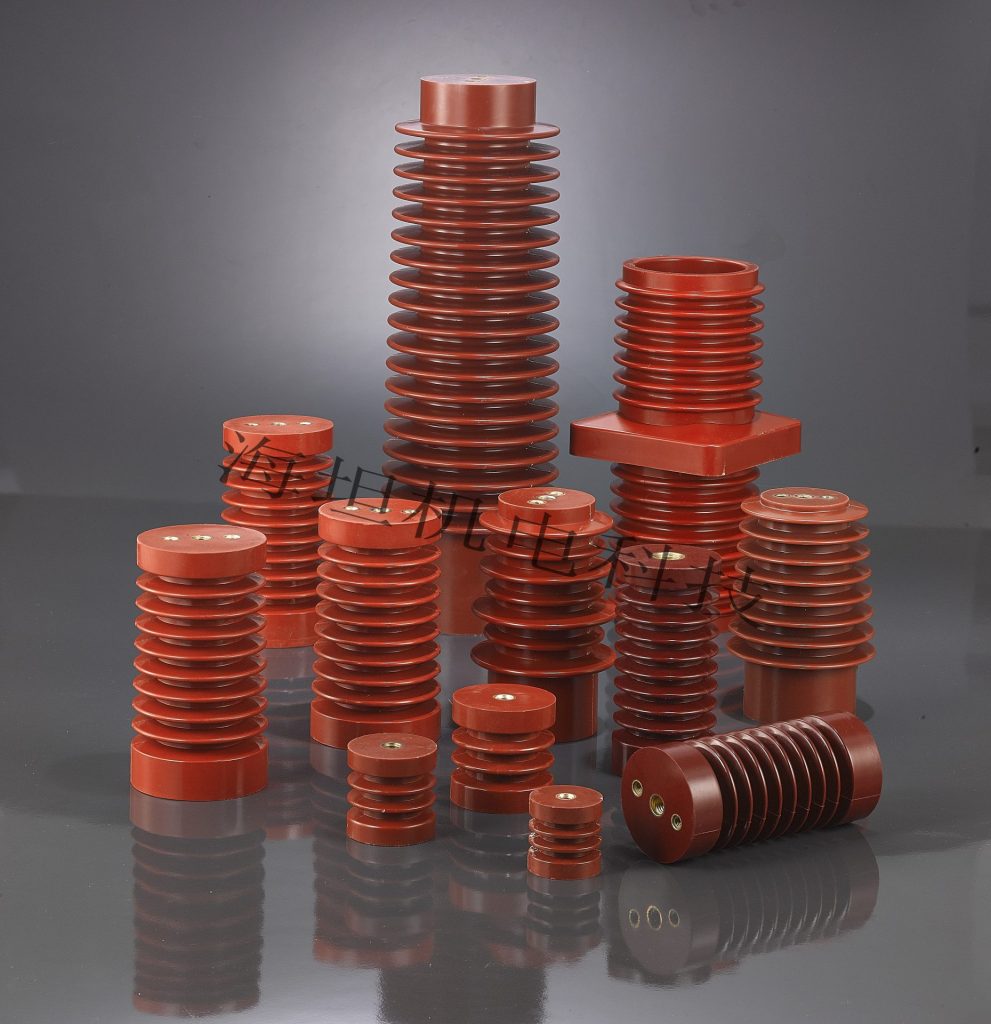
Energy Storage System Ready: High CTI BMC Insulators for Battery Systems
مدونة | غرفة الأخبار | أغسطس 13,2026
If your business designs, integrates, or manufactures battery energy storage systems, you already know that insulation failures inside a battery rack aren’t like insulation failures anywhere else. Battery systems pack high DC currents into tight, densely stacked enclosures, often in outdoor or semi-outdoor conditions with humidity, dust, and temperature swings working against every component inside. When an insulator degrades and starts tracking under these conditions, the consequence isn’t just a nuisance fault — it’s a direct fire and safety risk sitting inches from your cells. This is exactly why high CTI BMC insulators have become a baseline specification, not an optional upgrade, for serious battery system design.
In this guide, you’ll learn what Comparative Tracking Index (CTI) actually measures, why it matters more in battery and energy storage applications than almost anywhere else, and what your engineering and procurement teams should verify before specifying insulation for a battery system project.
What “High CTI” Actually Means for Your Battery System
Comparative Tracking Index (CTI) is a standardized measurement, defined under IEC 60112, that quantifies how well an insulating material resists surface “tracking” — the slow, progressive formation of a conductive carbon path across a material’s surface caused by repeated exposure to a contaminated, conductive liquid under electrical stress. In the test, a sample is exposed to 50 drops of a dilute ammonium chloride solution while energized, and the CTI value represents the maximum voltage the material can withstand without forming that conductive track.
For your business, the practical takeaway is simple: the higher the CTI value, the more resistant an insulator is to failure under contamination and moisture — exactly the conditions battery racks are routinely exposed to. Industry guidance for energy storage applications commonly points to a minimum CTI of 300 or higher for reliable long-term performance, with some high-density battery rack designs specifying even higher thresholds to maximize safety margins in tight busbar spacing.
Why Battery and Energy Storage Environments Are Especially Demanding
Battery energy storage systems (BESS) create a uniquely harsh combination of conditions for insulation components. Battery racks concentrate busbars and interconnects into a compact footprint, which reduces creepage and clearance distances compared to conventional switchgear — meaning any degradation in an insulator’s tracking resistance has less margin for error before it becomes a real failure. Add in high DC currents, sustained thermal cycling from charge and discharge activity, and frequent outdoor or semi-conditioned enclosure environments with humidity and dust, and you have a genuinely stress-heavy operating profile for any insulating component.
This is compounded further in outdoor ESS containers and telecom backup battery cabinets, where salt fog, condensation cycles, and airborne particulates accelerate surface contamination on any exposed insulator. A material with marginal tracking resistance might perform adequately in a clean, climate-controlled panel — but inside a battery enclosure, that same material can become the weakest link in the entire system’s safety profile.
Industry Standards and Specs to Check When Sourcing Battery-Grade Insulators
Across the industry, engineering teams sourcing insulation for battery and ESS applications typically verify the following before approving a component for use:
- CTI value and test method: Confirm the CTI rating was tested to IEC 60112 (or the equivalent ASTM D3638 for North American projects) and that the value meets or exceeds your project’s minimum threshold.
- Dielectric strength: Battery-grade insulators should demonstrate high dielectric withstand voltage appropriate for your system’s DC voltage architecture, commonly specified at 2.5 kV AC or higher for one minute.
- Creepage and clearance compliance: Verify distances meet IEC 60664 requirements based on your system’s rated voltage, pollution degree, and material group classification (which is directly tied to CTI value).
- Flammability rating: A UL94 V-0 rating is standard practice for battery enclosure components, given the elevated fire risk profile of energy storage installations.
- Operating temperature range: Confirm the material’s rated range covers both ambient extremes and internal thermal rise from battery charge and discharge cycles — commonly -40°C to +120°C or wider for demanding applications.
- Mechanical load rating: Insulators must physically withstand short-circuit forces on busbars, which your team can calculate using standard short-circuit force formulas based on current, spacing, and conductor length.
Why BMC Is a Preferred Material for High-CTI Battery Insulation
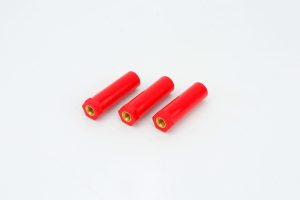
Across the electrical insulation industry, BMC (Bulk Molding Compound) has become one of the most widely specified materials for high-CTI, battery-grade insulators, for a few consistent reasons:
- Homogeneous, void-free structure: Compression molding produces a dense, uniform material with minimal internal voids, which supports consistent tracking resistance across the entire component rather than just at the surface.
- Tunable CTI performance: Formulators can adjust resin chemistry and filler selection — such as aluminum trihydrate, a filler widely used for its flame-retardant and arc-resistant properties — to push CTI values well above baseline thresholds for demanding applications.
- Low moisture absorption: Since moisture significantly accelerates tracking failure, BMC’s low water uptake helps preserve its rated CTI performance over the component’s service life, even in humid battery enclosures.
- Dimensional and thermal stability: BMC retains its shape and mechanical properties across the wide temperature swings typical of battery charge and discharge cycles, keeping busbars properly supported under thermal stress.
If you want a deeper look at how fiber content and filler ratios influence a BMC insulator’s mechanical and electrical performance, this guide on how glass fiber content and length affect BMC insulator mechanical properties breaks down the formulation trade-offs in detail.
Looking for busbar insulators engineered for high-density battery racks?
BMC vs. Other Insulation Materials for Battery Applications
Here’s how BMC compares to other materials commonly considered for battery and energy storage insulation:
| ملكية | عازل بي إم سي | Standard PBT/Nylon | بورسلين | الايبوكسي القياسي |
|---|---|---|---|---|
| Typical CTI Range | High (300–600+) | Moderate, grade-dependent | Very High (non-tracking) | معتدل |
| Moisture Absorption Impact on CTI | Minimal | Can be significant | Minimal | معتدل |
| الاستقرار الحراري | ممتاز | معتدل | ممتاز | معتدل |
| Suitability for Compact Battery Racks | Very High | معتدل | Low (bulky, heavy) | معتدل |
| Fire Performance (UL94) | V-0 | Varies by grade | Non-combustible | Varies by grade |
Where High-CTI BMC Insulators Are Used in Battery Systems
Across the energy storage industry, high-CTI BMC insulators are commonly specified in:
- Battery rack busbar support and interconnect isolation
- Battery Management System (BMS) enclosure standoffs and mounting hardware
- ESS container switchgear and internal distribution panels
- EV charging infrastructure and high-current DC distribution
- Telecom backup battery cabinets and outdoor power enclosures
For a broader look at how insulation components function within energy storage cabinet architecture more generally, this article on the application of low voltage insulators in energy storage walks through design considerations like creepage distance and mechanical load calculations in more detail.
How to Evaluate and Source High-CTI Insulators for Your Project
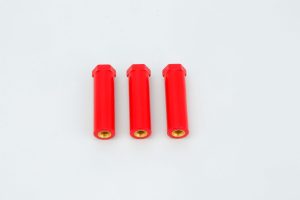
Before your team commits to an insulator for a battery or ESS project, request documented test reports rather than relying on general product descriptions alone. A credible supplier should be able to provide CTI test data referencing the specific IEC or ASTM method used, along with dielectric strength, flammability, and thermal endurance results for the exact material grade you’re evaluating — not just generic BMC performance figures that may not reflect the specific formulation in your component.
It’s also worth requesting sample units for in-house validation, especially for high-density battery rack designs where creepage and clearance margins are already tight. Testing under your own facility’s specific contamination and humidity conditions can surface performance differences that a standardized lab test might not fully capture for your particular application. If your project also involves broader photovoltaic or energy storage cabinet design beyond the battery rack itself, this overview of DMC and BMC insulation components for photovoltaic and energy storage cabinets covers component selection across the full system.
Need documented CTI and dielectric test data for your battery project?
Frequently Asked Questions
1. What CTI value is recommended for battery energy storage insulators?
Industry guidance commonly points to a minimum CTI of 300 for reliable ESS performance, though many high-density battery rack designs specify higher values to build in additional safety margin given the tight creepage and clearance distances involved.
2. How is CTI different from dielectric strength?
Dielectric strength measures how much voltage a material can withstand before electrical breakdown occurs through the material itself, while CTI measures resistance to surface tracking under contamination. Both properties matter for battery insulators, but they address different failure modes.
3. Does a higher CTI value always mean a better insulator overall?
Not necessarily on its own. CTI should be evaluated alongside dielectric strength, mechanical load rating, thermal stability, and flammability performance — a truly suitable battery insulator needs to perform well across all of these properties together, not just one.
4. Why do outdoor ESS containers need higher tracking resistance than indoor panels?
Outdoor containers are exposed to salt fog, condensation, and airborne dust that accelerate surface contamination, which is the primary driver of tracking failure. Indoor, climate-controlled panels face a lower contamination load, so the safety margin required is comparatively smaller.
5. How does creepage distance relate to CTI value?
Under IEC 60664, materials with higher CTI values are permitted shorter minimum creepage distances for a given voltage and pollution degree, which is especially valuable in compact battery racks where physical space between conductors is limited.
6. What documentation should I request when sourcing battery-grade insulators?
Ask for CTI test reports referencing IEC 60112 or ASTM D3638, dielectric strength data, UL94 flammability certification, and thermal endurance results specific to the exact material grade and thickness used in your component.
7. Can insulator formulations be customized for a specific CTI target?
Yes. Resin chemistry and filler selection can be adjusted to push CTI performance toward specific project targets. It’s best to share your required CTI threshold and operating environment directly with your supplier’s technical team during specification.
8. Is CTI testing required, or just recommended, for battery system certification?
Requirements vary by region and certification body, but CTI-related material group classifications are commonly referenced in creepage and clearance calculations required under safety standards like IEC 60664 and UL certification pathways for battery and energy storage equipment.
Give your battery system insulation your safety and compliance teams can rely on.
--- نهاية ---
 البريد الإلكتروني: [email protected]
  رقم 20 طريق لينغيون، دونغفنغ
المنطقة الصناعية، مدينة ليوشي، يويهتشينغ
المدينة بمقاطعة تشجيانغ

واتساب

ويشات
© حقوق الطبع والنشر 2024 شركة الصين هايتان للتكنولوجيا الكهروميكانيكية المحدودة. جميع الحقوق محفوظة.الدعم بواسطة: جونج سياسة الخصوصية
 Arabic
  English (United States)
  English (South Africa)
  Belarusian
  Bengali
  Japanese
  Kazakh
  Korean
  Myanmar
  Russian
  Thai
Thai  Ukrainian
  Uzbek
Uzbek  Vietnamese
  Chinese