
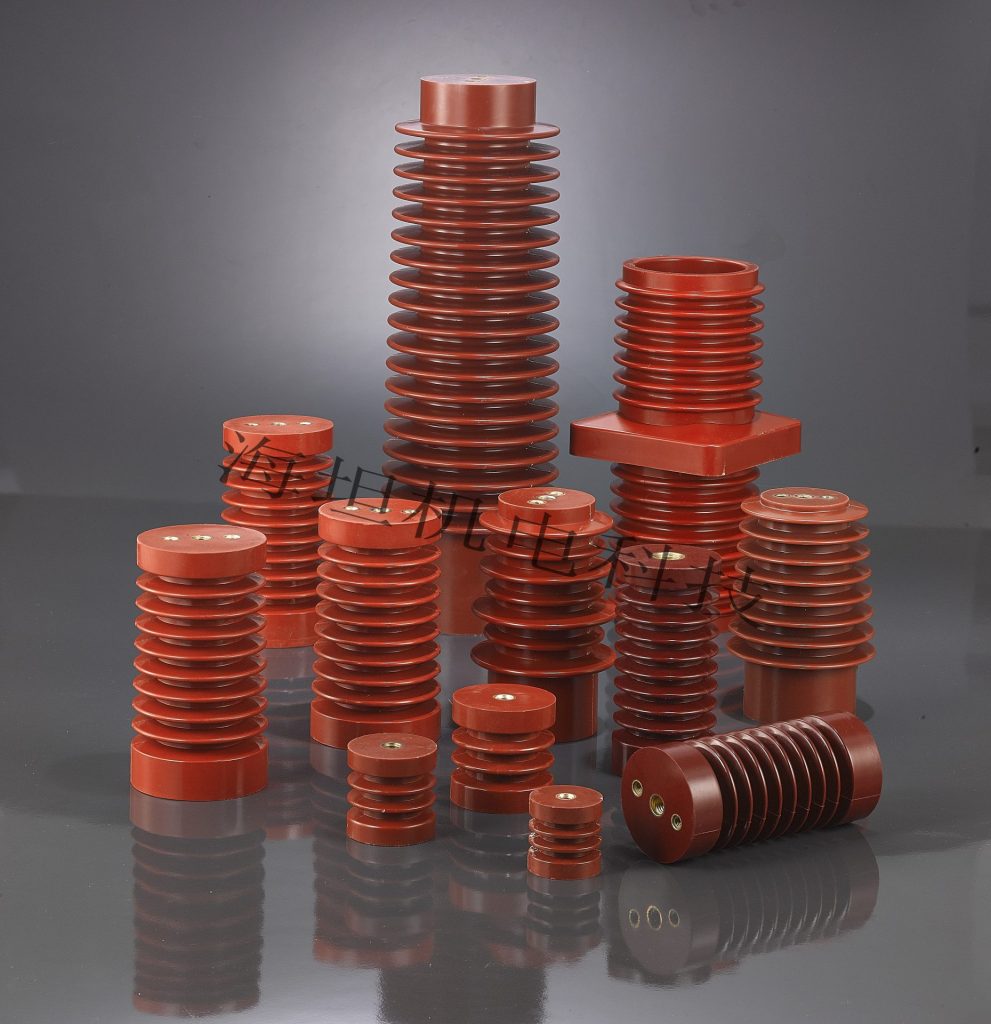
How DMC Busbar Support Insulators Improve Insulation Coordination in Low-Voltage Switchgear
مدونة | غرفة الأخبار | ديسمبر 23,2025
مقدمة
Insulation coordination is a critical design principle in low-voltage switchgear, directly affecting electrical safety, operational reliability, and service life. As power systems become more compact and current densities increase, the demands placed on insulating components grow significantly. Among these components, DMC busbar support insulators play a vital role in maintaining safe electrical spacing, mechanical stability, and long-term insulation performance.

Insulation Coordination in Low-Voltage Switchgear
Insulation coordination refers to the optimized selection and arrangement of insulation levels, clearance distances, and creepage paths to withstand expected electrical stresses during normal operation and abnormal conditions such as short circuits or switching transients.
In low-voltage switchgear, effective insulation coordination must ensure:
Adequate clearance to prevent air breakdown
Sufficient مسافة الزحف to avoid surface tracking
Stable insulation under overvoltage and fault conditions
Mechanical integrity to preserve designed insulation distances
Busbar support insulators are central to achieving these objectives, as they directly determine conductor spacing and insulation reliability.
Why DMC Is Ideal for Busbar Support Insulators
DMC (Dough Molding Compound) is a glass-fiber-reinforced thermosetting composite material widely used in electrical insulation applications. Its unique combination of electrical, mechanical, and environmental properties makes it particularly suitable for low-voltage switchgear.
Key material characteristics include:
High dielectric strength
Excellent anti-tracking performance
قوة ميكانيكية عالية وصلابة
Thermal stability and low aging rate
These properties enable DMC busbar support insulators to perform reliably under complex electrical and mechanical stresses
Improving Electrical Insulation Performance
Low-voltage switchgear frequently experiences transient overvoltages caused by switching operations, inductive loads, or fault clearing. These events place significant stress on insulation systems.
DMC busbar support insulators contribute to improved insulation coordination by:
Providing high dielectric withstand capability, reducing the risk of breakdown
Maintaining stable electrical properties across a wide voltage range
Minimizing leakage current and localized heating
As a result, voltage stress is more evenly distributed across the insulation system, helping to preserve clearance and creepage performance over time.
Maintaining Creepage Distance and Preventing Tracking
In polluted or humid environments, surface contamination can lead to tracking, leakage currents, and eventual flashover. This is a common failure mode in low-voltage switchgear installed in industrial or semi-outdoor locations.
DMC busbar support insulators feature:
High surface resistivity
Strong resistance to electrical tracking
Stable surface insulation even under moisture exposure
These characteristics help maintain effective creepage distances and significantly reduce the risk of pollution flashover, supporting long-term insulation coordination without frequent maintenance.
Mechanical Stability Under Short-Circuit Forces
During short-circuit events, busbars are subjected to strong electrodynamic forces that can cause displacement, vibration, or deformation. If busbar supports lack sufficient mechanical strength, designed insulation distances may be compromised.
DMC busbar support insulators offer:
High compressive and flexural strength
Excellent resistance to impact and vibration
Structural integrity under thermal and electrical stress
This mechanical robustness ensures that busbars remain securely positioned during fault conditions, preserving insulation clearances and preventing secondary failures.
Thermal and Environmental Reliability
Low-voltage switchgear often operates in environments with temperature fluctuations, elevated internal heat, and long service cycles. Insulating materials must maintain performance over time without degradation.
As a thermosetting material, DMC provides:
Strong heat resistance without softening or deformation
Low thermal expansion, reducing stress on mounted components
Resistance to moisture, chemicals, and aging
These features contribute to consistent insulation coordination throughout the equipment’s service life, reducing the need for inspection and replacement.
Contribution of DMC Busbar Support Insulators to Insulation Coordination
| Insulation Coordination Requirement | Role of DMC Busbar Support Insulators |
| Voltage withstand capability | High dielectric strength |
| Creepage and clearance control | Stable geometry and surface insulation |
| Short-circuit resistance | قوة ميكانيكية عالية |
| Environmental durability | Heat, moisture, and aging resistance |
By addressing electrical, mechanical, and environmental factors simultaneously, DMC busbar support insulators form a reliable foundation for insulation coordination in low-voltage switchgear.
Applications in Low-Voltage Switchgear
DMC busbar support insulators are widely used in:
Low-voltage switchgear assemblies
Power distribution panels
Motor control centers (MCCs)
Industrial control cabinets
Their use enables compact designs while maintaining safety margins, making them especially suitable for modern, high-density electrical systems.
خاتمة
Effective insulation coordination is essential for the safe and reliable operation of low-voltage switchgear. Through their excellent electrical insulation, high mechanical strength, and strong environmental resistance, DMC busbar support insulators ensure stable busbar positioning, prevent insulation failure, and support long-term system reliability.
As low-voltage switchgear continues to evolve toward higher performance and longer service life, DMC busbar support insulators remain a proven and dependable solution for achieving robust insulation coordination.
--- نهاية ---
 البريد الإلكتروني: [email protected]
  رقم 20 طريق لينغيون، دونغفنغ
المنطقة الصناعية، مدينة ليوشي، يويهتشينغ
المدينة بمقاطعة تشجيانغ

واتساب

ويشات
© حقوق الطبع والنشر 2024 شركة الصين هايتان للتكنولوجيا الكهروميكانيكية المحدودة. جميع الحقوق محفوظة.الدعم بواسطة: جونج سياسة الخصوصية
 Arabic
  English (United States)
  English (South Africa)
  Belarusian
  Bengali
  Japanese
  Kazakh
  Korean
  Myanmar
  Russian
  Thai
Thai  Ukrainian
  Uzbek
Uzbek  Vietnamese
  Chinese