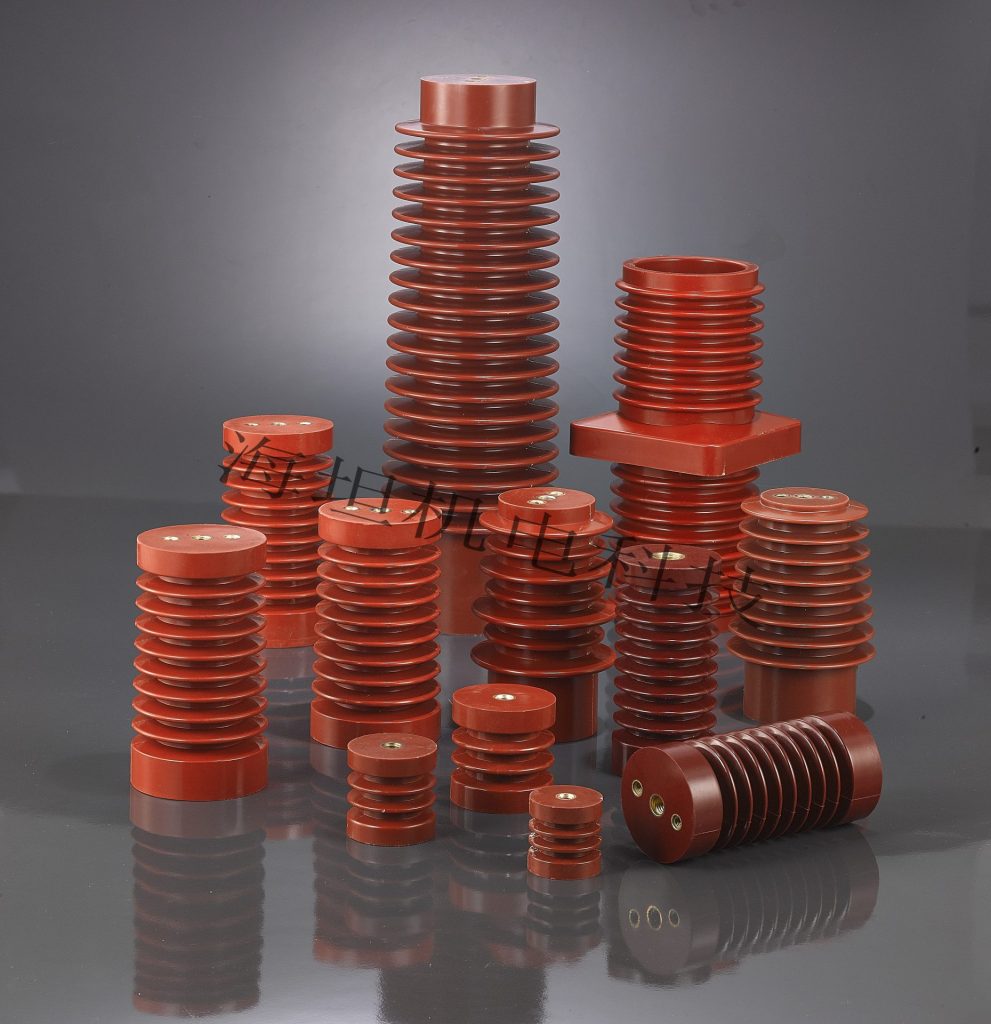
Stable Capacitance Characteristics: How BMC Insulators Deliver Precise Insulation for Sensitive Electronics
مدونة | غرفة الأخبار | يوليو 20,2026
If your business runs a data center, a semiconductor fab, or any precision manufacturing line, you already know that “insulation” isn’t just about keeping current where it belongs. It’s about keeping your electrical environment quiet, predictable, and free of the tiny disturbances that can throw off sensitive instrumentation, corrupt signal integrity, or trip power quality alarms. This is exactly where the insulation material behind your busbars and switchgear starts to matter far more than most procurement teams realize. A BMC insulator with a stable, well-controlled dielectric constant does more than just prevent short circuits — it protects the electrical stability your sensitive equipment depends on.
In this guide, you’ll learn exactly why capacitance and dielectric stability matter for precision electronics, how BMC bulk molding compound achieves this stability, and what specifications your team should check before sourcing insulation material for power-sensitive facilities.
What “Stable Capacitance Characteristics” Actually Means for Your Equipment
Every insulation material has a dielectric constant (also called relative permittivity) — a value that describes how the material behaves in an electric field. When this value shifts unpredictably with temperature, humidity, or frequency, it changes the parasitic capacitance between conductors and support structures in your electrical system. For most industrial equipment, that shift is negligible. But for your business, if you’re operating data center power distribution units, precision test equipment, or semiconductor manufacturing lines, even small, inconsistent capacitance changes can introduce noise, timing jitter, or measurement drift into circuits that were never designed to tolerate them.
This is why “stable capacitance characteristics” isn’t a marketing phrase — it’s a real engineering requirement. An electrical insulator that maintains a consistent dielectric constant and a low dissipation factor across a wide operating range gives your engineers a predictable electrical baseline, instead of one more variable to troubleshoot.
Why Insulation Material Choice Directly Affects Power Quality
Power quality problems don’t always come from the grid or your generators — sometimes they originate inside your own panels. When an insulation material absorbs moisture, contains internal voids, or uses inconsistent filler distribution, its dielectric behavior becomes uneven across the component and unstable over time. That inconsistency can create parasitic capacitive coupling between busbars, contribute to harmonic distortion, and in extreme cases, introduce electromagnetic interference that affects nearby sensitive electronics.
For facilities where uptime and signal accuracy are non-negotiable — data centers, cleanrooms, medical device production, and precision instrumentation manufacturing — this is a real operational risk, not a theoretical one. Choosing an insulation material engineered for dielectric consistency is one of the simplest ways your team can eliminate a source of unpredictable electrical noise before it ever becomes a problem.
How BMC Insulators Deliver Consistent Dielectric Performance
BMC bulk molding compound is formulated and compression-molded specifically to minimize the variables that cause dielectric drift. Here’s what gives BMC insulators their stability advantage:
- Homogeneous composition: Compression molding under controlled heat and pressure produces a dense, uniform structure with minimal voids or air gaps that would otherwise cause localized capacitance variation.
- Low and stable dielectric constant: BMC’s resin-glass fiber matrix maintains a consistent permittivity value across a wide frequency and temperature range, giving your system a predictable electrical baseline.
- Low dissipation factor (loss tangent): BMC insulators lose very little electrical energy as heat under AC fields, reducing localized heating and long-term thermal drift in your equipment.
- Low moisture absorption: Because water has a very high dielectric constant, even small amounts of absorbed moisture can distort a material’s electrical properties. BMC’s low water uptake keeps its dielectric behavior stable across humidity swings.
- High volume resistivity: BMC maintains excellent insulation resistance over time, reducing leakage current paths that could otherwise interfere with sensitive low-signal circuits nearby.
If you’d like a deeper technical comparison of how BMC’s raw material composition achieves these properties, our earlier article on BMC and SMC busbar insulator support material properties and performance breaks this down in more detail, including how it compares to SMC on strength and thermal behavior.
Dielectric Stability Comparison: BMC vs. Other Insulation Materials
Here’s how BMC compares to other commonly used insulation materials on the properties that matter most for power-sensitive environments:
| ملكية | عازل بي إم سي | بورسلين | عازل SMC | الايبوكسي القياسي |
|---|---|---|---|---|
| Dielectric Constant Stability | Excellent, low variation | Good, but glaze-dependent | جيد جدًا | Moderate, mix-dependent |
| Dissipation Factor | قليل | Very Low | قليل | معتدل |
| Moisture Absorption Impact | Minimal | Minimal (if unglazed cracks avoided) | Minimal | Can be significant |
| Structural Uniformity | High (compression molded) | Moderate (firing variability) | عالي | Variable (cure-dependent) |
| Suitability for Sensitive Electronics | Very High | High, but bulky and brittle | عالي | معتدل |
Key Specifications to Verify Before You Source
Before your team commits to an insulation material for a power-quality-sensitive project, make sure the supplier’s datasheet clearly documents:
- Dielectric constant value and its tolerance range across the relevant frequency band for your application.
- Dissipation factor (loss tangent) at your system’s rated frequency and operating temperature.
- Volume and surface resistivity to confirm long-term insulation reliability.
- Moisture absorption rate, since this directly affects how stable the dielectric constant remains over time.
- Thermal endurance and dimensional stability under your facility’s continuous operating temperature.
- Test standards referenced (such as IEC or ASTM methods) so your engineering team can validate the data independently.
Where This Matters Most: Applications in Power-Sensitive Environments
Stable dielectric insulation material isn’t a “nice to have” in every industry — but in the following environments, it directly protects your equipment’s accuracy, uptime, and compliance:
- Data center power distribution units, busway systems, and switchgear where clean power directly impacts server and network uptime
- Semiconductor and precision electronics manufacturing lines sensitive to electrical noise and signal drift
- Medical device production and testing environments requiring consistent, certifiable electrical performance
- Telecom base stations and network infrastructure where insulation stability supports long-term signal integrity
- Calibration labs and test & measurement facilities where even minor capacitive drift can affect instrument accuracy
If your operations also face humid or coastal conditions on top of these power-quality requirements, it’s worth reviewing how BMC insulators handle both challenges simultaneously in our article on BMC LV insulators and coastal corrosion protection.
Choosing the Right Supplier for Precision Applications
For power-quality-critical projects, sourcing decisions deserve extra scrutiny. Prioritize manufacturers with in-house compression molding, documented dielectric test data, and experience supplying data centers or precision manufacturing clients — not just general industrial buyers. To compare your options more broadly, our roundup of the top 10 busbar support insulator manufacturers is a solid starting point for your vendor shortlist.
Need insulation you can trust to stay electrically consistent, batch after batch?
الأسئلة الشائعة
Why does dielectric constant stability matter for a data center?
An unstable dielectric constant can introduce parasitic capacitance and electrical noise into power distribution systems, which can affect the clean power delivery your servers and network equipment depend on for consistent uptime.
What is a dissipation factor, and why should my team care about it?
The dissipation factor measures how much electrical energy an insulation material loses as heat under an AC field. A lower dissipation factor means less energy loss, less localized heating, and more stable long-term performance in your equipment.
Does humidity affect BMC insulator performance?
BMC’s low moisture absorption rate means humidity has minimal impact on its dielectric constant, which is one reason it performs reliably in both precision electronics facilities and humid or coastal environments.
Can unstable insulation material actually cause equipment malfunctions?
Yes. Inconsistent dielectric behavior can contribute to signal noise, measurement drift, or harmonic distortion — issues that are especially disruptive in precision manufacturing, testing, and data center environments.
What test standards should I ask my supplier about?
Request dielectric constant and dissipation factor data tested to recognized IEC or ASTM methods, along with volume resistivity and moisture absorption results, so your team can independently verify the material’s stability claims.
How does BMC compare to epoxy for power-sensitive applications?
BMC generally offers more consistent dielectric behavior than standard epoxy, whose performance can vary more with cure quality and moisture exposure. BMC’s compression-molded uniformity gives your team more predictable, repeatable results.
Are BMC insulators suitable for semiconductor manufacturing environments?
Yes. Their low, stable dielectric constant and minimal outgassing make BMC insulators a strong fit for cleanroom and semiconductor manufacturing power systems where electrical noise must be tightly controlled.
Give your sensitive equipment insulation that stays electrically predictable, every time.
--- نهاية ---
 البريد الإلكتروني: [email protected]
 رقم 20 طريق لينغيون، دونغفنغ
المنطقة الصناعية، مدينة ليوشي، يويهتشينغ
المدينة بمقاطعة تشجيانغ

واتساب

ويشات
© حقوق الطبع والنشر 2024 شركة الصين هايتان للتكنولوجيا الكهروميكانيكية المحدودة. جميع الحقوق محفوظة.الدعم بواسطة: جونج سياسة الخصوصية
 Arabic
  English (United States)
  English (South Africa)
  Belarusian
  Bengali
  Japanese
  Kazakh
  Korean
  Myanmar
  Russian
  Thai
Thai  Ukrainian
  Uzbek
Uzbek  Vietnamese
  Chinese