Flame-Retardant and Self-Extinguishing: How DMC Insulators Shield Industrial Safety
مدونة | غرفة الأخبار | يوليو 29,2026
If your business operates switchgear, control panels, or any low voltage distribution equipment in an industrial setting, fire safety isn’t a checkbox — it’s a core part of how you protect your people, your facility, and your uptime. Electrical faults, arc flashes, and overheating components are among the leading causes of industrial fires, and the insulation material inside your panels plays a direct role in whether a fault stays contained or turns into a much bigger problem. This is exactly why flame-retardant, self-extinguishing عوازل DMC have become a standard specification for engineers and safety managers who can’t afford to leave fire risk to chance.
In this guide, you’ll learn exactly what makes DMC insulation material flame-retardant and self-extinguishing, how the SM Insulator series is built to meet demanding industrial safety standards, and what specifications your team should verify before sourcing.
What Is a DMC Insulator?
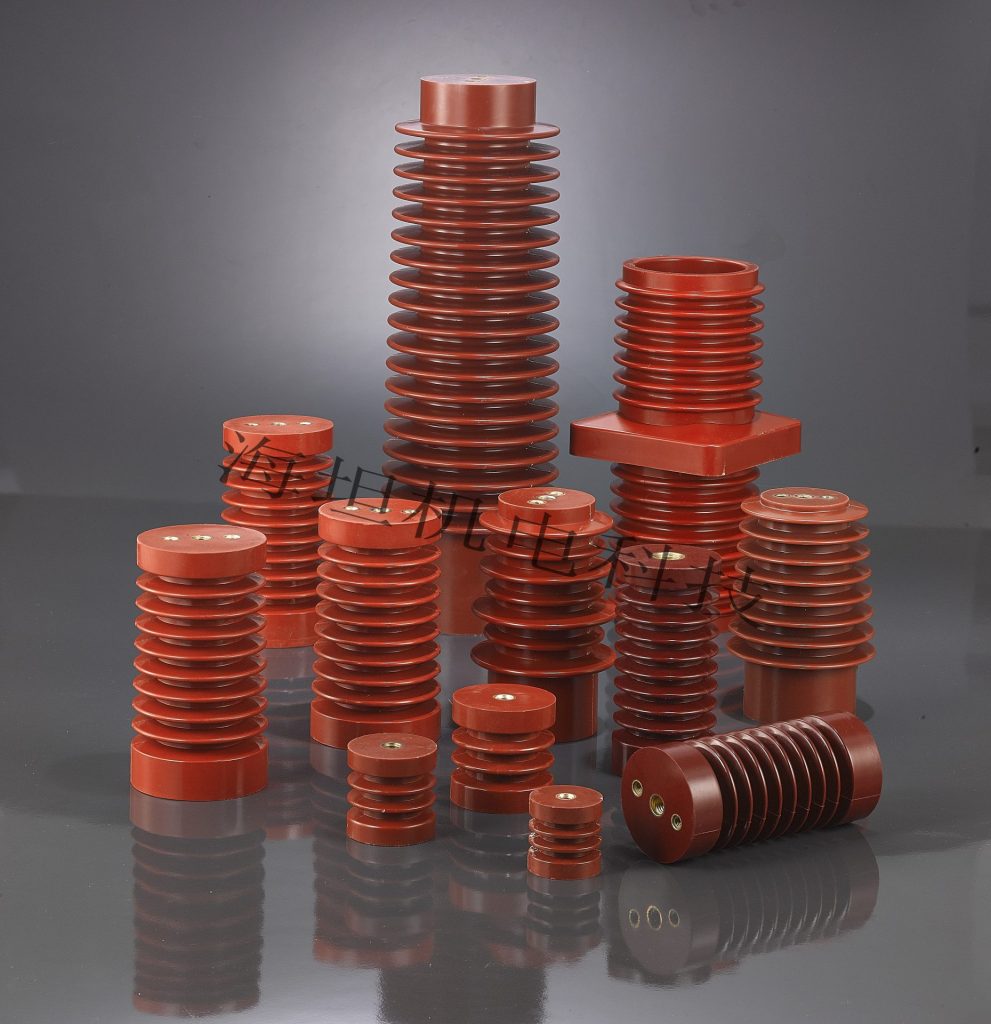
DMC stands for Dough Molding Compound — a thermosetting composite made from unsaturated polyester resin, short glass fibers, and mineral fillers, blended into a dough-like consistency and compression-molded into precise shapes under heat and pressure. This process allows manufacturers to produce highly detailed, dimensionally accurate العوازل الكهربائية with consistent material properties throughout the entire part, not just on the surface.
For your business, this matters because DMC’s molding process directly supports its fire performance. Unlike coatings or surface treatments that can wear off, flame retardancy is built into the material itself, giving your equipment consistent protection for the full service life of the component. If you want the complete technical breakdown of how this material is engineered for low voltage systems, our guide on DMC busbar support insulators explained covers the full manufacturing process and material composition.
Why Flame Retardancy and Self-Extinguishing Performance Matter for Industrial Safety
Electrical panels concentrate energy, heat, and combustible materials in a confined space — which is precisely why fire safety standards for this equipment are so strict. If an arc fault or overheating event occurs, the difference between a contained incident and a spreading fire often comes down to whether the surrounding insulation material ignites, sustains combustion, and releases smoke or toxic gases.
A genuinely self extinguishing material stops burning on its own once the ignition source is removed, rather than continuing to burn and spread flame to nearby components. This single property can be the difference between a minor equipment repair and a full facility shutdown — which is why fire performance should never be an afterthought when your team is specifying electrical safety components for industrial environments.
How DMC Insulators Achieve Flame-Retardant, Self-Extinguishing Performance
DMC insulators are formulated with specific flame-retardant additives and a dense, void-free molded structure that together deliver measurable fire safety performance:
- UL94 V-0 flammability rating: The highest UL94 vertical burn classification, meaning the material self-extinguishes within seconds after the flame source is removed, with no flaming drips.
- High Limiting Oxygen Index (LOI): DMC materials typically require significantly more oxygen to sustain combustion than standard plastics, making ignition far less likely in the first place.
- Low smoke and toxic gas emission: In the event of exposure to flame, quality DMC insulators produce minimal smoke density, protecting visibility and air quality for personnel during an emergency.
- Dimensional stability under thermal stress: DMC retains its structural integrity at elevated temperatures, so it continues to physically support and isolate busbars even under fault conditions.
- Consistent performance throughout the material: Because flame retardancy is compounded into the resin itself rather than applied as a coating, performance doesn’t degrade with surface wear or aging.
For a deeper look at how these performance characteristics compare across different low voltage insulation applications, see our article on the application and performance advantages of DMC materials in low voltage insulators.
Fire Performance Comparison: DMC vs. Other Insulation Materials
Here’s how DMC insulators compare to other commonly specified materials on the fire safety properties that matter most for industrial applications:
| ملكية | DMC Insulator (SM Series) | بورسلين | Standard Thermoplastic | عازل بي إم سي |
|---|---|---|---|---|
| UL94 Flammability Rating | V-0 | Non-combustible | Varies, often V-2 or lower | V-0 |
| Self-Extinguishing Time | Under 10 seconds | N/A (non-combustible) | Often sustains flame | Under 10 seconds |
| Smoke Density | قليل | None | عالي | قليل |
| Detail Molding Precision | Very High | Moderate (limited by firing) | عالي | Moderate to High |
| مقاومة التأثير | عالي | Low, brittle | معتدل | عالي |
Key Specifications to Verify Before You Source
Fire safety claims should always be backed by documented data. Before your team commits to a supplier, confirm the following are clearly stated on the technical datasheet:
- UL94 test results with the specific rating (V-0, V-1, or V-2) and the thickness tested, since ratings can vary by sample thickness.
- Limiting Oxygen Index (LOI) value, which indicates how resistant the material is to sustained combustion.
- Smoke density and toxicity data, especially important for enclosed or occupied spaces such as control rooms and switchgear rooms.
- Halogen content, if your facility requires halogen-free materials for environmental or safety compliance.
- Mechanical load rating and dimensional tolerances to confirm compatibility with your busbar support requirements.
- Third-party certification rather than manufacturer self-declared performance claims alone.
Where Flame-Retardant DMC Insulators Are Used
Because fire safety requirements are especially strict in enclosed and high-density electrical environments, DMC insulators are widely specified across:
- Low voltage switchgear, switchboards, and motor control centers
- Industrial control cabinets and busbar trunking systems
- Oil, gas, and mining facilities with heightened fire risk classifications
- Rail and transit electrical systems requiring strict fire and smoke compliance
- Marine and offshore electrical enclosures where evacuation routes must stay clear of smoke
For applications involving busbar routing and support beyond fire performance alone, our complete guide to busbar insulators is a helpful resource for your broader system design.
Introducing the SM Insulator Series
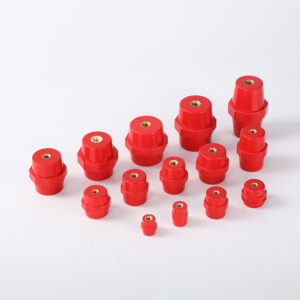
Haitan’s SM Insulator series is purpose-built around this exact requirement: dependable for demanding industrial applications. Every SM Insulator is compression-molded from DMC material, consistent mechanical strength, and long-term dimensional stability, giving your engineering team a component they can specify with confidence — and giving your safety team one less variable to worry about.
Give your electrical systems fire protection that’s built in, not bolted on.
الأسئلة الشائعة
What does UL94 V-0 actually mean for my equipment?
UL94 V-0 is the highest vertical burn rating in the UL94 flammability standard. It means the material self-extinguishes within a short, specified time after the flame source is removed and produces no flaming drips that could ignite nearby components.
Is DMC the same as BMC for fire performance?
Both DMC and BMC are glass-fiber reinforced thermosetting compounds capable of achieving UL94 V-0 ratings, but DMC’s dough-like consistency allows for finer, more detailed molded features, making it well suited to precision insulator geometries like the SM series.
Does self-extinguishing mean the material won’t burn at all?
Not exactly. Self-extinguishing materials can ignite under sustained direct flame, but they stop burning on their own once the ignition source is removed, which significantly limits fire spread compared to non-flame-retardant materials.
What is Limiting Oxygen Index (LOI) and why does it matter?
LOI measures the minimum oxygen concentration required to sustain combustion. A higher LOI means the material is harder to ignite and keep burning, which is a useful additional data point alongside UL94 ratings when evaluating fire safety.
Are DMC insulators suitable for hazardous or classified areas?
DMC insulators are commonly used in oil, gas, and mining facilities with elevated fire risk classifications, but your team should always confirm specific component certifications against your site’s exact hazardous area classification requirements.
How do I verify a supplier’s flame-retardant claims?
Request third-party UL94 test reports, LOI data, and smoke density results rather than relying on marketing claims alone. Reputable manufacturers should be able to provide full documentation for your compliance records.
Can the SM Insulator series be customized for specific mounting requirements?
Yes. Compression molding allows for custom shapes, hole patterns, and creepage distances tailored to your panel design. It’s best to share your drawings or specifications directly with the supplier’s engineering team.
Do flame-retardant insulators cost more than standard options?
Unit costs can be modestly higher, but the reduced fire risk, lower insurance and compliance exposure, and longer service life typically make flame-retardant DMC insulators a stronger long-term value for industrial applications.
How does smoke density affect facility safety during a fault?
Lower smoke density preserves visibility for evacuation and emergency response, and it reduces the volume of potentially toxic byproducts released into occupied spaces such as control rooms and switchgear areas.
What documentation should I request before placing a bulk order?
Ask for UL94 and LOI test reports, mechanical and dimensional specifications, and sample units for in-house validation, along with any relevant industry certifications specific to your application before committing to production quantities.
Ready to specify insulation your safety team can stand behind?
--- نهاية ---
 البريد الإلكتروني: [email protected]
 رقم 20 طريق لينغيون، دونغفنغ
المنطقة الصناعية، مدينة ليوشي، يويهتشينغ
المدينة بمقاطعة تشجيانغ

واتساب

ويشات
© حقوق الطبع والنشر 2024 شركة الصين هايتان للتكنولوجيا الكهروميكانيكية المحدودة. جميع الحقوق محفوظة.الدعم بواسطة: جونج سياسة الخصوصية
 Arabic
  English (United States)
  English (South Africa)
  Belarusian
  Bengali
  Japanese
  Kazakh
  Korean
  Myanmar
  Russian
  Thai
Thai  Ukrainian
  Uzbek
Uzbek  Vietnamese
  Chinese