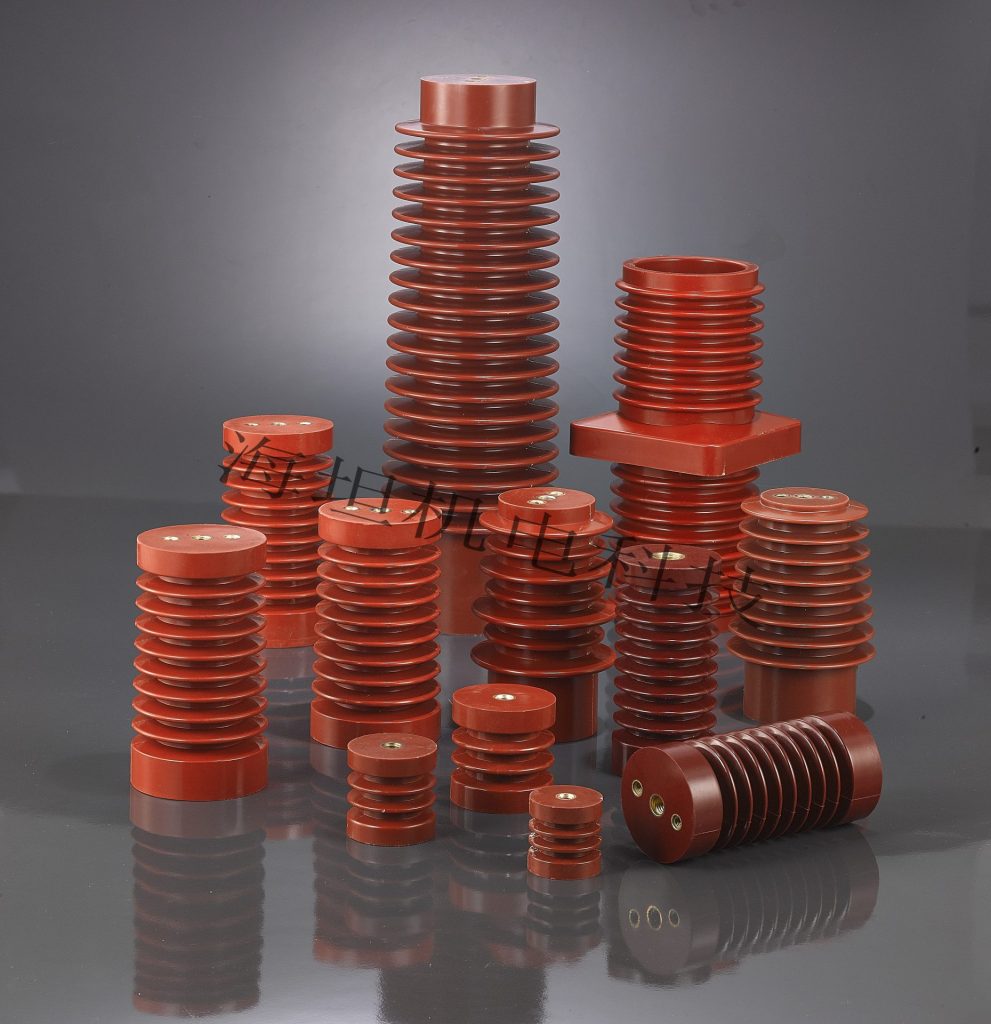
BMC Insulators: Lighter, Stronger, and Shatter-Resistant Compared to Ceramic
Блог | Рэдакцыя | Верас 15,2026
Every procurement team that’s worked with ceramic insulators has a version of the same story: a crate arrives with a few units cracked from transit, or a technician tightens a mounting bolt slightly too hard and hears that unmistakable snap. Ceramic isn’t a bad material — it has a long track record in high-voltage outdoor work — but its biggest limitation has nothing to do with electrical performance. It’s simply brittle, and brittle materials fail suddenly, without warning, under the kind of ordinary mechanical stress your business deals with constantly: shipping, handling, installation, and vibration in service.
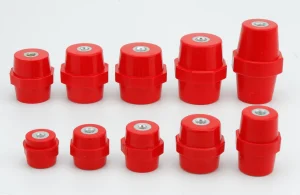
This guide explains why ceramic insulators crack in the first place, what actually changes when you switch to a BMC composite insulator, and how a design like the SM Series puts that difference into a practical, install-ready part for your panels.
Why Ceramic Insulators Crack in the First Place
Ceramic is a rigid, crystalline material with excellent dielectric strength and weathering resistance — properties that made it the default choice for insulators for well over a century. But rigidity is a double-edged property. Ceramic has very little ability to flex or absorb mechanical shock before it fractures, which means impact forces that a more flexible material would simply deform under instead tend to propagate straight through ceramic as a crack. This is why the failure modes your team sees with porcelain aren’t usually electrical — they’re mechanical: a dropped unit, an over-torqued bolt, a bump during transit, or years of vibration in service eventually finding a stress point.
Across the industry, porcelain insulators are still widely described as offering good insulation but high brittleness — a fair characterization that explains why composite alternatives have gained ground specifically in applications where handling risk and mechanical stress are real, ongoing concerns rather than occasional edge cases.
What Actually Changes With BMC Composite Insulators
BMC (Bulk Molding Compound) is a glass-fiber-reinforced thermoset composite, and the fiber reinforcement is what fundamentally changes the failure behavior compared to ceramic. Instead of a single rigid structure that cracks under impact, the glass fibers distribute mechanical stress across the material, giving BMC insulators genuine shatter resistance rather than ceramic’s tendency to fail in a single, sudden fracture. Compared with ceramic insulators, BMC and related composite materials are also lighter and easier to install — a meaningful difference for your team when you’re handling, shipping, or mounting large quantities of parts across a project.
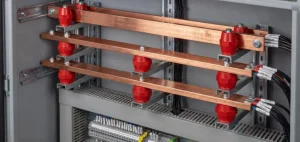
There’s a manufacturing advantage too, and it’s one that’s easy to overlook if you’re only thinking about the finished part. Compression molding allows BMC insulators to be produced as a single piece with metal inserts embedded directly into the mold — commonly electro-galvanized steel inserts for mounting hardware — rather than requiring a separate fastening or bonding step after the ceramic body is fired. That one-piece, insert-molded construction reduces the number of mechanical joints that could work loose over time, and it’s simply not something ceramic manufacturing can replicate in the same way.
Ready to move away from brittle ceramic components?
BMC vs. Ceramic: A Side-by-Side Look
| Уласнасць | BMC Composite | Ceramic (Porcelain) |
|---|---|---|
| Impact Behavior | Shatter-resistant; fibers distribute stress | Brittle; fractures suddenly under impact |
| Вага | Lighter, easier to handle and install | Heavier, more care required in handling |
| Insert Integration | Metal inserts molded in as one piece | Typically requires separate fastening hardware |
| Dimensional Consistency | Tighter tolerances across production runs via compression molding | More variation typical of firing-based ceramic production |
| Moisture/Heat Resistance | Higher resistance than traditional plastics | Good, but glaze can chip and expose the base material |
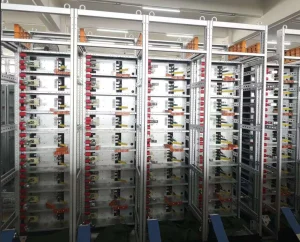
This isn’t a claim that BMC is superior in every respect — ceramic still has a legitimate role, particularly in some outdoor high-voltage applications with decades of proven field history. But for low voltage indoor panels, switchgear, and equipment where handling risk and mechanical durability are the bigger day-to-day concern, the trade-offs increasingly favor composite materials.
SM Series: BMC’s Impact Resistance in a Standard Standoff Format
The Серыя SM is a spindle-shaped BMC/SMC standoff insulator with a raised center section designed for wrench installation — a widely used format across distribution boxes, switchgear, inverters, and general panel work. In line with the composite properties described above, it’s built to be shatter-resistant with tighter height tolerances than typical porcelain equivalents. For your business, that translates into a part that holds up better through shipping and installation than a ceramic equivalent, without giving up the electrical performance your panel design depends on.
What to Verify Before You Switch From Ceramic to Composite
Switching insulator materials on an existing design isn’t purely a drop-in decision, even when the mechanical case is strong. Confirm the dielectric strength and voltage rating of the specific composite product against your system requirements — don’t assume “composite” automatically matches your ceramic part’s electrical rating without checking the datasheet. Verify the operating temperature range covers your application, particularly if the equipment runs hotter than a standard indoor panel. Check that mounting dimensions, insert thread size, and hole spacing match your existing panel design, or budget time for a minor redesign if they don’t. And confirm relevant certifications — CE, RoHS, UL94, and any national marks required for your target market — apply to the specific part you’re evaluating.
Get the specs before you commit to a material switch.
FAQ
Is BMC actually as strong electrically as ceramic, or just more impact-resistant?
BMC composites offer strong dielectric properties suited to low voltage applications, but electrical performance should always be confirmed against the specific product’s datasheet rather than assumed from the material category alone — different formulations and part designs can carry different ratings.
Why does ceramic still get used at all if it’s more brittle?
Ceramic has an extremely long field track record, particularly in outdoor high-voltage transmission applications, and its weathering resistance remains excellent. The brittleness trade-off matters more in applications with significant handling, shipping, or vibration exposure — which is common in low voltage panel work but less so in some fixed outdoor high-voltage installations.
What does “insert molding” mean, and why does it matter for reliability?
Insert molding embeds a metal component — typically a threaded insert — directly into the plastic or composite during the molding process, rather than attaching hardware afterward. This creates a more mechanically secure bond than a separate fastening step and reduces the number of joints that could loosen over time.
Can composite insulators handle outdoor exposure as well as ceramic?
Many composite formulations are engineered specifically for outdoor durability, including UV and moisture resistance, but this varies by product. Confirm outdoor-rated certification and test data for the specific part rather than assuming all composite insulators perform identically outdoors.
Does switching from ceramic to BMC require redesigning my panel?
Not necessarily, if you can source a composite part with matching mounting dimensions and electrical ratings. It’s worth checking hole spacing, insert thread size, and overall height against your current ceramic component before assuming a direct swap.
Are BMC insulators more expensive than ceramic ones?
Pricing varies by manufacturer, part size, and volume, so there’s no universal answer. It’s worth factoring in breakage-related replacement costs and handling time alongside unit price when comparing the two materials for your specific application.
How do I know if my application actually needs impact resistance, or if it’s a non-issue?
If your components go through shipping, frequent handling during assembly, or operate in an environment with meaningful vibration, impact resistance is a genuine factor. For a fixed installation with minimal handling after initial setup, it matters less — though most procurement teams still deal with at least the shipping and installation phase where it’s relevant.
Stop replacing insulators that cracked in transit before they even got installed.
Related Resources
- CY Insulator vs. Other Electrical Insulators: What’s the Difference?
- Understanding SM Insulators: Key Features and Benefits
- Перавагі прымянення і прадукцыйнасці матэрыялаў DMC у ізалятарах нізкага напружання
- Ізалятар шын: поўнае кіраўніцтва
--- КАНЕЦ ---
Папярэдняя: New Energy Insulators: High-Strength Insulation for EV, Solar, and 5G Systems
Ужо апошні артыкул
 Адрас электроннай пошты: [email protected]
 No 20 Lingyun Road, Dongfeng
Прамысловая зона, горад Люшы, Юэцін
Горад, правінцыя Чжэцзян


© Аўтарскае права China Haitan Electromechanical Technology Co., Ltd., 2024. Усе правы абаронены.ПАДТРЫМКА: JUNJ Палітыка прыватнасці
 Belarusian
  English (United States)
  English (South Africa)
  Arabic
  Bengali
  Japanese
  Kazakh
  Korean
  Myanmar
  Russian
  Thai
Thai  Ukrainian
  Uzbek
Uzbek  Vietnamese
  Chinese