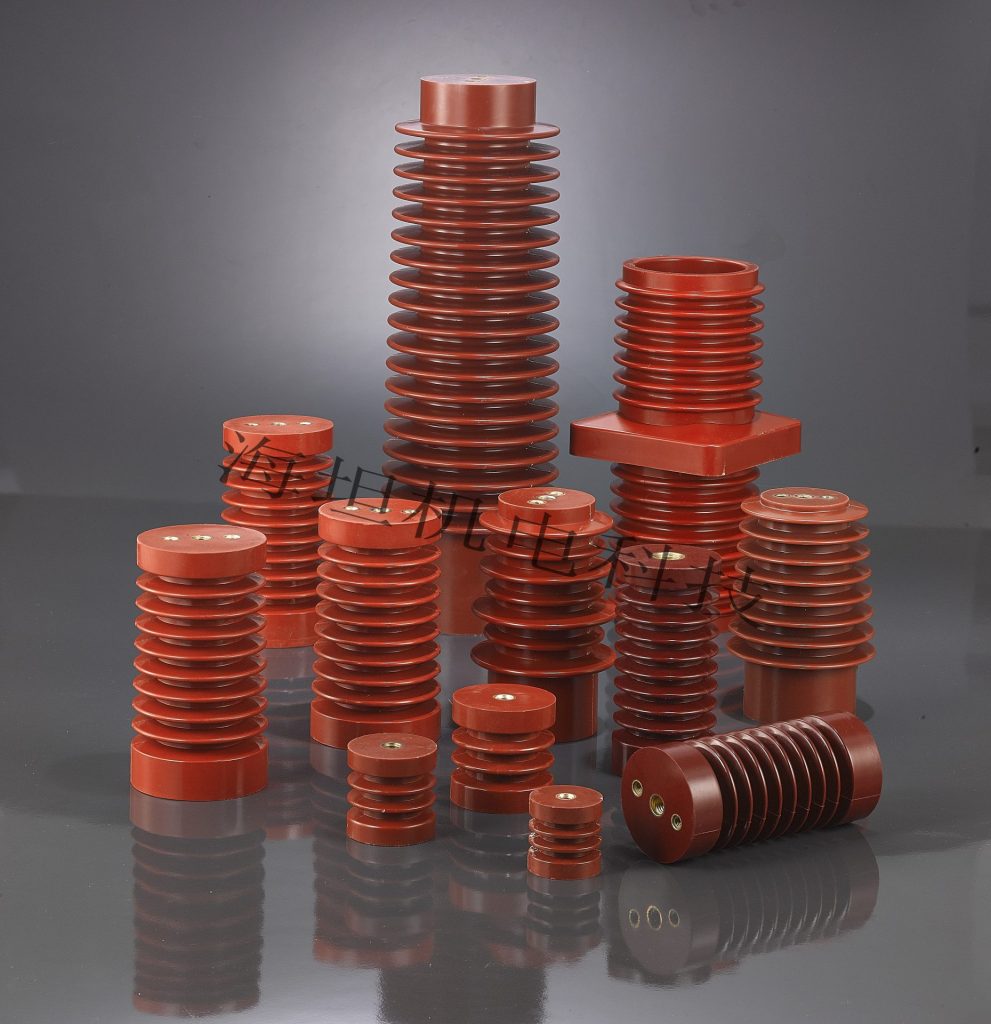
Common Types Of EL Insulators And Their Use In Power Distribution Equipment
Уводзіны
In modern power distribution equipment, insulation components play a critical role in ensuring electrical safety, mechanical stability, and long-term operational reliability. Among various insulation solutions, EL insulators are widely used in distribution cabinets, switchgear, and busbar systems due to their balanced electrical performance, structural strength, and design flexibility.
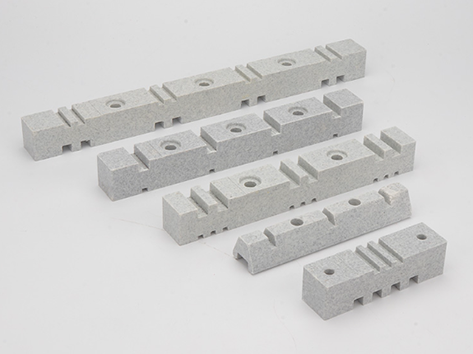
What Is an EL Insulator?
Ан EL insulator is a molded electrical insulation component used to support, separate, and fix live conductive parts such as busbars and terminals inside power distribution equipment. It provides both электраізаляцыя і mechanical support, preventing short circuits, leakage currents, and mechanical displacement under operational loads.
EL insulators are typically used in low-voltage and medium-voltage systems, where compact structure, reliability, and ease of installation are essential.
Common Types of EL Insulators
Standard Support-Type EL Insulators
Support-type EL insulators are the most commonly used form. They are designed to hold busbars or conductors at a fixed height and maintain safe clearance distances between live parts and grounded structures.
Typical applications:
Low-voltage distribution cabinets
Busbar support in switchboards
Control panels and power panels
These insulators provide stable mechanical support while ensuring consistent insulation performance under continuous electrical load.
Threaded EL Insulators (Male/Female or Double-Thread)
Threaded EL insulators are designed with metal inserts or threaded ends, allowing direct fastening to cabinet frames or busbar assemblies. They simplify installation and ensure secure positioning.
Typical applications:
Busbar fixing systems
Modular distribution cabinets
Pre-assembled power distribution units
Threaded designs improve assembly efficiency and reduce the risk of loosening caused by vibration or thermal expansion.
High-Strength EL Insulators for Heavy Busbars
For systems with high current ratings and large cross-section busbars, high-strength EL insulators are used to withstand increased mechanical loads and short-circuit forces.
Typical applications:
High-current distribution boards
Main busbar systems
Industrial power distribution equipment
These insulators are engineered to provide enhanced load-bearing capacity while maintaining reliable dielectric performance.
Compact EL Insulators for Space-Constrained Designs
Compact EL insulators are designed for modern distribution equipment where space optimization is critical. They allow closer component arrangement without compromising insulation safety.
Typical applications:
Compact switchgear
High-density distribution cabinets
Modular electrical enclosures
Their optimized geometry supports the trend toward smaller, more integrated power distribution systems.
Customized EL Insulators for Special Applications
In some cases, standard insulator designs cannot fully meet project-specific requirements. Customized EL insulators can be produced with special dimensions, mounting interfaces, or color coding for identification purposes.
Typical applications:
Multi-circuit cabinets
Phase identification in three-phase systems
OEM power distribution solutions
Customization enhances system clarity, installation efficiency, and operational safety.
Use of EL Insulators in Power Distribution Equipment
EL insulators are widely used across different types of power distribution equipment, including:
Low-voltage and medium-voltage switchgear
Distribution cabinets and control panels
Busbar systems and conductor assemblies
Industrial power and utility distribution systems
Their role extends beyond insulation, contributing to mechanical integrity, thermal stability, and long-term reliability of the entire system.
How to Select the Right EL Insulator
When choosing an EL insulator, engineers should consider:
Rated voltage and insulation requirements
Mechanical load and short-circuit forces
Installation method and mounting structure
Space constraints within the cabinet
Environmental and operating conditions
Selecting the appropriate type ensures safe operation and reduces maintenance risks over the equipment lifecycle.
Заключэнне
EL insulators are essential components in power distribution equipment, offering reliable insulation and mechanical support in a wide range of applications. Understanding the common types of EL insulators and their specific uses helps engineers and system designers optimize safety, efficiency, and performance in modern electrical systems.
As distribution equipment continues to evolve toward higher density and modular design, EL insulators will remain a key element in achieving safe and reliable power distribution.
FAQ
Q1: What is the main function of an EL insulator in power distribution equipment?
The primary function of an EL insulator is to provide electrical insulation and mechanical support for live components such as busbars and conductors. It ensures safe clearance distances, prevents short circuits, and maintains structural stability under electrical and mechanical loads.
Q2: In which voltage range are EL insulators commonly used?
EL insulators are mainly used in low-voltage and medium-voltage distribution systems, including distribution cabinets, switchgear, and control panels. The exact voltage rating depends on the insulator design and material specifications.
Q3: How do threaded EL insulators improve installation efficiency?
Threaded EL insulators allow direct fastening to cabinet frames or mounting plates using bolts or studs. This simplifies assembly, improves positioning accuracy, and reduces installation time, especially in modular or pre-assembled distribution systems.
Q4: Can EL insulators withstand short-circuit forces?
Yes. EL insulators are designed to withstand mechanical stresses caused by short-circuit currents, including axial and lateral forces acting on busbars. High-strength EL insulators are specifically used in high-current and heavy busbar applications.
Q5: Are EL insulators suitable for compact and high-density cabinets?
Yes. Compact-type EL insulators are specifically designed for space-constrained layouts. They support closer busbar spacing while maintaining required insulation distances, making them suitable for modern high-density distribution cabinets.
Q6: Can EL insulators be customized for specific applications?
Yes. EL insulators can be customized in terms of dimensions, mounting interfaces, and colors. Customization is often used for special cabinet layouts, phase identification, or OEM-specific power distribution solutions.
Q7: What factors should be considered when selecting an EL insulator?
Key selection factors include rated voltage, mechanical load requirements, short-circuit strength, mounting method, available installation space, and operating environment. Proper selection ensures safety, reliability, and long service life.
--- КАНЕЦ ---
 Адрас электроннай пошты: [email protected]
 No 20 Lingyun Road, Dongfeng
Прамысловая зона, горад Люшы, Юэцін
Горад, правінцыя Чжэцзян


© Аўтарскае права China Haitan Electromechanical Technology Co., Ltd., 2024. Усе правы абаронены.ПАДТРЫМКА: JUNJ Палітыка прыватнасці
 Belarusian
  English (United States)
  English (South Africa)
  Arabic
  Bengali
  Japanese
  Kazakh
  Korean
  Myanmar
  Russian
  Thai
Thai  Ukrainian
  Uzbek
Uzbek  Vietnamese
  Chinese