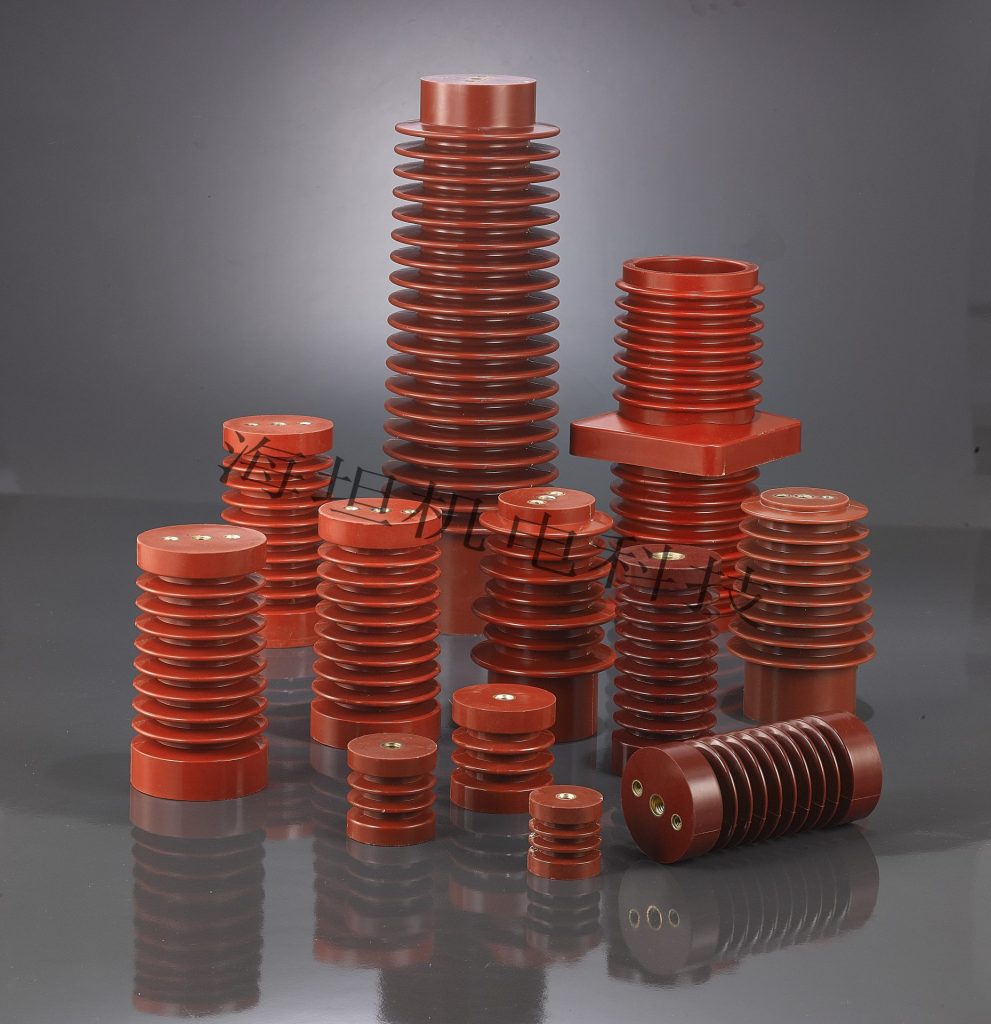
Cylindrical MNS BMC Insulators: Evaluating Strength, Torque, and Moisture
Блог | Рэдакцыя | Ліст 18,2026
If you are specifying a cylindrical MNS BMC insulator for a distribution box, switchgear lineup, inverter, or another low-voltage assembly, you need more than a shape name. Your business is usually deciding whether the support can take installation torque, resist bending in service, and keep a reliable insulating surface if moisture appears. A cylindrical BMC body can be a practical starting point, but the shape alone does not make the part waterproof, and it does not automatically prove higher torque or bending capacity. This guide shows you what to verify and where catalog claims should stop.
What a Cylindrical MNS BMC Insulator Should Do
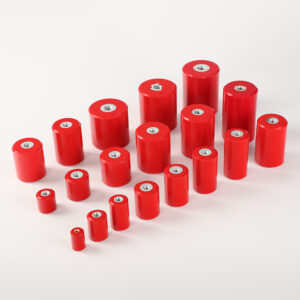
A cylindrical MNS BMC insulator is a molded standoff used to support and electrically isolate a busbar or other live part from the mounting surface and nearby conductive structure. In a low-voltage panel, it has to hold the conductor under normal and fault-related load, and keep an insulating path after heat, vibration, and contamination.
MNS-type low-voltage switchgear is widely used, so cylindrical supports in this family are often bought as catalog parts in several diameters, heights, and thread sizes. MNS insulator is a BMC/SMC circuit-support insulator for low-voltage distribution and communication lines, and for applications such as distribution boxes, switchgear, inverters, and green power supplies. Haitan MNS insulator supports customizable colors. Inserts are associated with physical strength. Confirm insert size, engagement, and mechanical values on the model you intend to buy.
Cylindrical Geometry: Where the Shape Helps, and Where It Does Not
A cylinder is a compact structural form, and a smooth round body can encourage water to run off instead of collecting in sharp corners or deep recesses. That can help where condensation appears.
The load path matters more than the silhouette. For a given material grade and insert, a more substantial body and a well-anchored insert generally help carry installation torque and service loads, while a taller or slimmer body can increase bending leverage. Do not assume a cylindrical MNS insulator automatically offers higher torque resistance or bending capacity than another shape with a different cross-section, insert, or test method. Compare like-for-like data, including the test method, conditioning, and mechanical quantities that match your load case.
A cylindrical body may reduce standing-water pockets and help drainage after condensation. Contaminants can still film the surface, and moisture can still collect at the insert face, under a washer, at the busbar interface, or around the mounting hole. Tracking follows the creepage path between conductive parts, not the insulator outline. Geometry cannot replace material quality, finish, creepage, contamination control, or assembly sealing.
What BMC Material Contributes — and What the Label Does Not Prove
BMC, or bulk molding compound, is a glass-fiber-reinforced unsaturated polyester thermoset, usually compression-molded. SMC is a related sheet-form compound often listed alongside BMC in the same family. Electrical-grade formulations are typically chosen for insulation, dimensional stability, and mechanical strength, so BMC is common in low-voltage busbar supports. The label is still not a complete specification: two parts can both be called BMC and differ in glass content, fillers, tracking resistance, flammability grade, and insert retention. For a broader primer on types and materials, use the complete guide to busbar insulators, then return to model-level data.
Many electrical BMC grades absorb relatively little water compared with some engineering thermoplastics, and a thermoset body does not melt like those plastics. Low water absorption is still not a water seal, and the insulator does not replace a gasket, enclosure rating, or tested assembly. In humid or polluted service, the usual risk is surface leakage and tracking when moisture combines with dust or salt. Ask for CTI or material group, and review creepage and pollution degree under IEC 60664-1 principles, as applied through assembly standards such as IEC 61439-1.
Tightening Torque, Torque Resistance, and Bending Are Not Interchangeable
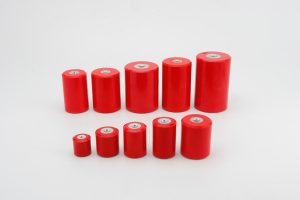
Tightening torque is the installation setting your technicians apply to the fastener. Torque resistance, sometimes published as torque strength, is the insulator’s ability to keep the metal insert from rotating, loosening, or tearing out of the molded body when that torque is applied. Bending or cantilever strength is a different load case: a lateral or offset force from busbar weight, magnetic forces, vibration, or misalignment. Tensile or compressive figures answer axial questions and should not stand in for bending data.
If you confuse those numbers, you can over-torque an insert, or approve a part whose published “torque” value was never meant as a tightening setting. Ask for the test method, load direction, specimen conditioning, and acceptance criterion. If a catalog page mixes units or shortens “torque” into one unlabeled figure, treat it as incomplete until the datasheet makes it usable. Do not copy mechanical values from one model or test setup onto another part.
| Data to request | What you can evaluate | Common mistake to avoid |
|---|---|---|
| Recommended tightening torque for your fastener and thread | Installation requirements that help prevent thread, insert, or body damage | Using a torque-resistance test result as the installation torque setting |
| Torque resistance and the corresponding test method | How well the insert resists rotation within the molded body under the stated test conditions | Assuming cylindrical geometry alone guarantees higher torque resistance |
| Bending or cantilever strength, including load direction and test setup | Resistance to lateral loads relevant to your busbar arrangement | Substituting tensile or compressive strength for bending data |
| Tensile, insert pull-out, or compressive data, as applicable | Performance under the specific axial loading conditions in your design | Treating one mechanical test result as a rating for every load direction |
| Voltage withstand and insulation resistance, with test conditions | Component insulation performance under the specified conditions | Treating a component voltage figure as proof of finished-assembly compliance |
| Comparative tracking index (CTI) or material group, plus creepage distance | Suitability for your insulation-coordination requirements and expected pollution degree | Assuming the cylindrical shape provides waterproofing or an IP rating |
| Insert material, protective finish, and intended operating environment | Potential corrosion concerns and interfaces that need moisture protection | Expecting the insulator to replace enclosure sealing or cabinet ingress protection |
Moisture and Water Exposure: What Actually Protects the Assembly
Moisture performance is governed by the material surface, the creepage path, contamination, the interfaces around inserts and fasteners, and the enclosure or sealing of the finished assembly. Cylindrical geometry may help drainage, but it does not confer an IP rating. Ingress protection is generally a property of an enclosure or tested assembly, not a shape-based claim you can assign to a standoff.
In a clean, dry indoor assembly, a properly selected BMC or SMC cylindrical support may be appropriate once the electrical and mechanical data check out. If the cabinet can see condensation, wash-down, coastal salt, or outdoor-adjacent humidity, widen the review. Confirm the material grade and CTI for the assumed pollution degree, check creepage, and review insert metal, gaskets, and the enclosure rating. Those assembly details usually matter more than the cylinder profile. If humidity data is not available on a stated method, do not invent a rating.
Choosing a cylindrical MNS BMC insulator for your project?
Explore the MNS insulator range, then confirm the dimensions, thread size, and mechanical data your panel design requires.
What Your Business Should Put in the Specification and RFQ
Turn the points above into a short request. Specify the model family, diameter, height, thread, and insert metal. State the tightening torque your process will use, and ask for torque resistance on a stated method. Add bending or cantilever data if side load is possible, plus tensile or compressive data if those loads exist. Include the assembly’s rated insulation voltage, component withstand or insulation-resistance evidence, CTI or material group, and whether the environment is indoor dry, condensing, dusty, salty, or outdoor-adjacent.
Request certificates for the exact material grade or finished part, not only a company-level list of marks. For volume, lead time, or unit cost at scale, use the guide to MNS insulator bulk production and project-scale capacity.
FAQ
Does a cylindrical MNS BMC insulator automatically have higher torque and bending strength?
No. A cylindrical body can be a compact and useful structural form, and a larger, well-anchored insert can improve physical strength, but those are design factors, not a universal ranking. Compare stated torque-resistance and bending or cantilever results for the actual size, material grade, and insert.
Is a cylindrical insulator waterproof because of its shape?
No. A smooth cylinder may help water run off and may reduce pockets on the body, but waterproofing depends on material, surface condition, insert interfaces, creepage, contamination, and assembly sealing. You should not assign an IP rating to the insulator from geometry alone.
What is the difference between tightening torque and torque strength?
Tightening torque is the installation value your technicians apply to the screw or bolt. Torque strength, or torque resistance, is the ability of the insert and molded body to resist rotation, loosening, or pull-out under that torque. One is a process setting; the other is a component capability. Do not use one number for the other purpose.
What mechanical data should my business request before approving a model?
Request tightening guidance for your thread, torque resistance with test method, and bending or cantilever strength if side load is possible. Add tensile or compressive data when those loads exist, plus the method, load direction, and conditioning. If a supplier provides only one unlabeled “torque” figure, ask for clarification before you approve the part.
Can I use a standard indoor BMC MNS insulator in a humid or outdoor-adjacent cabinet?
Only after you review the environment. Confirm the material grade, CTI or material group, creepage for the assumed pollution degree, insert metal, and any humidity-related test data that actually exists. Then assess the enclosure and sealing of the assembly. A part suitable for a clean indoor panel may need extra controls if condensation or salt can reach the surface.
Do catalog voltage or torque figures replace assembly testing?
No. Component withstand or torque values can support part selection, but they do not replace insulation coordination or verification of the low-voltage assembly under the standard that applies to your equipment, such as IEC 61439-1. Clearances, creepage, short-circuit stresses, and enclosure conditions still have to be reviewed in the finished design.
Заключэнне
When you specify a cylindrical MNS BMC insulator, treat geometry and material as starting points, not as guarantees. A cylindrical body may help water run off and can be a strong mechanical form, but your decision should rest on tested torque, bending, and dielectric data, plus creepage, contamination, and the sealing of the finished assembly. Ask for model-specific datasheets, distinguish installation torque from torque resistance, and do not assign an IP rating to the insulator alone. If you document those limits clearly, your business can select a support that matches the real operating conditions of the panel.
--- КАНЕЦ ---
Папярэдняя: Three Cables, One Press: How a Triple Cable Clamp Speeds Up Installation
Ужо апошні артыкул
 Адрас электроннай пошты: [email protected]
 No 20 Lingyun Road, Dongfeng
Прамысловая зона, горад Люшы, Юэцін
Горад, правінцыя Чжэцзян


© Аўтарскае права China Haitan Electromechanical Technology Co., Ltd., 2024. Усе правы абаронены.ПАДТРЫМКА: JUNJ Палітыка прыватнасці
 Belarusian
 English (United States)
 English (South Africa)
 Arabic
 Bengali
 Japanese
 Kazakh
 Korean
 Myanmar
 Russian
 Thai
 Ukrainian
 Uzbek
 Vietnamese
 Chinese