
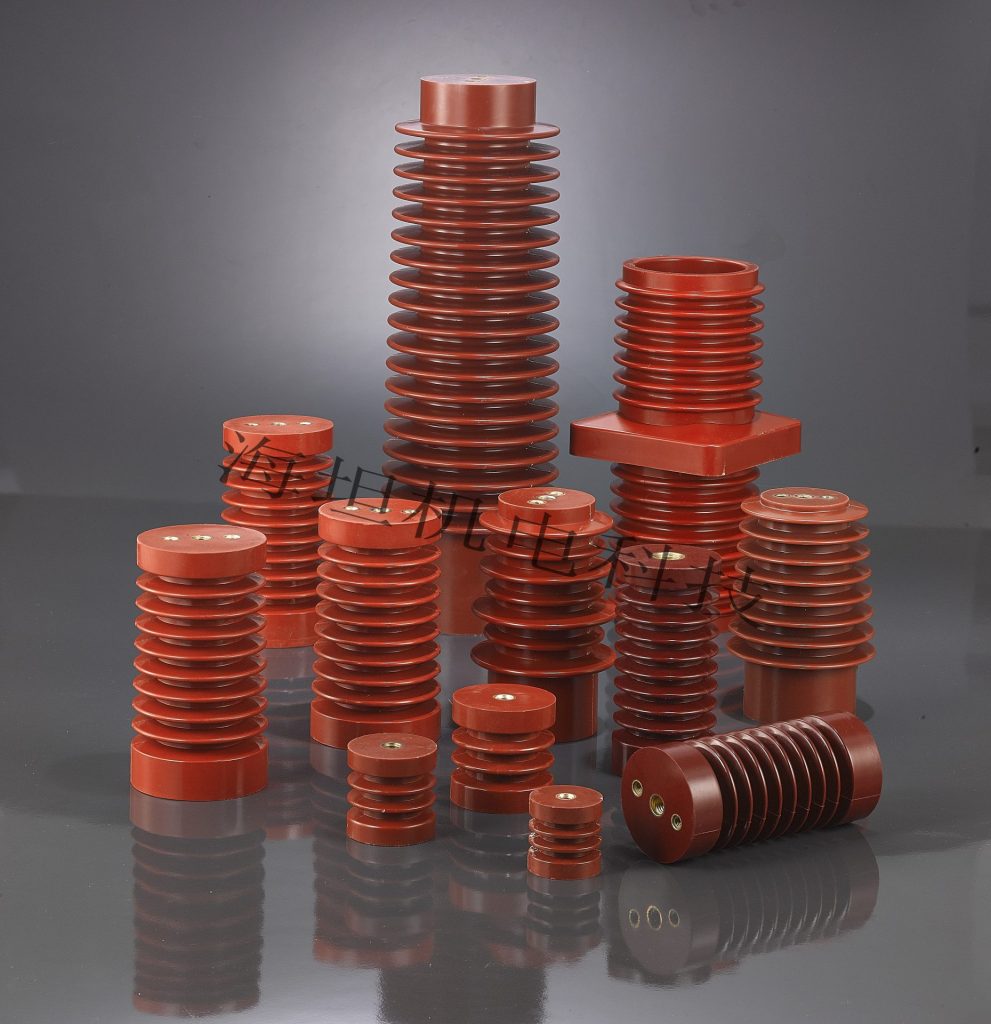
How Precision Molding Impacts the Performance of Busbar Insulators
Уводзіны
У сучасных электрычных сістэмах, шынныя ізалятары play a critical role in ensuring safety, stability, and efficiency. As power distribution networks become more compact and demand higher reliability, the manufacturing quality of these components becomes increasingly important. Among the many factors that determine performance, precision molding stands out as a key driver of consistency and durability.
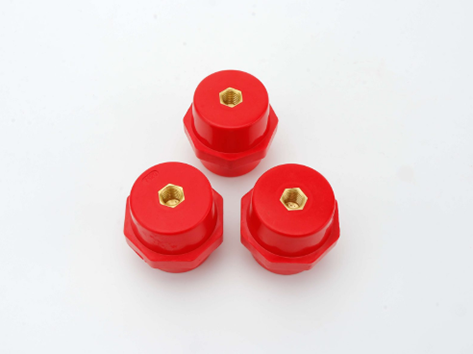
What Is Precision Molding in Busbar Insulator Manufacturing?
Precision molding refers to the use of highly controlled molding processes—typically compression molding or injection molding—to produce insulators with tight dimensional tolerances, uniform material distribution, and defect-free surfaces.
Materials commonly used include:
DMC (сумесь для фармоўкі цеста)
SMC (ліставая фармовачная сумесь)
Epoxy resin
These materials require exact temperature, pressure, and curing control during molding to achieve optimal performance characteristics.
Dimensional Accuracy: The Foundation of Reliable Installation
One of the most immediate impacts of precision molding is dimensional consistency.
Чаму гэта важна:
Ensures perfect alignment with busbars and mounting systems
Prevents installation stress or misalignment
Reduces assembly time and labor costs
Even minor deviations in height, hole spacing, or flatness can lead to uneven load distribution, which may cause premature failure in high-voltage or high-current environments.
Прадукцыйнасць электраізаляцыі
Precision molding directly affects the электрычная трываласць and insulation reliability of busbar insulators.
Key benefits:
Eliminates internal voids and air pockets that can cause partial discharge
Ensures uniform density, improving insulation resistance
Enhances surface finish to reduce tracking and leakage current
A well-molded insulator minimizes the risk of electrical breakdown, especially in humid, dusty, or high-voltage conditions.
Mechanical Strength and Load-Bearing Capacity
Busbar insulators must withstand not only electrical stress but also mechanical forces, including:
Busbar weight
Цеплавое пашырэнне
Short-circuit forces
Precision molding ensures:
Even distribution of reinforcing fibers (in DMC/SMC materials)
Consistent wall thickness and structural integrity
High compressive and tensile strength
This results in insulators that can maintain stability under dynamic and long-term loads.
Surface Quality and Environmental Resistance
The molding process also determines the surface smoothness and defect level of the insulator.
High-quality surfaces provide:
Better resistance to moisture and contamination
Reduced risk of surface tracking and flashover
Improved aging performance in outdoor or harsh environments
Precision molds with polished cavities help produce insulators with minimal surface imperfections, enhancing both performance and lifespan.
Batch Consistency and Quality Control
In large-scale electrical projects, consistency across thousands of components is essential.
Precision molding enables:
Repeatable production with minimal variation
Stable performance across batches
Easier compliance with international standards
Advanced manufacturers often integrate:
Automated molding systems
Real-time temperature and pressure monitoring
Strict post-molding inspection processes
This ensures every шынны ізалятар meets the same high-quality benchmark.
Impact on System Reliability and Safety
Ultimately, the benefits of precision molding translate into greater system reliability.
Poorly molded insulators can lead to:
Electrical leakage or breakdown
Mechanical failure under load
Increased maintenance and downtime
In contrast, precision-molded insulators:
Extend service life
Reduce failure rates
Enhance overall electrical safety
Заключэнне
Precision molding is not just a manufacturing detail—it is a core factor that defines the performance of busbar insulators. From dimensional accuracy and electrical insulation to mechanical strength and environmental resistance, every aspect of an insulator’s functionality is influenced by how precisely it is molded.
For engineers, procurement specialists, and OEM manufacturers, choosing suppliers with advanced molding capabilities is essential to ensuring long-term reliability and safety in electrical systems.
FAQ
1. Why is precision molding important for busbar insulators?
It ensures consistent dimensions, eliminates defects, and improves both electrical and mechanical performance.
2. What materials benefit most from precision molding?
DMC, SMC, and epoxy resin materials all require controlled molding processes to achieve optimal properties.
3. How does molding affect insulation performance?
Proper molding removes air gaps and ensures uniform density, which enhances dielectric strength and reduces failure risks.
4. Can poor molding lead to electrical failures?
Yes, defects like voids or uneven surfaces can cause partial discharge, tracking, or even insulation breakdown.
5. How can I identify a high-quality molded insulator?
Look for smooth surfaces, consistent dimensions, certifications, and a reliable manufacturer with strict quality control processes.
--- КАНЕЦ ---
 Адрас электроннай пошты: [email protected]
  No 20 Lingyun Road, Dongfeng
Прамысловая зона, горад Люшы, Юэцін
Горад, правінцыя Чжэцзян


© Аўтарскае права China Haitan Electromechanical Technology Co., Ltd., 2024. Усе правы абаронены.ПАДТРЫМКА: JUNJ Палітыка прыватнасці
 Belarusian
  English (United States)
  English (South Africa)
  Arabic
  Bengali
  Japanese
  Kazakh
  Korean
  Myanmar
  Russian
  Thai
Thai  Ukrainian
  Uzbek
Uzbek  Vietnamese
  Chinese