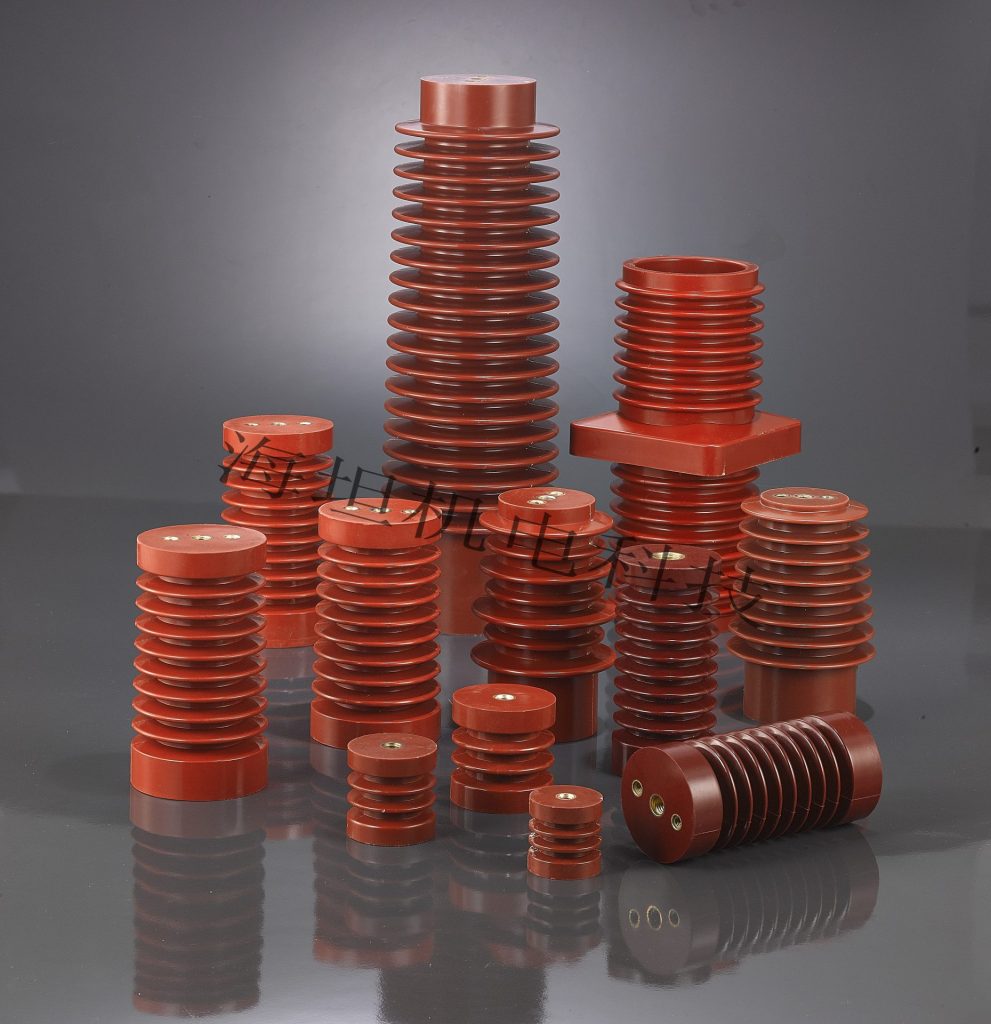
MNS Insulator Bulk Production: Cost-Effective Capacity for Large-Scale Projects
ব্লগ | নিউজরুম | আগস্ট 03,2026
If your business is managing a utility substation rollout, an EPC contract, or a large-scale switchgear manufacturing program, you already know that sourcing insulators isn’t just about finding the right technical spec — it’s about finding a manufacturer who can actually deliver at the volume your project demands, on schedule, without quality slipping as order size grows. A supplier that performs well on a 500-unit sample order can still fall apart at 50,000 units if their production capacity, quality control systems, and raw material supply chain weren’t built for scale. This is exactly the gap that separates a reliable MNS insulator partner from a risky one on large projects.
In this guide, you’ll learn what actually makes bulk insulator production cost-effective at scale across the industry, and what your team should evaluate before committing to a high-volume supplier.
What Is an MNS Insulator?
MNS insulators are compression-molded busbar support components designed specifically for MNS-type low voltage switchgear systems — one of the most widely deployed switchgear platforms in industrial and utility electrical distribution worldwide. Because MNS switchgear architecture is standardized across so many facilities globally, demand for MNS-compatible components tends to come in large, repeatable quantities: a single substation retrofit or panel manufacturing contract can easily require thousands of identical insulators. If you want the full technical rundown on specifications, materials, and applications, this MNS insulator guide covers everything your engineering team needs to know.
Why Large-Scale Projects Need a Manufacturer Built for Volume
When your project scales into the thousands or tens of thousands of units, the risks that were manageable at small order sizes become project-critical. A supplier without dedicated bulk production capacity often struggles with inconsistent batch quality, unpredictable lead times as they juggle multiple small clients on shared equipment, and pricing that doesn’t actually improve much with volume because their cost structure was never designed around scale in the first place.
For your business, this translates directly into project risk: delayed commissioning dates, inconsistent component tolerances across batches, and procurement costs that eat into your project margin. Choosing a manufacturer with true large-scale MNS switchgear component capacity isn’t just a cost decision — it’s a schedule and quality risk-management decision.
What Actually Makes Bulk Insulator Production Cost-Effective
Not every manufacturer that claims “bulk production capability” is actually structured to deliver on it. Across the industry, the suppliers that consistently perform well on large orders tend to share a few specific operational traits your team should look for:
- In-house compression molding at scale: A manufacturer that owns its own molding equipment — rather than outsourcing production to third-party factories — controls tooling, cycle times, and material quality directly, which keeps unit costs competitive as order volume grows.
- Batch-to-batch quality consistency: Standardized process controls and in-house testing are what ensure unit #1 and unit #50,000 meet the same electrical and mechanical specifications, so your engineering team doesn’t have to worry about inconsistent tolerances mid-project.
- Economies of scale on raw materials: Bulk purchasing of resin, glass fiber, and fillers reduces per-unit material costs — and this is where genuine volume discounts should actually come from, rather than simply from thinner margins.
- Flexible tooling for project-specific requirements: Whether a project needs standard MNS insulator dimensions or custom mounting configurations, sufficient in-house tooling capacity should support both without extending lead time unnecessarily.
- Dedicated project coordination: Large orders benefit from dedicated production scheduling and a single point of contact, so your procurement team retains clear visibility into production status and delivery timelines throughout the project.
This same production discipline generally applies across related busbar support components too — for background on the underlying materials commonly used across these product lines, see our guide to BMC and SMC busbar insulator support material properties and performance, which is useful background if your project also involves BMC/SMC SB Series busbar insulators alongside MNS-type components.
Bulk Manufacturer vs. Small Workshop or Trading Company
Here’s how a dedicated large-scale manufacturer compares to smaller workshops or trading companies when your project volume scales up:
| ফ্যাক্টর | Dedicated Bulk Manufacturer | Small Workshop | Trading Company |
|---|---|---|---|
| Lead Time Reliability at Volume | High — dedicated capacity planning | Low — limited equipment, competing orders | Variable — dependent on third-party factories |
| Batch-to-Batch Consistency | High — standardized process control | Variable | Depends on subcontracted factory |
| Unit Cost at High Volume | Competitive, improves with scale | Limited economies of scale | Added margin layer |
| Custom Tooling Capability | In-house, faster turnaround | Limited or outsourced | Outsourced, slower coordination |
| Direct Technical Documentation | Yes, direct from manufacturer | Limited | Often incomplete or delayed |
What to Evaluate Before Committing to a Bulk Supplier
Before your team signs off on a large-volume purchase order, confirm the following with your prospective supplier:
- Actual in-house production capacity — monthly output volume, not just theoretical maximums.
- Quality control process — what testing occurs at each production stage, and what documentation is provided per batch.
- Minimum order quantities and price break tiers — so your procurement team can plan budgets accurately across project phases.
- Sample and pilot batch availability — to validate quality before committing to full-scale production.
- Logistics and packaging capability for large shipments, including export documentation experience if your project is international.
- Track record with comparable project sizes — ask for references or case studies from similarly scaled projects.
Where Bulk MNS Insulator Supply Matters Most
Large-volume MNS insulator sourcing is most critical for project types where component standardization and delivery timing directly affect commissioning schedules:
- Utility substation construction and retrofit programs
- EPC contracts requiring standardized components across multiple sites
- Switchgear and panel board manufacturers building to MNS specifications
- Renewable energy project rollouts, including solar and wind farm substations
- Industrial facility expansions requiring multiple identical distribution panels
Planning Your Bulk MNS Insulator Order
The most successful large-scale procurement projects share a common pattern: early supplier engagement. Sharing your project timeline, total volume, and technical specifications with your supplier as early as possible allows them to reserve production capacity, plan raw material procurement, and flag any lead time constraints well before your commissioning deadline becomes a pressure point.
Look for a supplier willing to engage in this kind of planning conversation before an order is placed, not just after. A manufacturer that asks detailed questions about your volume, timeline, and technical requirements upfront is generally a better indicator of production discipline than one that simply quotes a price without understanding the full scope of your project.
Planning a large-scale project? Get bulk pricing built around your timeline.
FAQs
What is the minimum order quantity for MNS insulators?
Minimum order quantities vary depending on whether you need standard catalog dimensions or custom tooling. Standard configurations typically have lower minimums than fully custom-molded parts — it’s best to confirm current thresholds directly with the supplier for your specific requirements.
How does pricing improve as order volume increases?
Unit pricing typically drops in tiers as volume increases, driven by raw material bulk purchasing and more efficient use of molding equipment. Ask your supplier for a volume-based pricing breakdown so your team can plan budgets across different order sizes.
Can quality be maintained consistently across a very large order?
Yes, with the right process controls. Manufacturers using standardized compression molding parameters and in-house batch testing can maintain consistent electrical and mechanical properties across production runs of any size.
What lead time should I expect for a large MNS insulator order?
Lead times depend on order volume, customization requirements, and current production schedules. Sharing your target delivery date early allows your supplier to reserve capacity and give you a realistic, project-specific timeline.
Can I get a sample batch before committing to full production?
Most reputable manufacturers offer sample units or small pilot batches so your engineering team can validate specifications and quality before a full-scale purchase order is placed.
Can suppliers support custom mounting configurations for large projects?
Manufacturers with in-house tooling capability can typically accommodate custom hole patterns, dimensions, and mounting configurations tailored to a specific switchgear or panel design, even at high production volumes. Confirm this capability and any related tooling costs before finalizing your order.
What documentation is provided with bulk orders?
Bulk orders should come with batch test reports, material certifications, and dimensional inspection records, giving your procurement and compliance teams full traceability for the project.
Can suppliers handle international shipping and export documentation?
Experienced manufacturers with export track records can generally manage packaging, freight coordination, and export documentation for international projects — it’s worth confirming this capability and asking for past project experience directly with any supplier you’re evaluating.
What happens if my project timeline shifts mid-production?
Suppliers with dedicated project scheduling can typically accommodate reasonable timeline adjustments, especially when communicated early. Ask about change management and rescheduling policies before your order is confirmed.
How do I compare total cost of ownership, not just unit price?
Factor in batch consistency, defect rates, lead time reliability, and documentation quality alongside unit price — a slightly higher per-unit cost from a reliable bulk manufacturer often works out cheaper than delays or rework caused by inconsistent quality.
Let’s talk about your project volume, timeline, and budget.
--- শেষ ---
 ই-মেইল: [email protected]
 নং 20 লিঙ্গিউন রোড, ডংফেং
ইন্ডাস্ট্রিয়াল জোন, লিউশি টাউন, ইউকিং
শহর, ঝেজিয়াং প্রদেশ

হোয়াটসঅ্যাপ

© কপিরাইট 2024 China Haitan Electromechanical Technology Co., Ltd. সর্বস্বত্ব সংরক্ষিত৷দ্বারা সমর্থন: JUNJ গোপনীয়তা নীতি
 Bengali
  English (United States)
  English (South Africa)
  Arabic
  Belarusian
  Japanese
  Kazakh
  Korean
  Myanmar
  Russian
  Thai
Thai  Ukrainian
  Uzbek
Uzbek  Vietnamese
  Chinese