
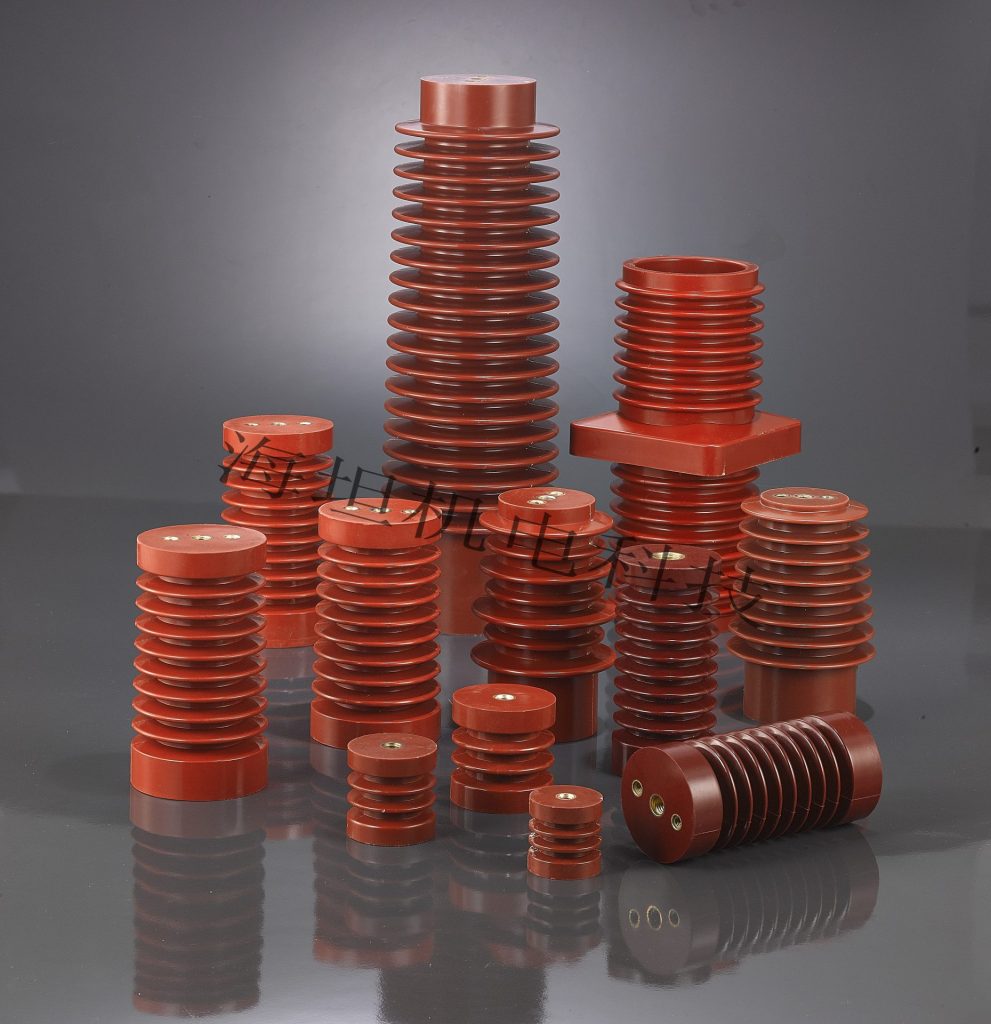
Thermal Resistance and Heat Dissipation in Low Voltage Busbar Clamp Insulators
ব্লগ | নিউজরুম | জানু. 14,2026
ভূমিকা
In low voltage power distribution systems, heat management is a critical factor affecting safety, reliability, and service life. Busbars carrying high currents naturally generate heat, and if this heat is not properly controlled, it can lead to insulation degradation, mechanical failure, and even fire hazards. Low voltage busbar clamp insulators play an essential role in ensuring both thermal resistance and effective heat dissipation within electrical systems.
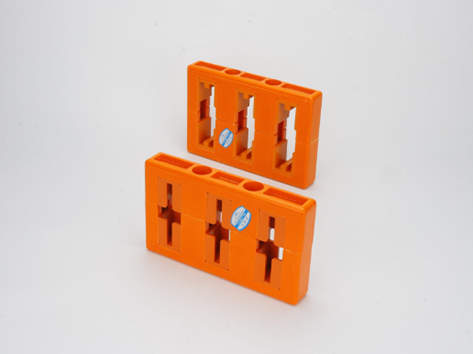
Heat Generation in Low Voltage Busbar Systems
Electrical current flowing through busbars generates heat due to electrical resistance. Additional heat sources include:
High current density and load fluctuations
Contact resistance at joints and connections
Short-term overload or fault conditions
Ambient temperature and poor ventilation
Without proper thermal management, excessive heat can compromise insulation performance and mechanical stability.
Role of Busbar Clamp Insulators in Thermal Management
Busbar clamp insulators are not only structural supports but also key components in managing heat within low voltage systems. Their design and material properties directly affect how heat is resisted, absorbed, and dissipated.
High Thermal Resistance Protects Insulation Integrity
Thermal resistance refers to a material’s ability to withstand elevated temperatures without degrading. High-quality busbar clamp insulators are designed to:
Maintain dielectric strength at high operating temperatures
Resist deformation or softening under thermal stress
Prevent insulation breakdown during overload conditions
Materials such as DMC (ময়দা ঢালাই যৌগ) exhibit excellent thermal stability, making them suitable for continuous operation in demanding electrical environments.
Stable Performance Under Thermal Cycling
Low voltage systems often experience repeated heating and cooling cycles caused by load variations. These thermal cycles can lead to:
Material fatigue
Cracking or warping
Loss of clamping force
Busbar clamp insulators with strong thermal resistance maintain mechanical strength and dimensional stability under thermal cycling, ensuring long-term reliability.
Supporting Efficient Heat Dissipation
While insulators are not primary heat conductors, their design influences heat dissipation in the system. Well-designed busbar clamp insulators:
Avoid trapping heat around the busbar
Allow adequate air circulation within panels
Maintain consistent contact pressure without restricting heat flow
Optimized geometry helps prevent localized hotspots that could accelerate insulation aging.
Preventing Heat-Induced Mechanical Failure
Excessive heat can weaken mechanical supports, leading to loosening or misalignment of busbars. High-performance busbar clamp insulators:
Retain mechanical strength at elevated temperatures
Resist creep and deformation
Keep busbars securely positioned even under thermal stress
This mechanical stability is essential for preventing secondary failures caused by heat-induced movement.
Reducing Fire and Arc Risks
Heat accumulation increases the risk of insulation failure, arcing, and fire. Busbar clamp insulators with good thermal resistance and arc resistance:
Reduce the likelihood of surface tracking
Prevent ignition caused by insulation breakdown
Enhance overall fire safety in electrical enclosures
Materials like DMC are particularly valued for their flame-retardant and arc-resistant properties.
Importance of Material Selection
The thermal performance of busbar clamp insulators depends heavily on material choice. Compared to conventional plastics, advanced composite materials offer:
Higher heat deflection temperatures
Better resistance to thermal aging
Improved safety margins under overload conditions
Selecting the right material ensures stable performance across the full operating temperature range.
Applications Where Thermal Performance Matters Most
Thermal resistance and heat dissipation are especially critical in:
Low voltage switchgear and distribution boards
Motor control centers (MCCs)
High-current industrial panels
Renewable energy and energy storage systems
In these applications, effective thermal management directly impacts system uptime and safety.
উপসংহার
Thermal resistance and heat dissipation are essential performance characteristics of low voltage busbar clamp insulators. By withstanding high temperatures, maintaining mechanical stability, and supporting efficient heat management, these insulators help protect electrical systems from overheating, insulation failure, and fire hazards.
For engineers and system designers, choosing busbar clamp insulators with proven thermal performance is a key step toward building safer, more reliable, and longer-lasting low voltage power systems.
FAQ: Thermal Resistance and Heat Dissipation in Low Voltage Busbar Clamp Insulators
1. Why is thermal resistance important for busbar clamp insulators?
Thermal resistance ensures that busbar clamp insulators can withstand high operating temperatures and short-term overloads without losing their insulating or mechanical properties. Good thermal resistance helps prevent insulation breakdown, deformation, and system failures caused by overheating.
2. How does heat affect the performance of busbar clamp insulators?
Excessive heat can lead to reduced dielectric strength, material aging, mechanical deformation, and loss of clamping force. Over time, this increases the risk of short circuits, arcing, and equipment damage if thermal performance is insufficient.
3. Do busbar clamp insulators help dissipate heat?
While busbar clamp insulators are not primary heat conductors, their design and geometry influence airflow and heat distribution within electrical panels. Properly designed insulators help avoid heat accumulation and localized hotspots around the busbar.
4. Which materials offer the best thermal resistance for low voltage busbar clamp insulators?
Advanced composite materials such as DMC (ময়দা ঢালাই যৌগ) provide excellent thermal stability, high heat deflection temperature, and strong resistance to thermal aging, making them ideal for high-current low voltage applications.
5. Can busbar clamp insulators withstand thermal cycling?
Yes. High-quality busbar clamp insulators are designed to maintain mechanical strength and dimensional stability under repeated heating and cooling cycles, reducing the risk of cracking, warping, or loosening over time.
6. How does thermal performance relate to fire safety?
Good thermal resistance and arc resistance reduce the likelihood of insulation failure, surface tracking, and ignition. This significantly improves fire safety in low voltage panels and switchgear operating under high thermal stress.
7. Are thermal-resistant busbar clamp insulators necessary for high-current systems?
Absolutely. In high-current or compact installations, heat generation is more intense. Thermal-resistant busbar clamp insulators provide a wider safety margin, ensuring reliable operation and longer service life under demanding conditions.
--- শেষ ---
 ই-মেইল: [email protected]
  নং 20 লিঙ্গিউন রোড, ডংফেং
ইন্ডাস্ট্রিয়াল জোন, লিউশি টাউন, ইউকিং
শহর, ঝেজিয়াং প্রদেশ

হোয়াটসঅ্যাপ

© কপিরাইট 2024 China Haitan Electromechanical Technology Co., Ltd. সর্বস্বত্ব সংরক্ষিত৷দ্বারা সমর্থন: JUNJ গোপনীয়তা নীতি
 Bengali
  English (United States)
  English (South Africa)
  Arabic
  Belarusian
  Japanese
  Kazakh
  Korean
  Myanmar
  Russian
  Thai
Thai  Ukrainian
  Uzbek
Uzbek  Vietnamese
  Chinese