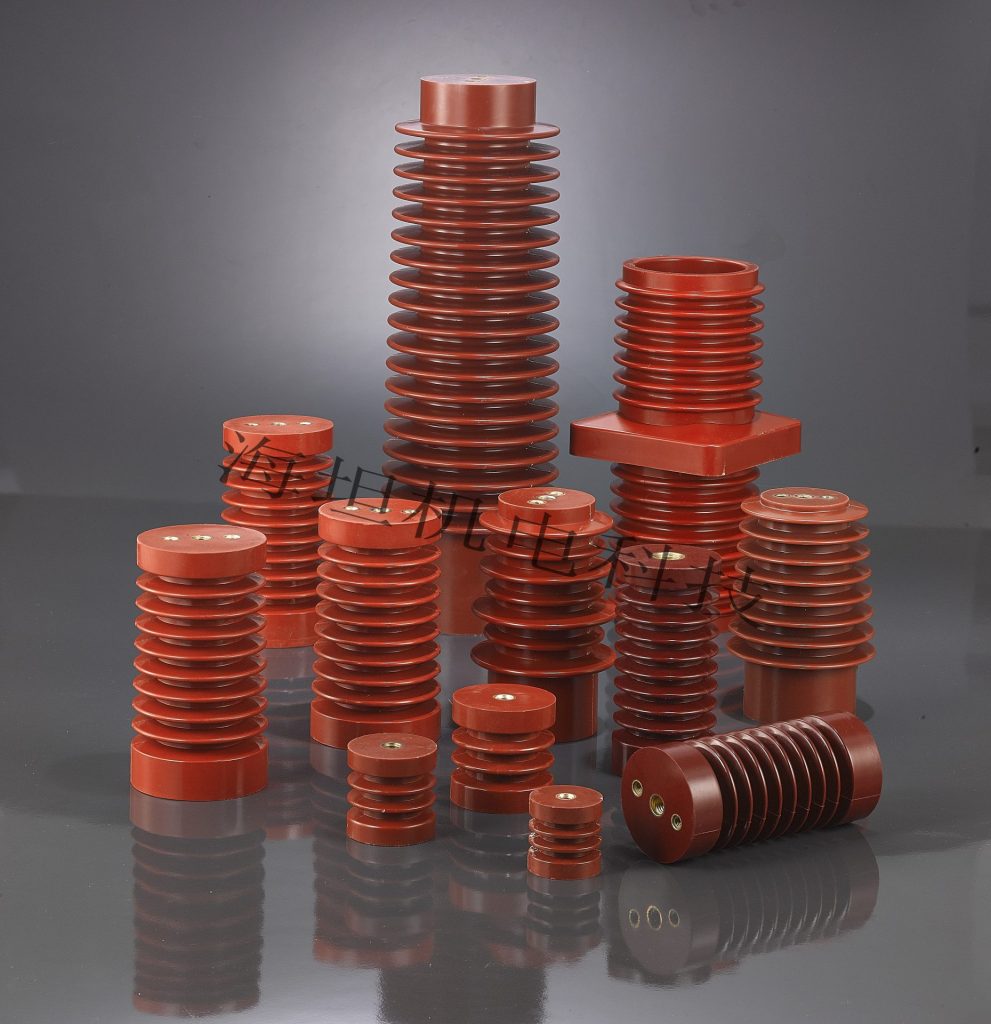
Why BMC and SMC Materials Make EL Busbar Supports Ideal for Distribution Boxes
ব্লগ | নিউজরুম | জুলাই 01,2026
If you design, build, or specify parts for low-voltage distribution boxes, you already know that the busbar support you choose can make or break the safety and lifespan of your panel. You need a component that holds copper bars firmly in place, resists arcing under fault conditions, and keeps performing after years of heat cycling and vibration. That’s exactly why EL busbar support made from BMC and SMC has become the go-to choice for distribution box manufacturers, panel builders, and OEM buyers around the world.
In this guide, you’ll learn what BMC and SMC actually are, how their properties translate into real electrical and mechanical performance, and why these two materials make EL busbar support one of the most reliable distribution line components your business can specify today.
What Is an EL Busbar Support, and Why Does Material Matter to Your Business?
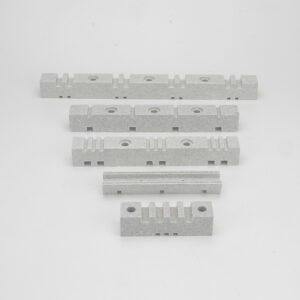
An EL busbar support (also called an EL insulator or busbar clamp) is the molded bracket that holds copper or aluminum busbars at a fixed spacing inside your distribution box, switchgear cabinet, or MNS panel. It does two jobs at once: it keeps live conductors mechanically secure, and it electrically isolates them from the enclosure and from each other.
Because it sits directly between live phases, the material it’s molded from is not a minor spec detail — it determines your panel’s dielectric strength, its behavior during a short-circuit event, and how long it stays safe in the field. If you want a deeper technical breakdown of busbar insulators across different series, our complete guide to busbar insulators is a useful companion read to this article.
BMC (Bulk Molding Compound): What It Brings to Your EL Busbar Support
BMC is a thermoset compound made of unsaturated polyester resin reinforced with chopped glass fibers, then compression-molded under heat and pressure. When your supplier uses BMC for an BMC insulator, you get:
- উচ্চ যান্ত্রিক শক্তি — BMC holds its shape under the clamping force and vibration your busbar frame experiences during installation and operation.
- Strong arc and tracking resistance — the glass-fiber-reinforced structure resists surface tracking, which matters a lot when phases are closely spaced.
- Excellent dimensional stability — thick-section parts (like busbar frame bodies) mold accurately and stay true over time, so your phase spacing doesn’t drift.
- Flame-retardant performance — most BMC formulations used for busbar support meet self-extinguishing requirements, which is essential for anything inside an enclosed distribution box.
BMC is generally the better choice when your part has thicker sections or complex geometry, since compression molding handles bulk material more predictably than thin-sheet processes.
SMC (Sheet Molding Compound): The Other Half of the Equation
SMC starts life as a resin-impregnated sheet reinforced with glass fiber, then compression-molded much like BMC — but the sheet format gives it different flow characteristics. When you specify an এসএমসি বাসবার সমর্থন for your project, you’re typically getting:
- A smoother, more consistent surface finish — useful for busbar supports that need tight tolerances or a cleaner cosmetic appearance.
- Higher flow into thin or complex sections — SMC fills detailed mold geometry well, which is why it’s popular for the EL and combined busbar support series.
- High dielectric strength and low water absorption — both matter for a SMC busbar support insulator that has to perform in humid or outdoor-adjacent cabinets.
- Good cost-efficiency at scale — SMC production suits high-volume runs, which keeps unit cost down for OEM and bulk orders.
In practice, many manufacturers — including Haitan — use BMC and SMC side by side across different product series, choosing the material that best fits each part’s thickness, tolerance, and mechanical load requirements.
BMC vs SMC: A Quick Comparison for Your Sourcing Team
| সম্পত্তি | বিএমসি | এসএমসি |
|---|---|---|
| Base form | Bulk / dough compound | Pre-formed sheet |
| Best for | Thicker, load-bearing sections | Thin, detailed, high-tolerance parts |
| Surface finish | ভাল | চমৎকার |
| অস্তরক শক্তি | উচ্চ | উচ্চ |
| শিখা প্রতিবন্ধকতা | Self-extinguishing grades available | Self-extinguishing grades available |
| Typical application | Busbar frame bodies, heavy-duty clamps | EL series busbar support, insulator caps |
Why BMC and SMC Make EL Busbar Support Ideal for Distribution Boxes
Now that you know how each material behaves individually, here’s why the combination matters specifically for your distribution box:
1. Electrical safety under real-world stress. Your distribution box needs to isolate live phases reliably even after years of thermal cycling. Both BMC and SMC deliver high dielectric strength and strong tracking resistance, which keeps creepage distances safe as required by IEC and GB standards.
2. Mechanical strength during fault conditions. A short-circuit event puts sudden, high electrodynamic force on your busbars. An EL busbar support molded from BMC or SMC holds its clamping force and shape instead of cracking or deforming, protecting the rest of your panel.
3. Flame retardancy that supports your compliance. Because BMC and SMC are inherently flame-retardant thermosets, your EL busbar support contributes to the overall fire-safety rating of your enclosure — a requirement your certification body will check closely.
4. Dimensional stability across your product’s service life. Humidity, temperature swings, and vibration don’t distort BMC or SMC parts the way they can distort some plastics. That means the phase spacing you designed for stays accurate for the life of your distribution box.
5. Consistent, cost-effective mass production. Both materials mold well at volume, which keeps your per-unit cost predictable — important if you’re sourcing distribution line components for OEM or ODM production runs.
Where Your Business Can Use BMC/SMC EL Busbar Support
Beyond standard distribution boxes, this same combination of materials shows up across the applications your customers are likely asking about:
- Low-voltage switchgear and কম ভোল্টেজ অন্তরক assemblies
- EV charging pile busbar assemblies
- Communication cabinets and 5G base station enclosures
- Photovoltaic and energy storage combiner/distribution panels
- MNS-type switchgear and panel boards
If your distribution box design also needs secure closures alongside your busbar support, it’s worth reviewing complementary distribution box lock options at the same time, since sourcing compatible components together simplifies your BOM.
How to Choose the Right SMC or BMC Busbar Support Insulator for Your Project
When your team is evaluating suppliers, use this checklist to keep your sourcing decision straightforward:
- Confirm your busbar dimensions — width, thickness, and how many bars per phase (single, double, triple, or quadruple row).
- Confirm phase count — single, three-phase, four-phase, or five-phase configurations all require different EL busbar support geometry.
- Confirm spacing — common spacings run 55, 80, 100, 110, 120, 130, 140, 150, 160, 175, and 180 mm.
- Match the material to the part — BMC for heavier, load-bearing sections; SMC for thinner, high-tolerance components.
- Check certifications — look for CQC, CE, ISO, and RoHS compliance on any SMC busbar support insulator you’re sourcing.
- Vet the manufacturer — production consistency matters as much as the datasheet. Our roundup of the শীর্ষ 10 বাসবার সমর্থন অন্তরক নির্মাতারা is a good starting point if you’re comparing suppliers.
Not sure which material or spacing fits your distribution box design? Our engineering team can review your drawing and recommend the right EL busbar support configuration to you.
Why Choose Haitan’s EL Busbar Support for Your Business
Selecting the right commercial supplier means balancing premium engineering with smooth, reliable logistics. When you source an EL type busbar support from Haitan, your business secures high-performance distribution line components backed by flexible commercial terms designed for modern industrial manufacturing. Haitan has manufactured BMC, SMC, and DMC insulators for the power industry since 1999. Your business benefits from over two decades of production experience, CQC/ISO/CE/RoHS-certified products.
Versatile Engineering Designed for Real-World Cabinets
Electrical setups are never one-size-fits-all. Our EL type busbar support frames are engineered to anchor single-phase, three-phase, and four-phase busbar systems seamlessly. Whether you are routing power through heavy-duty industrial switchgear or compact communication lines, this flexible design accepts busbar thicknesses ranging from 0mm all the way to 15mm. It is the ultimate utility component for heavy-duty power setups.
Rugged BMC and SMC Material Excellence
Safety in low-voltage distribution lines depends entirely on material strength. Every SMC busbar support insulator and BMC insulator we manufacture provides excellent dielectric isolation and robust mechanical defense against short-circuit forces. These premium molded resins will not crack, warp, or degrade when exposed to the high heat generated inside modern solar inverters, green power supplies, or crowded main distribution boxes.
FAQs
1. What is the difference between BMC and SMC busbar supports?
BMC is a bulk compression-molded compound best suited to thicker, load-bearing busbar frame bodies, while SMC is sheet-molded and better suited to thinner, high-tolerance, detailed parts. Both are glass-fiber-reinforced thermosets with similar electrical performance.
2. Is BMC or SMC better for high-voltage distribution boxes?
Both materials are primarily used in low-voltage applications. For higher-voltage requirements, your supplier should recommend a specific formulation and part design rather than relying on material type alone — talk to your engineering contact about your exact voltage class.
3. What certifications should an EL busbar support insulator have?
Look for CQC, CE, ISO, and RoHS certification as a baseline. These confirm the part has been tested for electrical safety, mechanical performance, and material compliance.
4. Can SMC busbar support insulators handle outdoor or humid environments?
Yes. SMC has low water absorption and good weather resistance, which is why it’s frequently specified for cabinets exposed to humidity, such as outdoor distribution boxes and EV charging enclosures.
5. What spacing sizes are available for EL busbar support?
Common industry spacings include 55, 80, 100, 110, 120, 130, 140, 150, 160, 175, and 180 mm, across single, three-phase, four-phase, and five-phase configurations.
6. How do BMC and SMC insulators perform under short-circuit fault current?
Both materials are engineered to hold their clamping force and dimensional shape under the electrodynamic forces generated during a short-circuit event, which helps protect the rest of your panel from mechanical failure.
7. Are BMC and SMC busbar supports flame retardant?
Most BMC and SMC formulations used for busbar support are self-extinguishing thermosets, contributing to the fire-safety rating of your overall enclosure. Always confirm the exact flame-retardant rating with your supplier’s datasheet.
8. What’s the typical lead time for OEM busbar support orders?
Lead time depends on order volume, tooling requirements, and customization level. Contact our team with your drawing or spec sheet, and we’ll confirm an accurate timeline for your project.
Ready to source reliable BMC and SMC EL busbar support for your distribution boxes? Let Haitan’s engineering team help you specify the right part for your project.
--- শেষ ---
 ই-মেইল: [email protected]
 নং 20 লিঙ্গিউন রোড, ডংফেং
ইন্ডাস্ট্রিয়াল জোন, লিউশি টাউন, ইউকিং
শহর, ঝেজিয়াং প্রদেশ

হোয়াটসঅ্যাপ

© কপিরাইট 2024 China Haitan Electromechanical Technology Co., Ltd. সর্বস্বত্ব সংরক্ষিত৷দ্বারা সমর্থন: JUNJ গোপনীয়তা নীতি
 Bengali
  English (United States)
  English (South Africa)
  Arabic
  Belarusian
  Japanese
  Kazakh
  Korean
  Myanmar
  Russian
  Thai
Thai  Ukrainian
  Uzbek
Uzbek  Vietnamese
  Chinese