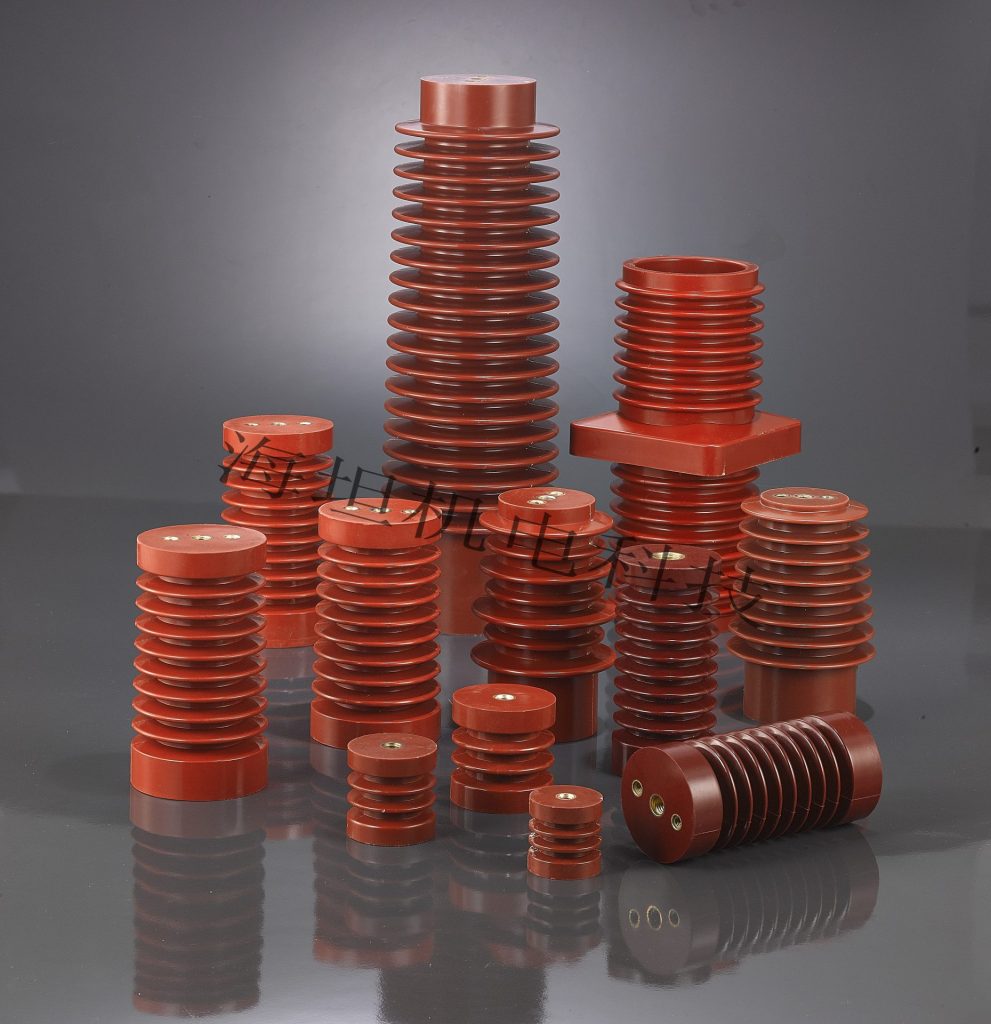
High-Performance DMC Insulators: A Lighter and Stronger Alternative to Ceramic Insulators
ভূমিকা
As industries continue to demand higher efficiency, improved reliability, and reduced equipment weight, traditional ceramic insulators are increasingly being replaced by advanced composite materials. Among these innovations, DMC (ডফ মোল্ডিং কম্পাউন্ড) ইনসুলেটর have emerged as a preferred solution for many electrical and industrial applications.
Offering excellent electrical insulation, superior mechanical strength, and a significantly lighter weight than ceramic alternatives, high-performance DMC insulators are becoming the material of choice for modern power distribution systems, switchgear, renewable energy equipment, and industrial machinery.
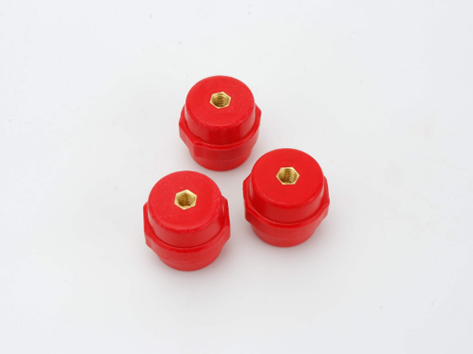
What Are DMC Insulators?
DMC (Dough Molding Compound) is a thermosetting composite material made from:
Unsaturated polyester resin
Glass fiber reinforcement
Mineral fillers
Specialized additives
Through compression molding, DMC can be manufactured into highly durable insulation components with excellent dimensional accuracy and consistent quality.
DMC অন্তরক ব্যাপকভাবে ব্যবহৃত হয়:
Low- and medium-voltage switchgear
Busbar support systems
বৈদ্যুতিক ক্যাবিনেট
Power distribution equipment
পুনর্নবীকরণযোগ্য শক্তি সিস্টেম
Industrial control equipment
Why Traditional Ceramic Insulators Face Limitations
Ceramic insulators have been used for decades because of their strong dielectric properties and heat resistance. However, modern industrial applications have exposed several limitations.
Heavy Weight
Ceramic components are significantly heavier than composite materials, increasing:
Equipment weight
Transportation costs
Installation complexity
Brittle Structure
Although ceramics have high compressive strength, they are prone to:
Cracking
Chipping
Breakage under impact or vibration
Difficult Manufacturing
Ceramic production often involves:
High-temperature firing
Longer production cycles
Greater energy consumption
These factors can increase manufacturing costs and reduce design flexibility.
Advantages of High-Performance DMC Insulators
Lightweight Design
One of the biggest advantages of DMC অন্তরক is their low weight.
Compared with ceramic insulators, DMC products can be significantly lighter while maintaining excellent structural integrity.
Benefits include:
Easier handling and installation
Reduced equipment weight
কম পরিবহন খরচ
Simplified maintenance
This is particularly valuable in switchgear, transportation systems, and renewable energy installations.
Superior Mechanical Strength
Modern DMC formulations reinforced with glass fibers provide exceptional mechanical performance.
Key characteristics include:
High compressive strength
Excellent tensile strength
Strong impact resistance
Superior vibration resistance
Unlike ceramic insulators, DMC materials are far less likely to crack under mechanical stress.
This makes them ideal for:
Railway systems
Industrial automation equipment
Heavy-duty electrical installations
Excellent Electrical Insulation Performance
High-performance DMC অন্তরক provide reliable electrical protection through:
High dielectric strength
Low leakage current
Excellent arc resistance
Stable insulation performance
These properties help ensure safe and reliable operation in demanding electrical environments.
Improved Resistance to Harsh Environments
Industrial equipment often operates in challenging conditions.
DMC অন্তরক offer strong resistance to:
Moisture
Dust
Industrial pollution
রাসায়নিক এক্সপোজার
UV radiation (with appropriate formulations)
This durability contributes to longer service life and reduced maintenance requirements.
Greater Design Flexibility
Compression molding technology allows DMC insulators to be produced in complex shapes and customized configurations.
Manufacturers can easily create:
Custom dimensions
Integrated mounting features
Specialized support structures
Industry-specific designs
This flexibility is often difficult and expensive to achieve with ceramic materials.
Cost-Effective Manufacturing
Compared with ceramic production, DMC molding offers several economic advantages:
Faster production cycles
Lower energy consumption
Reduced material waste
Consistent product quality
As a result, DMC insulators can provide an excellent balance between performance and cost.
DMC vs. Ceramic Insulators: A Comparison
| বৈশিষ্ট্য | ডিএমসি ইনসুলেটর | সিরামিক অন্তরক |
| ওজন | Lightweight | ভারী |
| ইমপ্যাক্ট রেজিস্ট্যান্স | চমৎকার | Relatively Brittle |
| যান্ত্রিক শক্তি | উচ্চ | High Compression Strength |
| Vibration Resistance | চমৎকার | পরিমিত |
| নকশা নমনীয়তা | উচ্চ | Limited |
| Manufacturing Efficiency | Fast | Slower |
| Customization Capability | চমৎকার | Limited |
| রক্ষণাবেক্ষণের প্রয়োজনীয়তা | কম | পরিমিত |
| Installation Convenience | Easy | More Difficult |
For many modern applications, DMC insulators provide a more practical and versatile solution.
Typical Applications of DMC Insulators
Switchgear and Power Distribution
DMC অন্তরক are widely used as:
বাসবার সমর্থন করে
Insulating spacers
Phase barriers
Structural insulation components
পুনর্নবীকরণযোগ্য শক্তি সিস্টেম
Applications include:
Solar power equipment
Wind turbine electrical systems
Battery energy storage systems
ইন্ডাস্ট্রিয়াল অটোমেশন
DMC insulators support:
Control panels
বৈদ্যুতিক ক্যাবিনেট
Automation equipment
Motor control systems
Transportation Electrification
Used in:
Railway systems
Metro infrastructure
Electric vehicle charging systems
Their lightweight and vibration-resistant characteristics make them especially valuable in transportation applications.
Why More Manufacturers Are Switching to DMC
Several industry trends are accelerating the transition from ceramic to DMC insulators:
Equipment Miniaturization
Modern systems require lighter and more compact components.
Increased Reliability Requirements
Manufacturers seek materials that resist cracking and mechanical damage.
Cost Optimization
DMC offers lower lifecycle costs through easier manufacturing and reduced maintenance.
Renewable Energy Expansion
Outdoor electrical equipment increasingly demands lightweight and durable insulation materials.
These factors continue to drive adoption across multiple industries.
Future Outlook for DMC Insulators
As electrical systems become more advanced, DMC technology continues to evolve.
Future developments may include:
Enhanced flame-retardant formulations
Improved thermal performance
Higher voltage capabilities
Sustainable and environmentally friendly materials
Smart insulation components with monitoring capabilities
These innovations will further strengthen DMC’s position as a leading alternative to traditional ceramic insulation.
উপসংহার
High-performance DMC অন্তরক are transforming the electrical insulation industry by providing a lighter, stronger, and more versatile alternative to ceramic insulators. Their superior mechanical durability, excellent electrical performance, environmental resistance, and cost-effective manufacturing make them an ideal choice for modern industrial applications.
From power distribution systems and renewable energy projects to transportation infrastructure and industrial automation, DMC insulators are helping engineers design safer, more efficient, and more reliable electrical systems.
As industries continue to prioritize performance, flexibility, and sustainability, the shift from ceramic to DMC insulation solutions is expected to accelerate in the years ahead.
FAQ
Are DMC insulators stronger than ceramic insulators?
In terms of impact resistance, vibration resistance, and overall toughness, DMC insulators generally outperform ceramic insulators. Ceramics may have excellent compressive strength but are more brittle.
Can DMC insulators replace ceramic insulators completely?
Many low- and medium-voltage applications have successfully transitioned to DMC insulators. However, specific high-voltage applications may still require ceramic or other specialized materials depending on operating conditions.
Are DMC insulators suitable for outdoor use?
Yes. Properly formulated DMC insulators can provide excellent resistance to moisture, UV exposure, and environmental contamination.
What industries commonly use DMC insulators?
Power distribution, renewable energy, industrial automation, transportation, telecommunications, and manufacturing industries widely use DMC insulation products.
Do DMC insulators require less maintenance?
Yes. Their durability, crack resistance, and environmental performance often result in lower maintenance requirements and longer service life compared with traditional ceramic solutions.
--- শেষ ---
 ই-মেইল: [email protected]
 নং 20 লিঙ্গিউন রোড, ডংফেং
ইন্ডাস্ট্রিয়াল জোন, লিউশি টাউন, ইউকিং
শহর, ঝেজিয়াং প্রদেশ

হোয়াটসঅ্যাপ

© কপিরাইট 2024 China Haitan Electromechanical Technology Co., Ltd. সর্বস্বত্ব সংরক্ষিত৷দ্বারা সমর্থন: JUNJ গোপনীয়তা নীতি
 Bengali
  English (United States)
  English (South Africa)
  Arabic
  Belarusian
  Japanese
  Kazakh
  Korean
  Myanmar
  Russian
  Thai
Thai  Ukrainian
  Uzbek
Uzbek  Vietnamese
  Chinese