
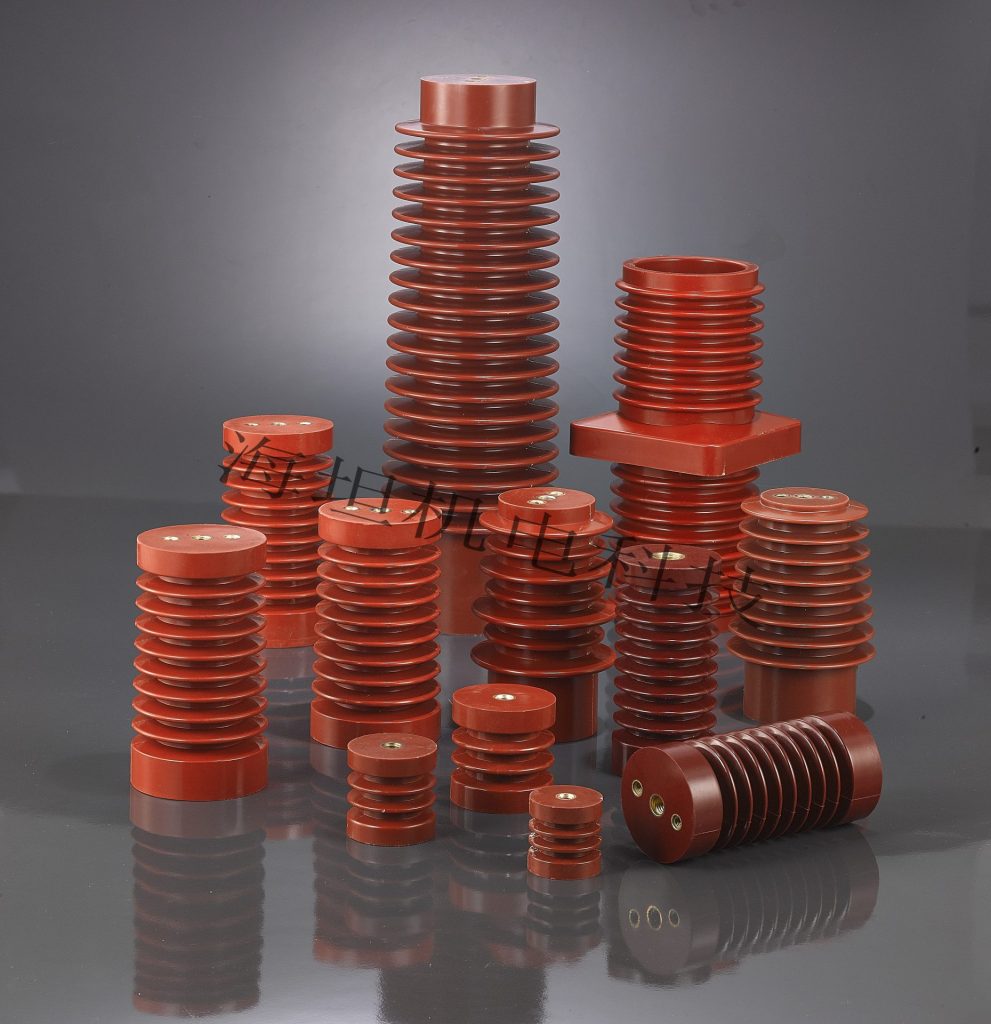
How Can DMC Insulators Adapt to the New Demands of New Energy and Smart Grid Development?
導入
With the rapid growth of renewable energy and the continuous evolution of smart grids, power systems are facing unprecedented technical challenges. Higher voltage levels, harsher operating environments, digital monitoring, and stricter safety standards are redefining the performance requirements for electrical insulation materials.
As a widely used composite insulating material, DMC (Dough Molding Compound) 絶縁体 are also undergoing transformation to meet these new demands.
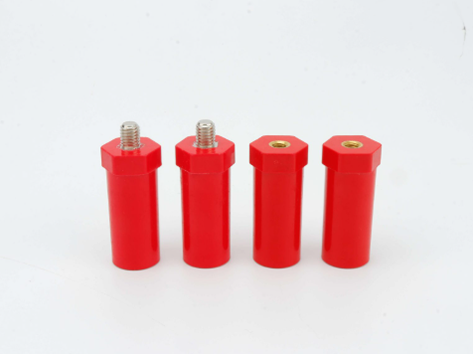
New Energy and Smart Grids: Changing Requirements for Insulation Materials
Impact of Renewable Energy Integration
The large-scale integration of solar, wind, and energy storage systems introduces:
Frequent voltage fluctuations
Higher switching frequencies
Outdoor and extreme environmental exposure
Insulators must maintain stable electrical and mechanical performance under dynamic loads and variable climates.
スマートグリッドの開発
Smart grids emphasize:
Digital monitoring and automation
Compact and modular equipment design
Higher reliability and lower maintenance costs
This creates demand for insulation materials that are lightweight, precise, durable, and compatible with intelligent systems.
Core Advantages of DMC Insulators in Modern Power Systems
DMCインシュレーター are formed from a thermosetting composite of polyester resin, glass fiber, fillers, and additives. Their inherent properties make them highly suitable for modern power applications.
Excellent Electrical Insulation Performance
High dielectric strength
Stable insulation resistance
Good arc and tracking resistance
These features help ensure safe operation in medium- and low-voltage systems used in renewable energy and smart substations.
High Mechanical Strength and Dimensional Stability
Reinforced glass fibers provide strong mechanical support
Low shrinkage ensures dimensional accuracy
This is especially important for compact switchgear, inverters, and intelligent distribution equipment.
Lightweight and Corrosion Resistance
Compared with traditional ceramic or metal-insulated structures, DMCインシュレーター offer:
Reduced equipment weight
Strong resistance to moisture, chemicals, and salt spray
This makes them ideal for offshore wind farms, coastal power stations, and outdoor photovoltaic systems.
Adapting DMC Insulators to New Energy Applications
Wind Power Systems
In wind turbines and wind power substations, DMCインシュレーター are used in:
Control cabinets
Terminal blocks
バスバーサポート
Their vibration resistance and mechanical stability help maintain reliable performance under long-term dynamic loads.
Photovoltaic and Energy Storage Systems
PV inverters and energy storage systems require insulation materials that can withstand:
High temperatures
DC voltage stress
Frequent on/off switching
Modified DMC formulations with enhanced heat resistance and flame retardancy can meet these requirements effectively.
Meeting Smart Grid Demands Through Material and Design Optimization
Enhanced Flame Retardancy and Environmental Compliance
モダンな DMCインシュレーター can be optimized to:
Meet UL94 V-0 flame retardant standards
Comply with RoHS and REACH regulations
This supports the sustainable and safe development of smart grids.
Precision Molding for Intelligent Equipment
DMC molding technology allows:
High-precision, complex structural designs
Integration with sensors, terminals, and monitoring components
This enables compact layouts and supports the trend toward intelligent, modular power equipment.
Long Service Life and Low Maintenance
Smart grids demand long-term stability and reduced downtime. DMC insulators provide:
Strong aging resistance
Stable performance under thermal cycling
This helps lower maintenance costs and improves overall system reliability.
Future Development Trends of DMC Insulators
To further adapt to new energy and smart grid development, DMC insulators are evolving in several directions:
Material innovation: Improved heat resistance, tracking resistance, and environmental adaptability
Functional integration: Compatibility with smart sensing and monitoring technologies
Sustainable manufacturing: Reduced environmental impact and improved recyclability
These advancements will continue to expand the application scope of DMC insulators in modern power systems.
結論
As new energy and smart grid technologies reshape the global power infrastructure, insulation materials must evolve accordingly. Thanks to their excellent electrical performance, mechanical strength, design flexibility, and environmental resistance, DMC insulators are well-positioned to meet these new demands.
Through continuous material optimization and application innovation, DMC insulators will play an increasingly important role in ensuring the safety, efficiency, and intelligence of future power systems.
よくある質問
What is a DMC insulator and why is it widely used in power systems?
A DMC insulator is an insulating component made from Dough Molding Compound, a thermosetting composite material reinforced with glass fibers. It is widely used in power systems due to its excellent electrical insulation performance, high mechanical strength, dimensional stability, and resistance to heat, moisture, and corrosion.
Are DMC insulators suitable for new energy applications such as solar and wind power?
Yes. DMC insulators are highly suitable for new energy systems. They can withstand voltage fluctuations, temperature changes, and harsh outdoor environments commonly found in solar photovoltaic systems, wind power installations, and energy storage equipment.
How do DMC insulators support smart grid development?
DMC insulators support smart grids by enabling compact equipment design, precise molding for intelligent components, long service life, and low maintenance requirements. Their stability and reliability help ensure continuous operation of automated and digitally monitored power systems.
Can DMC insulators meet flame retardant and environmental standards?
Modern DMC insulators can be formulated to meet international flame retardant standards such as UL94 V-0, as well as environmental regulations including RoHS そして REACH, making them suitable for sustainable and safe smart grid applications.
How do DMC insulators compare with ceramic insulators?
Compared with ceramic insulators, DMC insulators are lighter in weight, less brittle, more impact-resistant, and easier to mold into complex shapes. They are especially advantageous in compact switchgear, intelligent distribution systems, and modular power equipment.
Are DMC insulators suitable for outdoor and harsh environments?
Yes. DMC insulators offer good resistance to moisture, chemicals, UV exposure, and salt spray, making them suitable for outdoor installations, coastal areas, and industrial environments.
- - 終わり - -
 電子メール:
  東風市霊雲路20号

© Copyright 2024 China Haitan Electromechanical Technology Co., Ltd. 全著作権所有。サポート:JUNJ プライバシーポリシー
 Japanese
  English (United States)
  English (South Africa)
  Arabic
  Belarusian
  Bengali
  Kazakh
  Korean
  Myanmar
  Russian
  Thai
Thai  Ukrainian
  Uzbek
Uzbek  Vietnamese
  Chinese