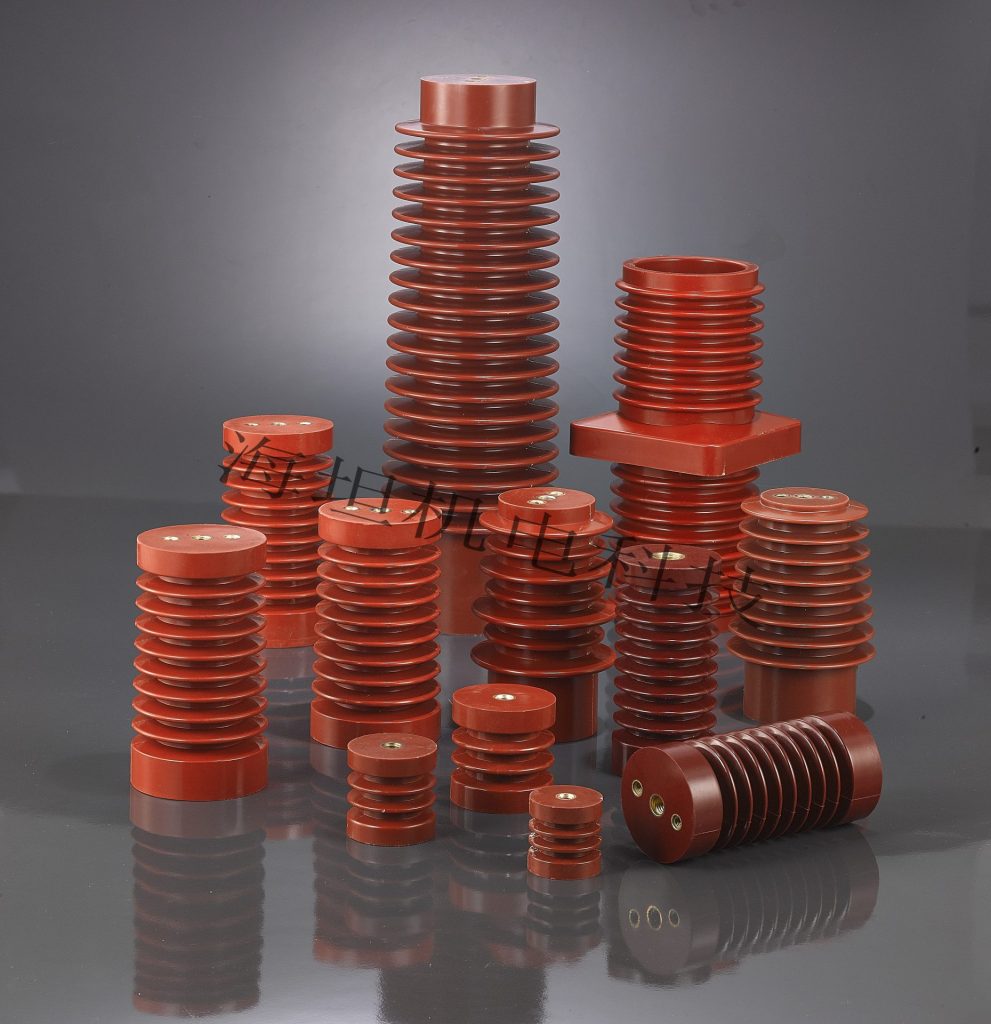
BMC LV Insulators: An Impregnable Shield Against Coastal Corrosion
Қожалдама | Жаңалықтар | Июл 13,2026
If your business operates busbar systems, switchgear, or power distribution equipment anywhere near the coast, you already know the enemy: salt fog, humidity, and constant temperature swings. Ordinary insulation materials crack, track, and fail long before their rated service life is up — and every failure means downtime, safety risk, and unplanned maintenance costs for your team. This is exactly why BMC LV insulators have become the standard choice for engineers and procurement teams who need components that simply keep working, year after year, in the harshest coastal and marine environments.
In this guide, you’ll get a complete, practical breakdown of what BMC low voltage insulators are, why they outperform traditional materials in corrosive environments, what specifications to check before you source them, and how to choose the right supplier for your project.
What Are BMC LV Insulators?
BMC stands for Bulk Molding Compound — a thermosetting composite made from unsaturated polyester resin, glass fiber reinforcement, and mineral fillers, then compression-molded under high heat and pressure. A BMC insulator uses this material to physically support and electrically isolate busbars, terminals, and conductors inside low voltage electrical systems. As a type of Төмен вольтты оқшаулағыш, BMC components typically operate in systems rated up to 1000V AC, covering the vast majority of industrial switchgear, distribution panels, and power equipment your business likely relies on.
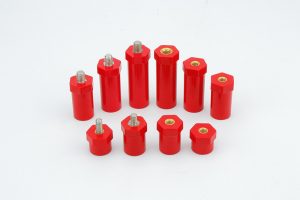
You’ll also see BMC insulators referred to as a BusBar қолдау көрсеткіші, since their primary job is mechanically holding busbars in fixed position while preventing current leakage between phases. If you want a deeper technical comparison of the raw materials themselves, our earlier article on BMC and SMC busbar insulator support material properties and performance breaks down exactly how BMC compares to SMC on strength, thermal stability, and cost.
Why Coastal Environments Destroy Ordinary Insulators
If your facility sits within a few kilometers of the coast, your equipment is exposed to airborne salt particles, high relative humidity, UV radiation, and rapid condensation cycles — sometimes all in the same day. For your business, this combination creates three specific failure modes in cheaper or unsuitable insulation materials:
- Electrical tracking: Salt deposits on the insulator surface create conductive paths, gradually carbonizing the material and leading to flashover or complete failure.
- Material degradation: UV exposure and moisture cause porcelain glazes to crack and many plastics to become brittle, chalky, or discolored within a few years.
- Corrosion-driven mechanical failure: Metal fittings and mounting hardware corrode, loosening the mechanical grip that keeps busbars properly aligned and supported.
These aren’t theoretical risks — they’re the leading causes of unplanned switchgear maintenance in coastal industrial zones, ports, offshore platforms, and marine infrastructure projects. If your team has already dealt with premature insulator failure, you know how disruptive and costly it can be to replace components mid-project.
How BMC Insulators Resist Coastal Corrosion
This is where BMC LV insulators earn their reputation as a genuinely “impregnable” solution for your coastal or marine-grade electrical systems. Unlike porcelain or untreated plastics, BMC’s composite structure is engineered specifically to withstand aggressive environmental stress:
- Hydrophobic surface: BMC naturally resists water absorption, so salt-laden moisture beads and runs off instead of soaking into the material and creating conductive tracking paths.
- High tracking and arc resistance: The resin-glass fiber matrix delivers excellent CTI (Comparative Tracking Index) performance, keeping your equipment safe even under repeated surface contamination.
- UV and weathering stability: BMC resists chalking, cracking, and color fade far longer than standard thermoplastics, which matters enormously for outdoor or open-air coastal installations.
- Corrosion-free composition: Because BMC contains no metal in its molded body, it simply cannot rust — eliminating one of the most common coastal failure points outright.
- Dimensional stability: BMC holds its shape and mechanical strength across wide temperature swings, so your busbars stay properly aligned and supported through seasonal changes.
On top of environmental resistance, most BMC LV insulators also achieve a UL94 V-0 flammability rating, meaning they self-extinguish and produce minimal smoke if exposed to flame — a critical safety feature for enclosed switchgear. You can review the technical details in our article on how BMC insulators deliver UL94 V-0 self-extinguishing and low-smoke performance.
BMC vs. Other Insulator Materials: A Side-by-Side Comparison
To help your team evaluate options quickly, here’s how BMC electrical insulators stack up against the other materials commonly used for busbar support in coastal applications:
| Мүлік | BMC изоляторы | Фарфор | SMC оқшаулағыш | Стандартты эпоксид |
|---|---|---|---|---|
| Salt Spray Resistance | Үздік | Good (glaze can crack) | Өте жақсы | Байсалды |
| Әсерге қарсы тұрақтылық | Биік | Low (brittle, chips easily) | Биік | Байсалды |
| Flammability Rating | UL94 V-0 | Non-flammable | UL94 V-0 | Varies by grade |
| Салмақ | Lightweight | Ауыр | Lightweight | Lightweight |
| Typical Coastal Lifespan | 15–20+ years | 10-15 жыл | 15–18 years | 5–8 years |
| Cost Efficiency | High long-term value | Higher install cost | High long-term value | Lower upfront, higher replacement cost |
Key Specifications to Check Before You Source BMC Insulators
Not every BMC electrical insulator on the market is built to the same standard. Before your business commits to a supplier, make sure the datasheet clearly specifies the following:
- Rated voltage and BIL (Basic Insulation Level): Confirm it matches your system’s operating and impulse withstand requirements.
- CTI / tracking resistance rating: Higher CTI values mean better performance in salt-contaminated environments.
- Mechanical load rating: Especially important for busbar support insulators carrying heavy copper or aluminum bars.
- Flammability certification: Look for UL94 V-0 or equivalent documentation, not just a verbal claim.
- Operating temperature range: Make sure it covers both your climate extremes and any internal panel heat buildup.
- Dimensional and mounting compatibility: Confirm hole spacing, thread type, and creepage/clearance distances fit your existing panel design.
Where BMC LV Insulators Are Used
Because of their corrosion resistance and mechanical strength, BMC insulators show up across a wide range of coastal and marine-adjacent applications your business may already be working in:
- Low voltage switchgear and switchboards in port and shipyard facilities
- Busbar trunking systems in coastal industrial and power distribution plants
- Offshore wind farm substations and onshore converter stations
- Desalination plants and marine processing facilities
- Outdoor electrical enclosures exposed to salt fog and high humidity
How to Choose the Right Supplier for Your Business
Sourcing decisions on electrical insulation components carry real consequences for your project timelines and long-term reliability, so it pays to be selective. Look for a manufacturer with in-house compression molding capability (rather than a trading company reselling generic stock), documented third-party test reports, and a track record supplying coastal or marine-grade projects specifically. If you’d like a broader view of the supplier landscape before you shortlist vendors, our roundup of the Топ-10 BusBar оқшаулағыш өндірушілерді қолдайды is a useful starting point for your evaluation.
Ready to protect your electrical systems from coastal corrosion?
ЖҚС
What is the difference between a BMC insulator and an SMC insulator?
Both are glass-fiber reinforced thermosetting composites, but BMC uses a bulk, dough-like compound ideal for smaller, more intricate molded shapes, while SMC uses pre-formed sheets better suited to larger, flatter components. Both offer strong corrosion and flame resistance for busbar support applications.
How long do BMC LV insulators last in coastal conditions?
With proper specification and installation, BMC insulators typically deliver 15–20+ years of reliable service even in high-salinity, high-humidity coastal environments, significantly outlasting untreated plastics and many porcelain alternatives.
Are BMC insulators suitable for offshore and marine platforms?
Yes. Their hydrophobic, non-metallic composition and high tracking resistance make BMC insulators a preferred choice for offshore substations, marine switchgear, and other applications with constant salt fog exposure.
What voltage range do BMC LV insulators cover?
Most BMC low voltage insulators are rated for systems up to 1000V AC, covering the majority of industrial and commercial busbar and switchgear applications your business is likely to encounter.
Do BMC insulators require special maintenance?
No. Unlike porcelain, BMC insulators generally require minimal maintenance — periodic visual inspection and occasional cleaning of surface contaminants is typically sufficient to maintain performance over their service life.
What certifications should I request from a BMC insulator supplier?
Ask for UL94 flammability test reports, CTI/tracking resistance data, mechanical load test results, and, where applicable, salt spray or accelerated weathering test data relevant to your specific application.
How do BMC insulators perform in fire conditions?
Quality BMC insulators are formulated to achieve a UL94 V-0 rating, meaning they self-extinguish quickly and generate low smoke, helping protect your equipment and personnel in the event of an electrical fault.
What is the typical lead time for bulk BMC insulator orders?
Lead times vary by order volume and customization level, but standard catalog items are typically available faster than fully custom-molded components. It’s best to confirm current lead times directly with your supplier’s sales team.
Are BMC insulators more cost-effective than porcelain long-term?
In most coastal applications, yes. While upfront unit costs can be comparable, BMC’s longer service life, lower breakage rates, and reduced maintenance needs typically result in a lower total cost of ownership over the equipment’s lifetime.
Give your electrical systems corrosion protection they can rely on for decades.
--- СОҢЫ ---
 E-mail: [email protected]
 №20 Лингюн жол, донгфенг
Индустриалды аймақ, Лиуши қаласы, YueQing
Қалалық, Жезеген провинциясы


Махат
© Copyright 2024 China Haitan электромеханикалық технологиясы Co., Ltd. Барлық құқықтар қорғалған.Қолдау: junj Құпиялылық саясаты
 Kazakh
  English (United States)
  English (South Africa)
  Arabic
  Belarusian
  Bengali
  Japanese
  Korean
  Myanmar
  Russian
  Thai
Thai  Ukrainian
  Uzbek
Uzbek  Vietnamese
  Chinese