
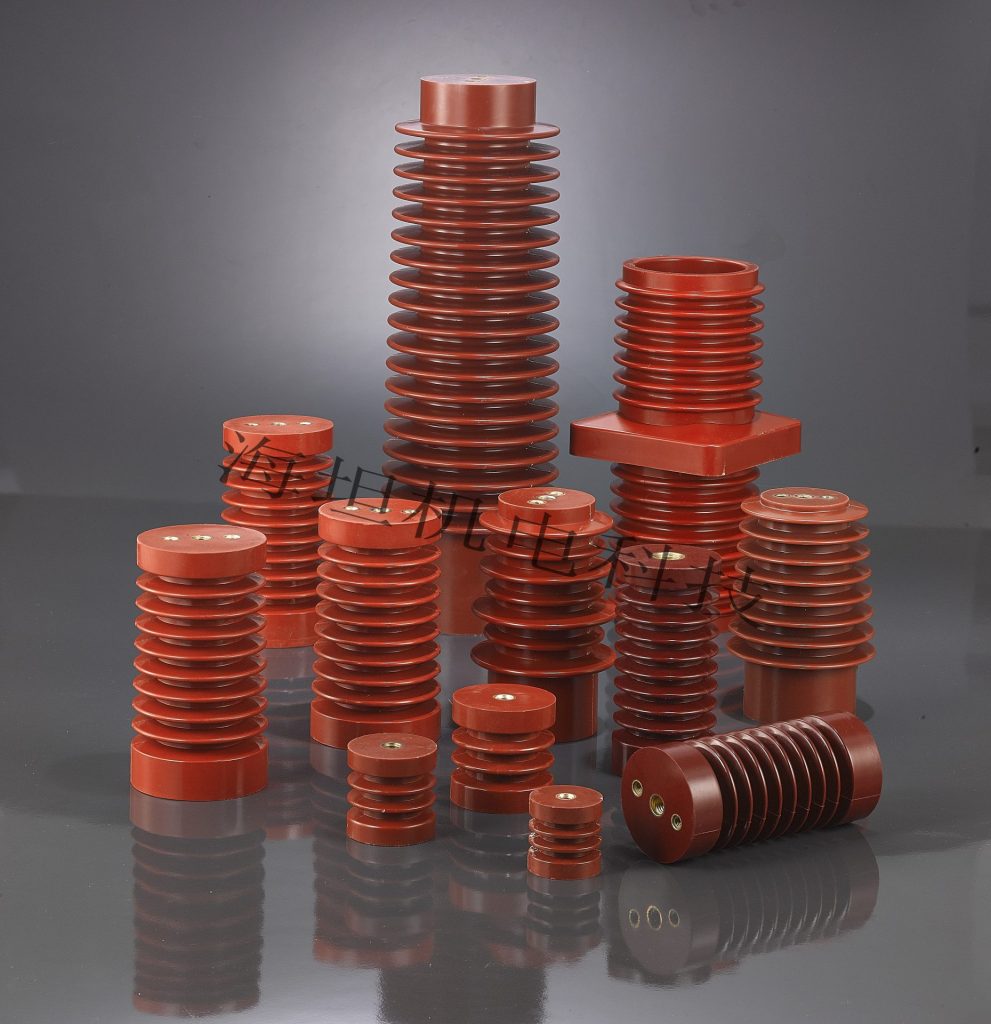
How Standoff Epoxy Busbar Support Insulators Improve Transformer Safety
Қожалдама | Жаңалықтар | Мар 03,2026
Кіріспе
In modern power distribution systems, transformer reliability and operational safety are critical for maintaining stable electricity supply. Inside transformers and switchgear assemblies, busbars carry large electrical currents between components. These conductive bars must be securely supported and properly insulated to prevent electrical faults, overheating, or mechanical failure.
This is where standoff epoxy busbar support insulators play a vital role. These components are designed to mechanically support busbars while providing strong electrical insulation, ensuring safe operation even in high-voltage and high-current environments.
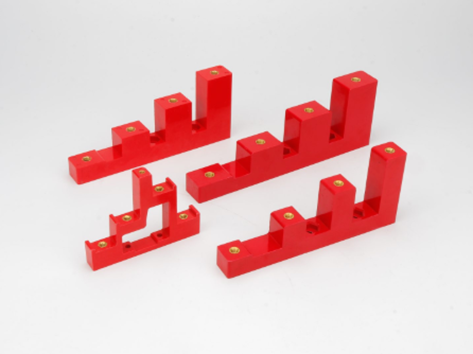
Providing Reliable Electrical Insulation
One of the primary functions of standoff epoxy busbar support insulators is to prevent electrical leakage and short circuits between conductive components.
Busbars inside transformers often operate at medium or high voltage levels, and if they come into contact with grounded structures or other conductors, serious faults may occur.
Epoxy support insulators help by:
Isolating busbars from grounded metal frames
Maintaining proper creepage and clearance distances
Preventing flashover between phases
Because epoxy resin has excellent dielectric strength, it can withstand high electrical stress without breaking down, making it ideal for transformer insulation systems.
Enhancing Mechanical Stability of Busbars
Transformers experience various mechanical stresses, especially during short circuits or sudden load changes. When large currents flow through busbars, strong electromagnetic forces can cause them to vibrate or shift.
Standoff epoxy busbar support insulators improve safety by:
Firmly fixing busbars in place
Withstanding high mechanical loads
Preventing busbar displacement or deformation
This mechanical stability ensures that conductors remain correctly aligned, reducing the risk of electrical contact or insulation failure.
Improving Heat Resistance and Thermal Stability
Transformers generate significant heat during operation. Busbars carrying high currents may experience temperature rise due to electrical resistance.
Epoxy busbar support insulators are designed to perform reliably under elevated temperatures by offering:
Жақсы Жылу тұрақтылығы
Resistance to heat deformation
Long-term performance under continuous load
Many epoxy insulators are manufactured with glass fiber reinforcement, which further improves heat resistance and mechanical strength. This helps maintain safe insulation even in demanding industrial environments.
Preventing Electrical Flashover and Arcing
Electrical flashover and arcing are serious hazards in transformer systems. These events can cause:
Equipment damage
Power outages
Fire risks
Standoff epoxy insulators reduce these risks by maintaining stable insulation barriers between conductors and grounded structures.
Their smooth surface and optimized design help:
Reduce contamination buildup
Improve resistance to surface tracking
Maintain insulation integrity over time
As a result, transformers equipped with high-quality epoxy insulators experience lower risk of insulation failure.
Supporting Compact and Efficient Transformer Design
Modern transformers and switchgear are increasingly designed to be compact and space-efficient. In such designs, busbars must be arranged carefully without compromising insulation distances.
Standoff epoxy busbar support insulators allow engineers to:
Securely position busbars in limited spaces
Maintain required insulation clearances
Optimize internal equipment layout
Because epoxy materials combine high mechanical strength with excellent insulation, they enable safer and more efficient equipment designs.
Ensuring Long-Term Operational Reliability
Another important safety benefit is long service life with minimal maintenance. High-quality epoxy busbar insulators offer:
Strong resistance to moisture and chemicals
Excellent aging resistance
Stable performance in harsh environments
These properties help maintain transformer safety over many years of operation, reducing the likelihood of unexpected failures.
Қорытынды
Standoff epoxy busbar support insulators are essential components in transformer systems. By providing strong electrical insulation, mechanical support, and thermal stability, they help ensure safe and reliable operation of power equipment.
Their ability to prevent short circuits, reduce mechanical stress, and maintain proper insulation distances makes them a key part of modern transformer design. As power systems continue to evolve toward higher efficiency and compact structures, epoxy busbar support insulators will remain crucial for improving transformer safety and long-term reliability.
Жиі қойылатын сұрақтар
1. What is a standoff epoxy busbar support insulator?
A standoff epoxy busbar support insulator is a component used in transformers and switchgear to support busbars mechanically while providing electrical insulation between conductive parts and grounded structures.
2. Why is epoxy used for busbar support insulators?
Epoxy resin offers high dielectric strength, good mechanical durability, and excellent heat resistance, making it suitable for demanding electrical applications.
3. Where are busbar support insulators commonly used?
They are widely used in power transformers, switchgear panels, distribution boards, and substations to support and insulate current-carrying busbars.
4. How do busbar support insulators prevent electrical faults?
They maintain proper clearance and creepage distances, preventing direct contact between conductors and grounded components, which reduces the risk of short circuits and flashover.
5. What factors should be considered when selecting a busbar support insulator?
Important factors include voltage rating, mechanical strength, thermal performance, installation size, and environmental conditions.
--- СОҢЫ ---
 E-mail: [email protected]
  №20 Лингюн жол, донгфенг
Индустриалды аймақ, Лиуши қаласы, YueQing
Қалалық, Жезеген провинциясы


Махат
© Copyright 2024 China Haitan электромеханикалық технологиясы Co., Ltd. Барлық құқықтар қорғалған.Қолдау: junj Құпиялылық саясаты
 Kazakh
  English (United States)
  English (South Africa)
  Arabic
  Belarusian
  Bengali
  Japanese
  Korean
  Myanmar
  Russian
  Thai
Thai  Ukrainian
  Uzbek
Uzbek  Vietnamese
  Chinese