
Cable Clamp: A Buyer’s Guide to PA6 Nylon 3-Core Clamps
Қожалдама | Жаңалықтар | Ноя 02,2026
If you are sourcing cable clamps for switchgear cabinets, solar arrays, or installations anywhere near the coast, the material decision matters more than the unit price. A nylon 3-core cable clamp moulded from PA6 grips three single-core cables in one fixing, shrinks your bill of materials, and never rusts — even where salt fog and chemical vapour quietly destroy steel hardware. This guide walks you through how PA6 cable clamps perform, where they outperform metal, and what your procurement team should check before placing a bulk order.
What Is a Nylon 3-Core Cable Clamp?
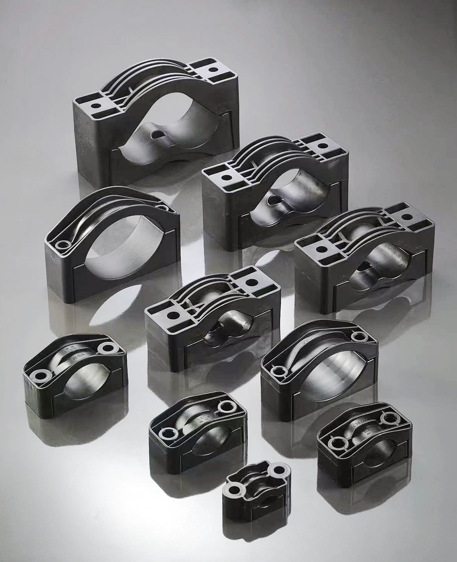
A 3-core cable clamp is a two-piece, saddle-style fixing that secures a bundle of three single-core cables — the classic triplex arrangement you see in distribution boards, PV string wiring, and control panels. Instead of driving three separate saddles and twelve screw points, you close one clamp over the bundle and fasten two screws. The body is injection-moulded from PA6 (polyamide 6, commonly known as nylon), with moulded ribs inside that hold each core in its own channel without cutting into the insulation.
For your business, the practical difference shows up immediately on site: fewer parts in the kit bag, fewer fixings per metre of route, and a tidier panel that passes inspection the first time. If you are reorganising cable routes inside enclosures, you will find the same logic applied across cable organization solutions using wire holders in industrial installations.
Why PA6 Nylon Delivers the Toughness Your Installations Need
PA6 is not ordinary plastic. Polyamide 6 is an engineering thermoplastic valued for exactly the properties a cable clamp needs in daily service: high impact toughness (it absorbs knocks and vibration instead of cracking), strong abrasion resistance (the ribs can press on the cable jacket without wearing through), and good resistance to oils, alkalis and many solvents. In practice, that means a clamp you tighten once stays tight — it does not turn brittle at low temperatures or creep loose under vibration the way more rigid, cheaper plastics can.
When you evaluate suppliers, ask for the test data behind the grade: flammability classification under UL 94 (standard PA6 is typically HB; flame-retardant grades reach V-0), UV weathering stability per ISO 4892 / ASTM G154 for outdoor use, and RoHS / REACH compliance documentation. A manufacturer that can hand you these reports without being chased is telling you something important about its quality system — and it costs you nothing to ask.
PA6 Nylon vs. Metal Cable Clamps: A Side-by-Side Comparison
Metal clamps look stronger on a spec sheet, but strength is not the only property that matters once the cabinet is energised and the environment turns hostile. Here is how the two materials compare where it counts:
| Мүлік | PA6 Nylon Cable Clamp | Metal (Steel) Cable Clamp |
|---|---|---|
| Corrosion resistance | Immune to rust; unaffected by salt fog and humidity | Rusts unless galvanised or stainless; coating damage exposes bare steel |
| Электр оқшаулау | Inherently non-conductive; no stray paths to earth | Conductive; can abrade insulation and create fault paths |
| Toughness & vibration | High impact strength; flexible ribs grip without cracking | Rigid; transmits vibration, edges can bite into cable jackets |
| Салмақ | Light — lowers shipping cost and panel load | Heavier per fixing point |
| Fixings per 3-core bundle | One clamp, two screws | Typically three saddles, up to twelve screws |
| Best-fit environment | Coastal, chemical plants, humid indoor, marine-adjacent sites | Dry indoor locations; high-temperature points beyond PA6 limits |
One honest caveat: for fixing heavy busbars rather than cable bundles, you still need a dedicated busbar clamp engineered for conductor weight and short-circuit forces — the nylon cable clamp is for cables, not busbars. Knowing that boundary keeps your BOM accurate and your inspectors happy.
One Clamp Replaces Three: Fewer Parts, Fewer Hours
The commercial argument for a 3-core clamp is arithmetic, not marketing. Every cable route in a triplex arrangement that once needed three saddles, six to twelve screws and three part numbers now needs one clamp and two screws. Multiply that across a 200-cable distribution cabinet or a utility-scale PV array, and you are looking at a dramatically shorter installation time, a smaller fastener inventory, and fewer SKUs for your warehouse to forecast and stock.
Labour is the bigger half of the saving. On most sites, the electrician’s hourly rate dwarfs the clamp price, so cutting fixing points per bundle by two-thirds cuts real money — not rounding errors. Your procurement team also benefits from consolidated ordering: one moulded part to quality-check, one reorder level to manage, and one supplier conversation instead of three. In B2B purchasing terms, that is fewer failure points across your entire supply chain.
Built for Salt Fog, Chemical Vapour and Humidity
If your projects touch seaside substations, wastewater plants, electroplating shops, or any facility where the air itself is corrosive, metal clamps are a maintenance liability. Galvanised steel starts sacrificing its coating the moment salt mist settles in; stainless steel resists it, at several times the price. A PA6 nylon clamp sidesteps the problem entirely: there is no coating to breach and no ferrous base to rust, so the clamp you install on day one is structurally the same clamp years later.
Non-conductivity is the quiet second benefit. Because nylon is an insulator, the clamp cannot bridge a damaged cable jacket to an earthed enclosure — a real failure mode with metal saddles that abrade insulation over time. Salt-spray endurance is a standard part of corrosive-environment qualification in this industry (typically verified by ASTM B117 salt fog testing), and the same discipline applies to your other cabinet hardware: see how low-voltage insulators stand up to coastal corrosion when the whole panel has to survive the same climate.
Beyond Cable Clamps: Source Insulators from the Same Supplier
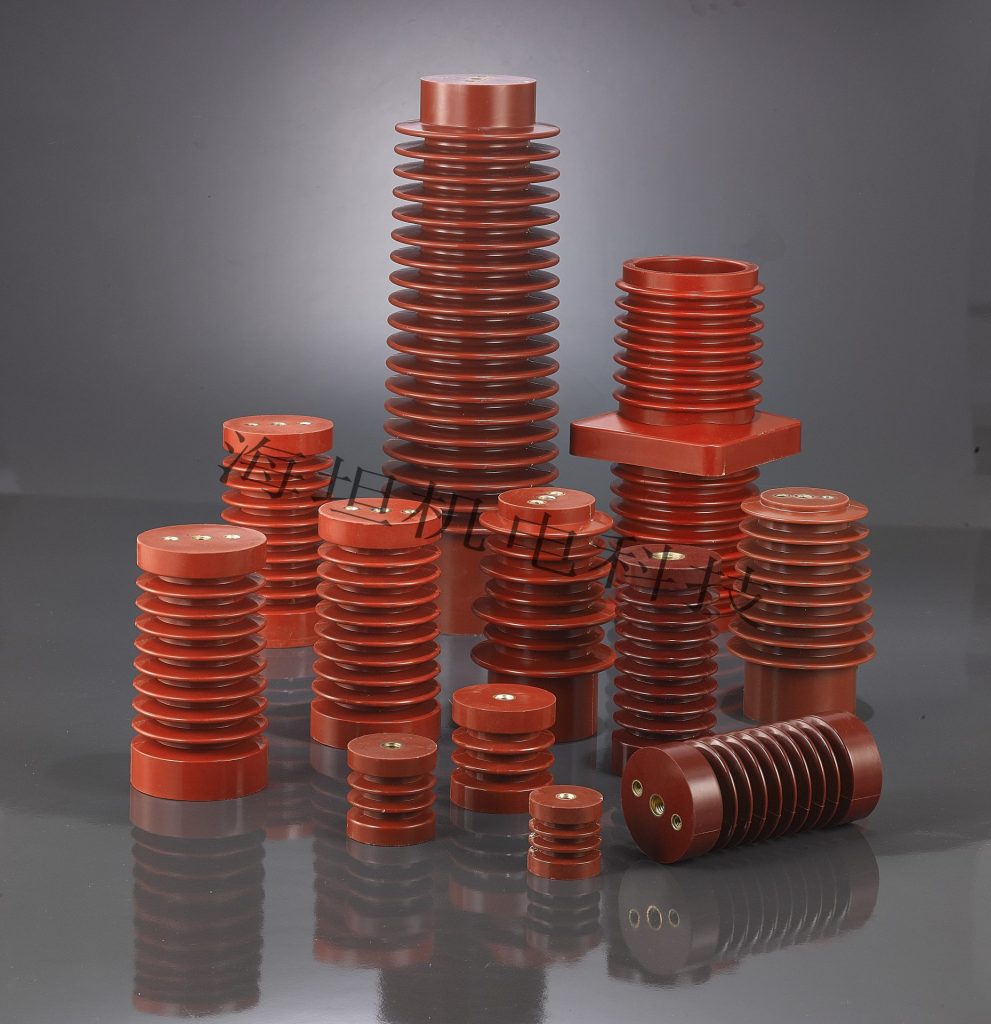
Here is a sourcing shortcut worth taking: the same moulding expertise that produces a reliable PA6 cable clamp also produces busbar support insulators, so you can consolidate both accessories on one purchase order. If you are fitting out low-voltage distribution cabinets, browse the full range of low-voltage insulators alongside the cable clamps.
Before you finalise the insulator side of the order, this complete guide to busbar insulators covers selection, mounting and testing in depth — reading it before you request prices will make your RFQ measurably sharper.
To see how the two components sit together in practice, the application-focused overview of busbar insulators and busbar clamps in power distribution cabinets walks through their positions in a real assembly, so your installer knows exactly which fixing serves which job.
Pairing your cable clamps with Кабельдік байланыстар from the same supplier rounds out the cable-management kit — one freight consignment, one quality standard, and one invoice for the accessories your panel build consumes by the thousand.
| Need Cable Clamps and Insulators on One Order? Send your cable bundle diameter, installation environment and target quantity — get material data sheets and a bulk quotation from Haitan’s engineering team. |
Quick Selector: Choosing the Right Cable Clamp
Work through the three questions below and you will arrive at a defensible spec before you even open a catalogue:
Step 1 — What does the installation environment look like?
Coastal, marine-adjacent, chemical plant or permanently humid → PA6 nylon is the clear choice: no rust, no conductivity, no coating to maintain. Dry indoor panels with extreme heat sources (above roughly 100 °C at the fixing point) → discuss high-temperature grades or metal with your supplier. Always confirm the temperature index of the exact PA6 grade quoted, not the datasheet of “nylon” in general.
Step 2 — How are the cables arranged?
Three single-core cables run as a triplex bundle → a 3-core clamp sized to the bundle’s outer diameter. Mixed or varying diameters → ask about multi-size ranges; good moulders typically offer a ladder of clamp sizes so one product family covers your whole route. Measure the bundle with tape wrapped snugly, then order the clamp whose range brackets that diameter — never force an undersized clamp onto the insulation.
Step 3 — What is your order volume and timeline?
Standard sizes in moderate volume are usually available from stock or short production runs. Large OEM or project volumes open the door to custom colours, packaging and drawings — most manufacturers will confirm tooling cost, sample lead time and repeat-order terms in writing. Whatever the volume, request samples and test them on your actual cable before committing the full order.
ЖҚС
What size cable clamp do I need for a 3-core bundle?
Measure the outer diameter of the three-cable bundle with the cores lightly taped together, then choose a clamp whose stated range brackets that measurement. Industry practice is to allow a small clearance so the ribs grip the jackets without compressing them; as a rule of thumb, if the bundle sits loosely in the clamp, step down a size. Reputable suppliers publish a size ladder, and asking for a sample of two adjacent sizes is the fastest way to lock the spec.
Are PA6 nylon clamps suitable for outdoor and UV-exposed installations?
Standard PA6 grades degrade slowly under sustained UV, so for exposed outdoor use the industry relies on UV-stabilised grades — and black is the most common colour because carbon-based pigmentation improves UV performance. Before ordering, ask the supplier for UV weathering test results (per ISO 4892 or ASTM G154) for the specific grade, and for references in solar or outdoor utility projects. For installations under cover but in coastal air, UV matters less than salt resistance — which PA6 handles inherently.
Can nylon cable clamps really replace metal ones in corrosive environments?
In corrosive service, nylon usually outlasts plated steel because there is no coating to breach and no base metal to corrode — this is why plastics dominate in wastewater, plating plants and seaside installations. The exceptions are mechanical, not chemical: very heavy cable loads, sharp-edge steel surfaces, or temperatures beyond the grade’s continuous rating. Evaluate the load per clamp and the local temperature first; if both sit inside the PA6 envelope, the nylon clamp is the lower lifetime-cost choice.
What temperature range can PA6 cable clamps handle?
General-purpose PA6 typically serves continuously from around −40 °C up to about +85 °C to +105 °C depending on the exact grade and heat stabilisation, with short excursions higher. In practice, cable surfaces in well-ventilated panels stay well inside that window, but clamps mounted near resistors, busbar joints or engine compartments need a heat-stabilised grade. Always confirm the temperature index from the supplier’s material data sheet for the grade you are buying — “nylon” covers a family of formulations, not one spec.
What MOQ and lead times are normal when sourcing cable clamps from manufacturers?
Across the industry, standard-size moulded parts are commonly offered with minimum order quantities in the thousands of pieces, with lead times from a couple of weeks for stock items to four to eight weeks for production runs, plus shipping. Custom colours or tooling add mould-making time on the first order only. Rather than chasing the lowest headline price, compare total landed cost per clamp at your realistic annual volume — and confirm in writing what happens on repeat orders, when tooling ownership and pricing matter most.
Do manufacturers provide free samples before a bulk order?
Most established moulders will supply a small quantity of stock-size samples free of charge, with the buyer covering freight — and many will also include the material data sheet and compliance documents (RoHS/REACH, flammability class) you need for your qualification file. Treat a supplier’s willingness to send samples quickly as a live test of its customer service. Fit the samples on your real cable, torque them as your crew would, then inspect after a week in service before releasing the purchase order.
| Ready to Test PA6 Cable Clamps on Your Own Cable? Browse the low-voltage insulator range and cable-management accessories — request samples and material data sheets before you commit a single bulk order. |
Related Resources
- Haitan Blog — Electrical Connection & Insulation Guides
- Material and Design Differences in Low-Voltage Wire Holders
- What Do Cable Ties Do in Electrical and Industrial Applications?
- Busbar Insulator and Busbar Clamp in Power Distribution Cabinets (English original)
Choosing a cable clamp is a small decision that compounds across thousands of fixing points. Spec one clamp that grips three cores, moulded from PA6 that shrugs off salt, chemicals and impact, and your business saves on parts, labour and warranty call-backs for the life of the installation. When you are ready to compare samples or request a bulk quotation, review the insulator and cable-management ranges above and contact the supplier with your bundle diameter, environment and target quantity — a clear spec sheet gets you an accurate price faster.
--- СОҢЫ ---
Алдыңғы: Energy Storage Connector Installation: A Field Wiring Checklist
Соңғы мақала
 E-mail: [email protected]
 №20 Лингюн жол, донгфенг
Индустриалды аймақ, Лиуши қаласы, YueQing
Қалалық, Жезеген провинциясы


Махат
© Copyright 2024 China Haitan электромеханикалық технологиясы Co., Ltd. Барлық құқықтар қорғалған.Қолдау: junj Құпиялылық саясаты
 Kazakh
 English (United States)
 English (South Africa)
 Arabic
 Belarusian
 Bengali
 Japanese
 Korean
 Myanmar
 Russian
 Thai
 Ukrainian
 Uzbek
 Vietnamese
 Chinese