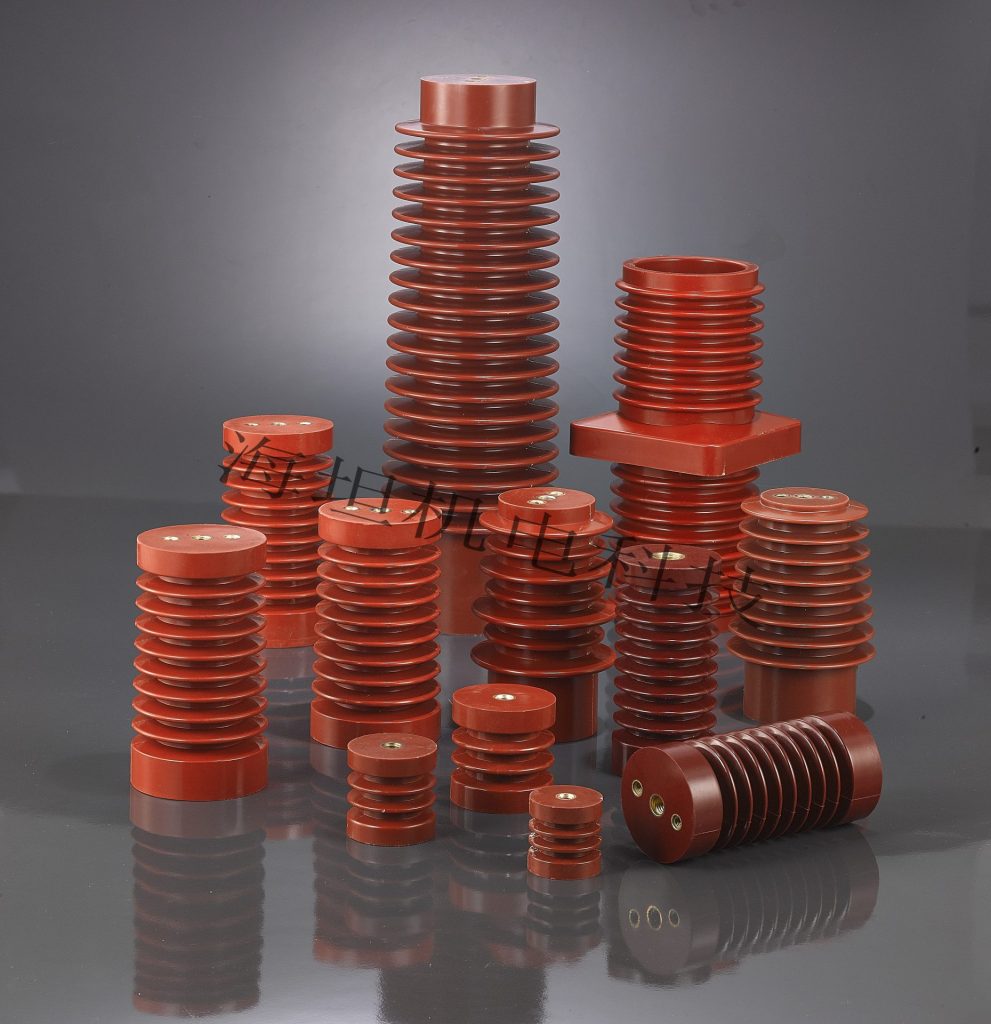
Optimizing Low-Voltage Switchgear Reliability with BMC / SMC Busbar Supports
Қожалдама | Жаңалықтар | Дек 26,2025
Кіріспе
Low-voltage switchgear plays a critical role in distributing electrical power safely and efficiently across industrial, commercial, and residential facilities. Its performance and reliability depend heavily on the quality and design of core components, particularly busbar insulator supports.
Among the most effective solutions are BMC (Жаппай қалыптау құралы) жіне SMC (Sheet Molding Compound) busbar supports, which combine high mechanical strength, Электр оқшаулау, және environmental durability. This article explores how using BMC / SMC busbar supports can optimize the reliability and longevity of low-voltage switchgear.

The Importance of Busbar Supports in Switchgear
Busbar supports are critical for:
Maintaining safe electrical clearance and creepage distances
Holding busbars securely during normal operation and fault conditions
Resisting electrodynamic forces caused by short-circuit currents
Ensuring insulation coordination across all switchgear components
If busbar supports fail mechanically or electrically, the consequences can include short circuits, equipment damage, or fire hazards. Therefore, selecting the right material is essential to switchgear reliability.
Why BMC / SMC Are Ideal for Busbar Supports
Электр оқшаулау көрсеткіштері
BMC and SMC materials offer:
Биік Диэлектрлік беріктің, providing reliable isolation between busbars and grounded parts
Аласа leakage current, minimizing the risk of tracking or flashover
Stable electrical properties under varying voltage and temperature conditions
These characteristics ensure that the busbar supports maintain insulation integrity over the lifetime of the equipment.
Механикалық беріктік және беріктік
During high-current events, busbars experience strong electrodynamic forces. BMC / SMC supports provide:
Биік compressive and flexural strength
Resistance to vibration and mechanical stress
Structural stability that preserves busbar alignment and spacing
SMC, with its longer fiber reinforcement, is often used for larger or heavy-duty supports, while BMC is ideal for compact or precise components.
Жылу және қоршаған ортаға төзімділік
Switchgear often operates in environments with heat, moisture, dust, or chemical exposure. BMC / SMC busbar supports are designed to:
Withstand high operating temperatures without deformation
Resist moisture, dust, and chemical corrosion
Maintain performance over long service periods
This ensures Ұзақ мерзімді сенімділік even in harsh industrial conditions.
Enhancing Switchgear Reliability with Proper Insulator Design
Using BMC / SMC busbar supports allows engineers to:
Optimize clearance and creepage distances, reducing the likelihood of insulation failure
Improve structural stability, minimizing busbar movement under short-circuit forces
Extend service life, reducing maintenance and downtime
Support compact and high-density switchgear designs, without compromising safety
Properly designed BMC / SMC busbar supports are therefore key to achieving reliable, long-lasting low-voltage switchgear.
Applications of BMC / SMC Busbar Supports
BMC / SMC busbar insulator supports are widely used in:
Low-voltage switchgear assemblies
Motor control centers (MCCs)
Distribution boards and panels
Industrial control cabinets
Renewable energy and energy storage systems
Their versatility makes them suitable for both compact, high-density designs жіне high-load industrial applications.
Қорытынды
Optimizing low-voltage switchgear reliability requires more than quality busbars and circuit protection—it demands robust and reliable busbar insulator supports. BMC and SMC materials provide the perfect combination of electrical insulation, mechanical strength, and environmental resilience, ensuring that busbars remain secure, insulated, and fully functional under all operating conditions.
By choosing the appropriate BMC or SMC busbar support, manufacturers and engineers can enhance switchgear performance, reduce maintenance needs, and extend equipment service life, delivering safer and more reliable power distribution solutions.
Жиі қойылатын сұрақтар
Q1: What is the difference between BMC and SMC busbar supports?
A: BMC uses short glass fibers and is ideal for compact, precise components. SMC contains longer fibers, offering higher mechanical strength for larger or heavy-duty applications.
Q2: How do BMC / SMC supports improve switchgear reliability?
A: They maintain busbar alignment, withstand electrodynamic forces, ensure insulation integrity, and resist environmental degradation.
Q3: Are BMC / SMC supports suitable for industrial environments?
A: Yes, they resist heat, moisture, dust, and chemicals, making them reliable in harsh industrial conditions.
Q4: Can BMC / SMC supports handle short-circuit forces?
A: Yes, they are engineered to withstand strong electrodynamic forces during fault conditions while maintaining busbar spacing.
Q5: How do I choose between BMC and SMC?
A: Use BMC for compact, precision-required designs, and SMC for larger, load-bearing components requiring higher mechanical strength.
--- СОҢЫ ---
 E-mail: [email protected]
 №20 Лингюн жол, донгфенг
Индустриалды аймақ, Лиуши қаласы, YueQing
Қалалық, Жезеген провинциясы


Махат
© Copyright 2024 China Haitan электромеханикалық технологиясы Co., Ltd. Барлық құқықтар қорғалған.Қолдау: junj Құпиялылық саясаты
 Kazakh
  English (United States)
  English (South Africa)
  Arabic
  Belarusian
  Bengali
  Japanese
  Korean
  Myanmar
  Russian
  Thai
Thai  Ukrainian
  Uzbek
Uzbek  Vietnamese
  Chinese