
Custom EL Insulator Solutions: When and Why You Need Them
ဘလော့ | သတင်းခန်း | May 27,2026
နိဒါန်း
In modern electrical and industrial systems, standard components are not always enough. As equipment becomes more complex and operating environments more demanding, custom EL insulator solutions are increasingly used to ensure safety, performance, and long-term reliability.
But when exactly do you need a custom solution? And what benefits does it bring compared to standard insulators? Let’s break it down.
What Is a Custom EL Insulator?
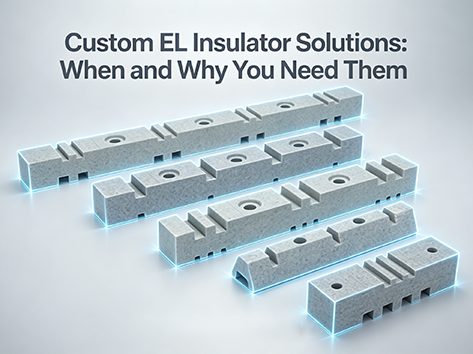
တစ်စီး custom EL insulator is an electrically insulating component designed specifically for a particular application rather than a general-purpose use.
Unlike off-the-shelf insulators, custom solutions are engineered based on:
Voltage requirements
Mechanical load conditions
Installation structure
Environmental challenges
Space limitations
This ensures optimal performance in specialized industrial systems.
When Do You Need Custom EL Insulator Solutions?
When Standard Sizes Don’t Fit Your Equipment
Industrial systems often have unique structural designs, especially in:
Switchgear cabinets
Busbar စနစ်များ
Power distribution units
Renewable energy equipment
If standard insulators do not match mounting space or layout, a custom design becomes necessary.
When Operating Voltage Is Highly Specialized
Some applications operate at:
Ultra-high voltage
Unstable voltage environments
Pulsed or transient electrical loads
In such cases, standard insulation ratings may not provide enough safety margin.
Custom EL insulators allow precise dielectric design to handle:
Higher breakdown voltage
Better insulation distance (creepage and clearance)
When Environmental Conditions Are Extreme
Harsh environments often require tailored solutions, such as:
High humidity or salt spray (marine applications)
Chemical exposure in industrial plants
Extreme heat or cold
Outdoor UV exposure
Custom materials and coatings can significantly improve durability and lifespan.
When High Mechanical Strength Is Required
Some systems involve:
Heavy busbar support
Strong vibration (railway, transportation, heavy machinery)
High mechanical stress from installation or operation
Custom EL insulators can be reinforced with:
Fiber-reinforced composites
Higher-density epoxy materials
Optimized structural geometry
When Safety Standards Are Strict
Certain industries require strict compliance with:
IEC standards
UL certification
ISO quality systems
Industry-specific regulations
Custom design ensures full compliance with project-specific safety requirements.
When You Want to Improve System Efficiency
Custom EL insulators are not only about fitting requirements—they can also improve performance:
Reduced energy loss
Better heat resistance
Optimized electrical field distribution
Improved system stability
Key Benefits of Custom EL Insulator Solutions
Perfect Fit for Complex Designs
Custom engineering ensures precise dimensions and mounting compatibility.
Improved Electrical Performance
Optimized insulation distance and material selection reduce failure risks.
Longer Service Life
Better environmental and mechanical adaptation leads to reduced wear and aging.
Enhanced Safety
Reduced risk of flashover, leakage current, and insulation breakdown.
Cost Efficiency in the Long Run
Although initial cost may be higher, custom solutions reduce maintenance and replacement expenses.
What Information Is Needed for Customization?
To develop a custom EL insulator, manufacturers typically require:
Operating voltage and current
Application environment (indoor/outdoor, humidity, temperature)
Mechanical load requirements
Installation structure drawings
Material preferences (if any)
Certification requirements
Providing accurate technical data ensures better design accuracy and performance.
Common Industries Using Custom EL Insulators
Custom solutions are widely used in:
Power transmission and distribution systems
Renewable energy (solar & wind)
Industrial automation equipment
Railway electrification systems
Data centers and telecom infrastructure
Heavy machinery and manufacturing plants
ကောက်ချက်
Custom EL insulator solutions are essential when standard products cannot meet the electrical, mechanical, or environmental demands of an application. They provide a tailored approach to safety, reliability, and performance—especially in high-demand industrial systems.
If your project involves complex requirements or harsh operating conditions, a custom-designed EL insulator is often the most reliable and cost-effective long-term solution.
အမြဲမေးလေ့ရှိသောမေးခွန်းများ
Q1: Are custom EL insulators more expensive?
Yes, but they offer better performance and lower long-term maintenance costs.
Q2: How long does customization take?
It depends on complexity, but typically ranges from a few weeks to a few months.
Q3: Can custom insulators be certified?
Yes, they can be designed to meet IEC, UL, or project-specific standards.
Q4: What is the minimum order for custom EL insulators?
It varies by manufacturer, but many support both prototypes and small batches.
--- အဆုံး ---
 E-mail: shay@cn ataitan.net
  နံပါတ် 20 လှိုင်လမ်း, Dongfeng
စက်မှုဇုန်, လီရှီမြို့, yueqing
မြို့, Zhejiang ပြည်နယ်


လောဝါတင်
©မူပိုင်ခွင့် 2024 China Haitan Electromemechaniomean နည်းပညာကုမ္ပဏီလီမိတက်။ပံ့ပိုးမှု: Junj ကိုယ်ရေးအချက်အလက်မူဝါဒ
 Myanmar
  English (United States)
  English (South Africa)
  Arabic
  Belarusian
  Bengali
  Japanese
  Kazakh
  Korean
  Russian
  Thai
Thai  Ukrainian
  Uzbek
Uzbek  Vietnamese
  Chinese