
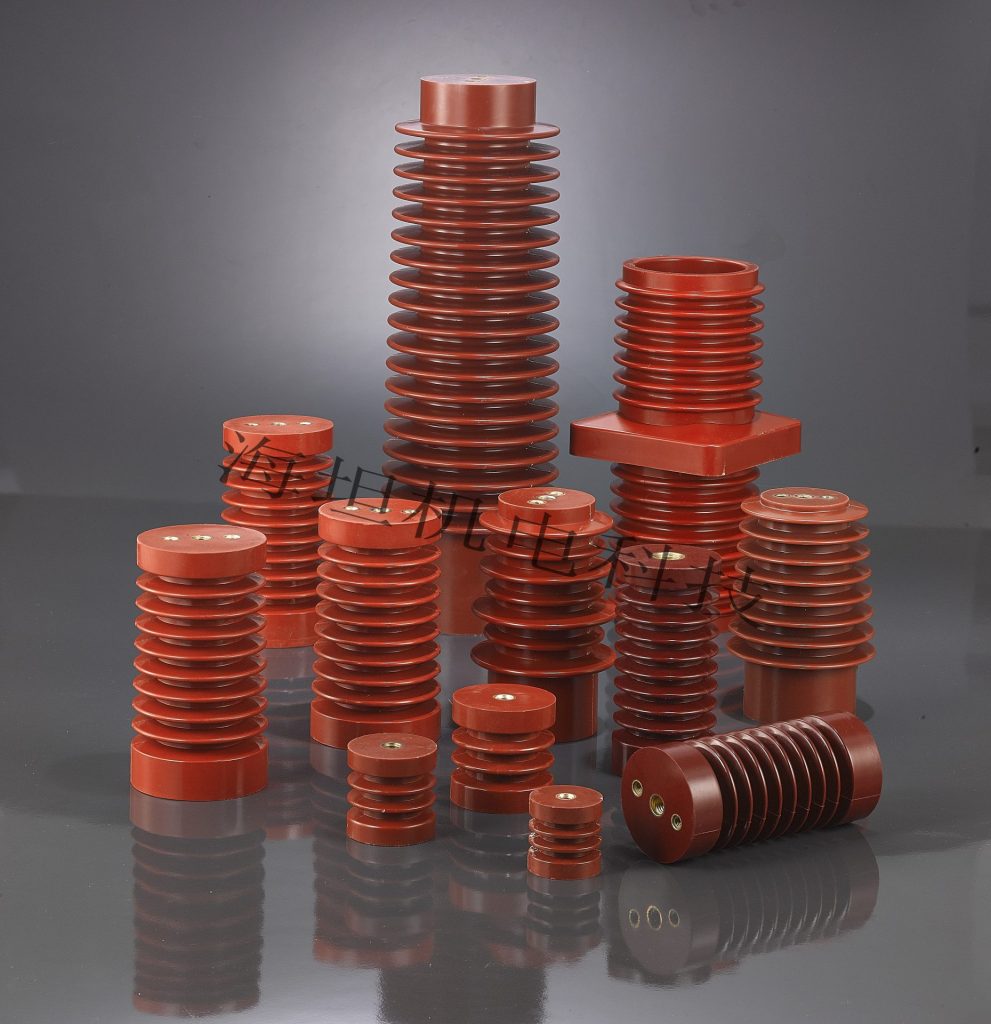
Advantages of DMC Insulators in Compact Power Distribution Design: Miniaturization and High Strength
Блог | Отдел новостей | Янв 26,2026
Введение
Modern power distribution equipment is evolving rapidly toward miniaturization, higher power density, and modular integration. Applications such as smart substations, compact switchgear, EV charging infrastructure, and renewable energy systems all demand:
Smaller installation footprints
Reduced phase-to-phase and phase-to-ground distances
Higher mechanical reliability in confined spaces
Long-term insulation stability under thermal and electrical stress
In this context, insulating components are no longer passive parts—they directly determine how compact, safe, and reliable a system can be. Among various insulation materials, Изоляторы DMC (тестоформовочный компаунд) have become a preferred solution for compact power distribution design.
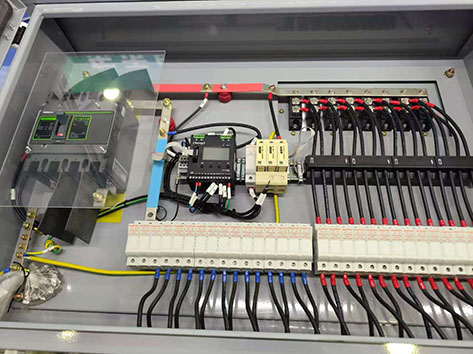 | 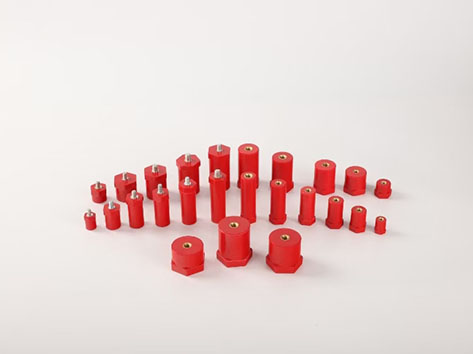 | 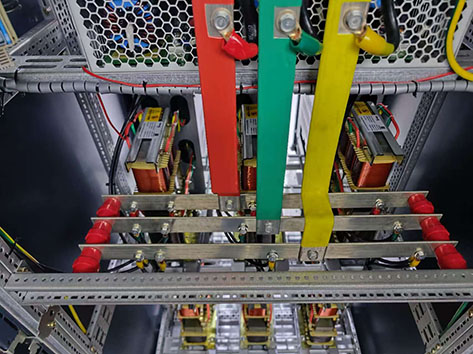 |
What Is DMC and Why It Matters in Compact Designs
DMC is a glass fiber–reinforced thermosetting polyester composite, typically composed of:
Unsaturated polyester resin
Chopped glass fibers (for mechanical reinforcement)
Fillers and additives for electrical and thermal performance
This material combination gives Изоляторы DMC а unique balance of mechanical strength, electrical insulation, and molding flexibility, making them especially suitable for space-constrained electrical systems.
High Mechanical Strength Enables Structural Miniaturization
Load-Bearing Capability in Limited Space
As equipment becomes smaller, insulating components often take on both electrical and mechanical roles—supporting busbars, conductors, and live parts.
Изоляторы DMC offer:
High compressive and tensile strength
Excellent resistance to bending and vibration
Stable performance under long-term mechanical load
This allows designers to reduce cross-sectional size without compromising structural safety, enabling thinner profiles and shorter insulation distances.
High Strength-to-Size Ratio
Compared with traditional ceramic or some thermoplastic insulators, DMC provides a higher strength-to-volume ratio, which is critical when:
Clearance is limited
Components are stacked vertically
Multiple functions are integrated into a single insulating part
As a result, DMC insulators help achieve compact layouts while maintaining mechanical robustness.
Design Plasticity: Flexible Shapes for High-Density Layouts
Complex Geometry Through Molding
One of DMC’s key advantages is its excellent moldability. Through compression molding, DMC insulators can be manufactured in:
Complex 3D shapes
Thin-wall structures
Integrated mounting features (slots, ribs, inserts)
This design freedom allows engineers to optimize insulation paths within tight spaces, instead of relying on oversized standard parts.
Integration Reduces Part Count
Изоляторы DMC can combine multiple functions into a single molded component, such as:
Электрическая изоляция
Механическая поддержка
Positioning and alignment
By reducing the number of separate parts, manufacturers can:
Improve assembly efficiency
Reduce tolerance stack-up
Further shrink overall equipment size
Reliable Electrical Insulation in High-Density Systems
Even as dimensions shrink, electrical safety requirements remain stringent. Изоляторы DMC perform well in compact environments due to:
High dielectric strength
Stable insulation performance under heat and humidity
Good tracking and arc resistance (with appropriate formulation)
These properties allow DMC insulators to maintain safe insulation performance even when creepage and clearance distances are minimized—a critical factor in compact switchgear and distribution assemblies.
Thermal Stability Supports High Power Density
High-density power distribution often means higher operating temperatures. DMC’s thermosetting nature provides:
Low thermal deformation
Stable mechanical and electrical properties under heat
Resistance to thermal aging
This ensures that insulation performance remains reliable over long service life, even in compact, heat-intensive electrical enclosures.
Typical Applications in Compact Power Distribution
DMC insulators are widely used in:
Compact LV and MV switchgear
Busbar support systems
Modular distribution boards
Smart RMUs and secondary equipment
EV charging and renewable energy power cabinets
In all these applications, space efficiency, mechanical strength, and insulation reliability are equally critical.
Conclusion: Enabling Compact Power Systems with DMC Insulators
As power distribution equipment continues to move toward smaller, denser, and smarter designs, insulation materials must evolve accordingly. Thanks to their high mechanical strength, excellent molding flexibility, and stable electrical performance, Изоляторы DMC provide an ideal insulation solution for limited-space environments.
By enabling structural miniaturization without sacrificing safety or durability, DMC insulators play a key role in the next generation of compact, high-performance power distribution systems.
Часто задаваемые вопросы
Why are DMC insulators suitable for compact power distribution equipment?
As power distribution systems move toward miniaturization and high-density layouts, insulation components must deliver both electrical insulation and mechanical support within limited space.
DMC insulators provide high mechanical strength and stable electrical performance in a compact form, making them ideal for space-constrained designs.
How does the high mechanical strength of DMC insulators support equipment miniaturization?
DMC is reinforced with glass fibers, giving it excellent compressive, tensile, and bending strength.
This allows designers to reduce the size and thickness of insulating components while still safely supporting busbars and live conductors, enabling overall equipment downsizing.
What design advantages do DMC insulators offer in limited installation space?
DMC insulators can be compression-molded into complex three-dimensional shapes, thin-wall structures, and parts with integrated mounting features.
This design flexibility helps optimize insulation paths and mechanical layouts in tight spaces without relying on oversized standard components.
Are DMC insulators suitable for high-density busbar systems?
Yes.
In high-density busbar systems, DMC insulators can serve both as electrical insulation and structural support, reducing part count, simplifying assembly, and improving space utilization while maintaining electrical safety.
Can DMC insulators maintain reliable insulation performance when creepage distances are reduced?
DMC materials offer high dielectric strength and stable insulation properties.
With proper design and compliance with applicable standards, DMC insulators can provide reliable insulation even in compact systems where creepage and clearance distances are optimized.
How do DMC insulators perform under high power density and elevated temperatures?
As a thermosetting material, DMC exhibits excellent thermal stability and low thermal deformation.
It maintains mechanical strength and insulation performance under continuous heat, making it suitable for compact enclosures with higher operating temperatures.
Can DMC insulators be customized for specific compact equipment designs?
Absolutely.
DMC insulators are highly suitable for customized designs, allowing geometry, mounting interfaces, and structural features to be tailored to specific space constraints, voltage levels, and mechanical load requirements.
--- КОНЕЦ ---
 Электронная почта: [email protected]
  № 20 Линюнь Роуд, Дунфэн
Промышленная зона, город Люши, Юэцин
Город, провинция Чжэцзян


© Copyright 2024 China Haitan Electromechanical Technology Co., Ltd. Все права защищены.ПОДДЕРЖКА: JUNJ политика конфиденциальности
 Russian
  English (United States)
  English (South Africa)
  Arabic
  Belarusian
  Bengali
  Japanese
  Kazakh
  Korean
  Myanmar
  Thai
Thai  Ukrainian
  Uzbek
Uzbek  Vietnamese
  Chinese