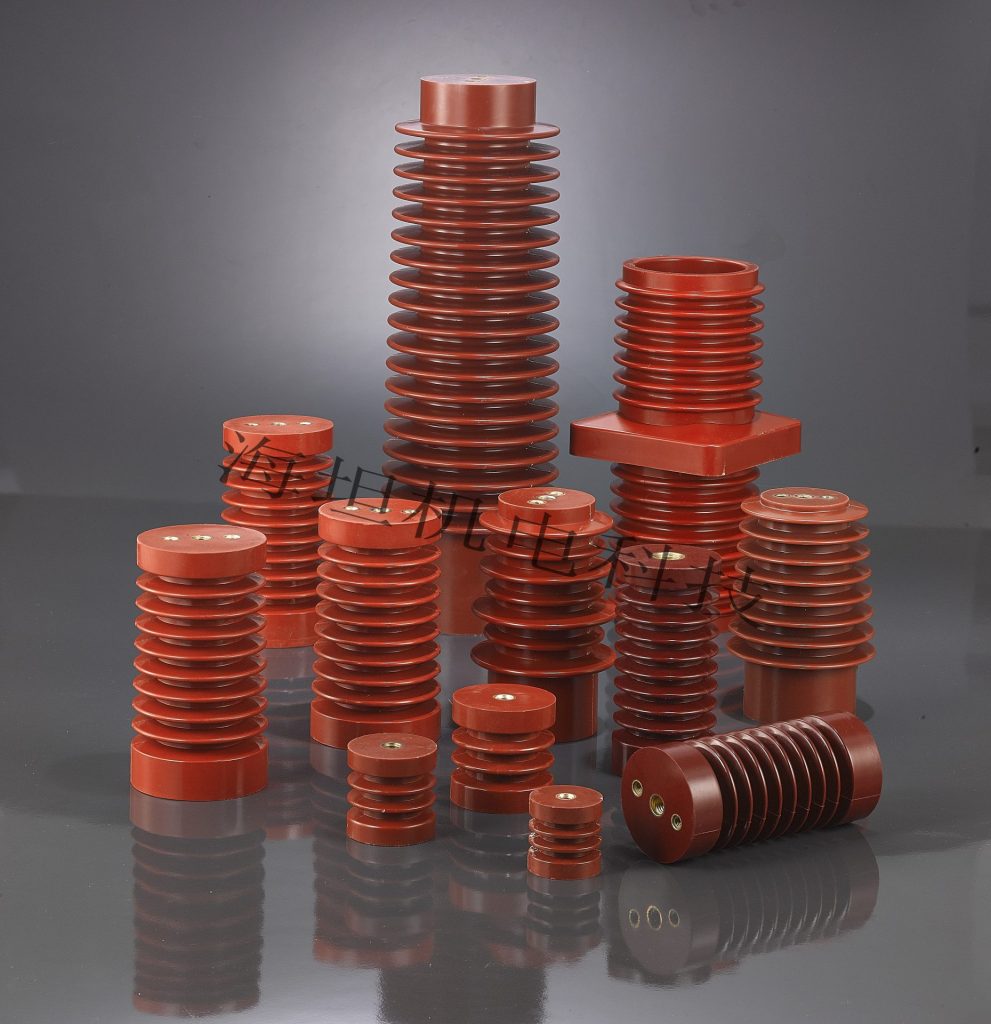
Why Composite Polyester is Revolutionizing Busbar Support Insulators
Блог | Отдел новостей | Апр 14,2026
Введение
In modern power distribution systems, safety, reliability, and efficiency are critical. Among the many components that ensure smooth operation, busbar support insulators play a pivotal role. Traditionally made from ceramic or standard plastic materials, these insulators have served the industry for decades. However, the advent of composite polyester materials is transforming the landscape, offering unprecedented advantages in durability, performance, and safety.
Superior Mechanical Strength
Изоляторы опоры шин are responsible for holding heavy conductors in place while maintaining electrical isolation. Composite polyester offers exceptional mechanical strength, combining rigidity with flexibility to withstand vibration, impact, and mechanical stress. Unlike traditional ceramic insulators, which can crack under heavy loads or sudden impacts, composite polyester insulators maintain structural integrity over time, reducing the risk of failure.
Excellent Electrical Insulation
Safety is non-negotiable in electrical systems. Composite polyester has excellent dielectric properties, providing high electrical insulation and ensuring that busbars remain electrically isolated. This reduces the risk of short circuits, electrical arcing, and equipment damage, especially in high-voltage environments.
High-Temperature and Environmental Resistance
Electrical systems often operate under high temperatures and harsh environmental conditions. Composite polyester excels in heat resistance, maintaining mechanical and electrical properties even at elevated temperatures. Additionally, it is resistant to UV radiation, moisture, and chemical corrosion. This makes it ideal for outdoor or industrial applications where traditional materials might degrade over time.
Lightweight and Easy to Install
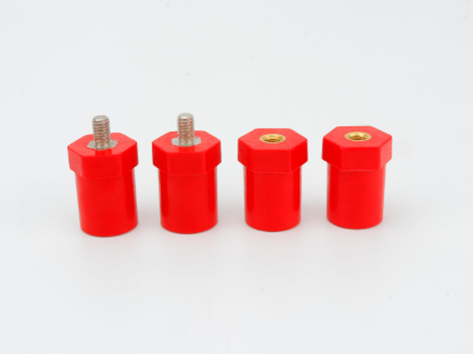
Compared to ceramic or metal-based insulators, composite polyester is significantly lighter. This makes installation easier, faster, and safer. Reduced weight also minimizes stress on supporting structures, extending the life of the overall system. Pairing composite polyester insulators with designs such as hex round screws ensures secure and efficient mounting, further enhancing system reliability.
Long-Term Cost Efficiency
While the upfront cost of composite polyester insulators may be slightly higher than traditional materials, their long-term benefits outweigh the initial investment. Reduced maintenance, longer service life, and lower failure rates translate into significant cost savings for utilities and industrial operators.
Supporting Modern Power Systems
The shift toward renewable energy, electric vehicles, and smart grids demands materials that can keep up with evolving technology. Composite polyester busbar support insulators provide the durability, flexibility, and safety required to support these modern power systems, ensuring consistent performance even under demanding conditions.
Заключение
Composite polyester is not just another material choice—it is redefining the standard for busbar support insulators. By combining mechanical strength, excellent insulation, environmental resistance, and ease of installation, it addresses the limitations of traditional materials and meets the demands of modern electrical infrastructure.
For engineers, utilities, and manufacturers, adopting composite polyester insulators means investing in safety, reliability, and long-term efficiency. In the evolving world of power distribution, this innovative material is proving to be a true game-changer.
Часто задаваемые вопросы
1. What is a composite polyester busbar support insulator?
Answer: It is an insulating device made from composite polyester, designed to hold and support busbars while providing electrical isolation. It combines mechanical strength, durability, and high dielectric properties, ensuring safe and reliable operation of electrical systems.
2. Why use composite polyester instead of ceramic or standard plastic?
Answer: Composite polyester offers superior mechanical strength, is lighter than ceramic, and resists cracking or breaking. It also provides excellent insulation, high-temperature resistance, UV resistance, and long-term durability, making it ideal for demanding industrial and outdoor environments.
3. How does it handle high temperatures and harsh conditions?
Answer: Composite polyester maintains its mechanical and electrical properties even at elevated temperatures. It is resistant to UV radiation, moisture, and chemical corrosion, making it suitable for outdoor installations and high-load conditions.
4. What is the role of the hex round screw design in installation?
Answer: Hex round screws allow for secure, precise, and easy installation of busbar support insulators. They minimize stress concentrations and ensure stable mechanical attachment, reducing the risk of vibration or loosening over time.
5. Are composite polyester insulators safe for high-voltage applications?
Answer: Yes. They provide excellent dielectric insulation and prevent short circuits, arcing, or leakage, ensuring safety in high-voltage systems.
6. How long do composite polyester busbar support insulators last?
Answer: With proper installation, they can last many years. Their resistance to heat, aging, UV light, and mechanical stress reduces maintenance frequency and extends the service life of electrical systems.
7. Can these insulators support modern power systems like renewable energy or smart grids?
Answer: Absolutely. Their durability, reliability, and excellent insulation make them suitable for high-performance applications, including renewable energy installations, electric vehicle charging stations, and smart grid infrastructure.
8. Are there cost advantages to using composite polyester insulators?
Answer: While the initial cost may be slightly higher than traditional materials, their long-term benefits—reduced maintenance, fewer failures, and longer lifespan—result in significant cost savings over time.
--- КОНЕЦ ---
 Электронная почта: [email protected]
 № 20 Линюнь Роуд, Дунфэн
Промышленная зона, город Люши, Юэцин
Город, провинция Чжэцзян


© Copyright 2024 China Haitan Electromechanical Technology Co., Ltd. Все права защищены.ПОДДЕРЖКА: JUNJ политика конфиденциальности
 Russian
  English (United States)
  English (South Africa)
  Arabic
  Belarusian
  Bengali
  Japanese
  Kazakh
  Korean
  Myanmar
  Thai
Thai  Ukrainian
  Uzbek
Uzbek  Vietnamese
  Chinese