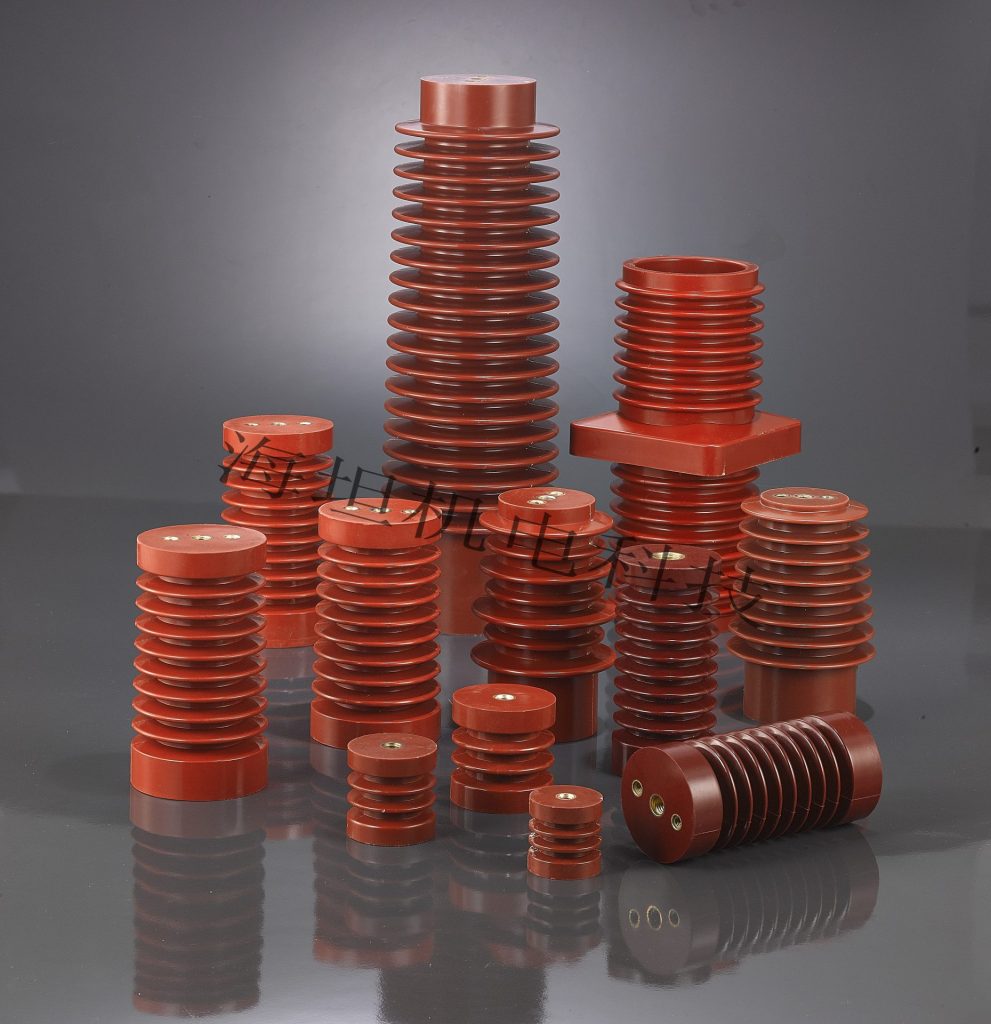
Energy Storage and Grid Insulators for Substations and Distribution Equipment
บล็อก | ห้องข่าว | ก.ย. 29,2026
Substations, distribution panels, and energy storage cabinets don’t share a single insulator spec sheet, even though your business might be sourcing components for all three on the same project. A substation busbar support insulator has to meet different mechanical and dimensional requirements than a compact insulator inside a battery storage container, and a component built for a State Grid-spec distribution cabinet follows a different set of expectations than a general industrial panel. Getting the right insulator into the right application — and confirming it actually performs before you commit to full-volume production — is the real challenge behind sourcing for this category.
This guide covers what insulators for energy storage, substation, and distribution equipment actually need to deliver, why a staged approach — small trial batch first, full-scale order after verification — reduces real project risk, and which insulator types tend to fit which part of this equipment range.
What Grid and Energy Storage Insulators Actually Need to Do
Across substations, distribution equipment, and energy storage systems, the insulator’s core job doesn’t change: fix conductors in place mechanically, and keep them electrically isolated from each other and from grounded surfaces. What changes significantly is the operating context. Substation and distribution equipment typically involves higher fault current levels and stricter mechanical load requirements, since a busbar failure at this level of the grid has consequences that ripple outward to everything downstream. Energy storage cabinets, by contrast, often pack components into a tighter footprint with less margin for creepage distance, and frequently see more thermal cycling from charge and discharge activity than a standard distribution panel.
Why This Application Range Spans Multiple Insulator Types
Grid and energy storage infrastructure isn’t a single use case — it’s a range of related but distinct applications, and the industry generally addresses that with a range of insulator designs rather than one universal part. Distribution cabinets built to certain national grid specifications call for insulators specifically rated to those standards. General substation and switchgear equipment calls for bus support frame designs capable of holding single, three, or four-phase busbar arrangements in fixed position. And energy storage racks, where creepage margins are tighter and contamination resistance matters more, call for insulators with well-documented tracking resistance rather than a general-purpose part borrowed from a conventional panel design.
Sourcing insulators across substation, distribution, and storage equipment?
The Case for a Small-Batch Trial Order Before You Scale
Grid and substation projects tend to be high-consequence, low-tolerance-for-error environments, which makes them exactly the kind of application where jumping straight to a full-volume order from a new supplier or a new product line is a riskier bet than it needs to be. A staged approach — order a small trial batch first, verify dimensional fit and electrical performance against your actual equipment, then place the full-scale order once quality is confirmed — gives your team a checkpoint before thousands of units are committed to a single production run.
This isn’t just a theoretical best practice — it’s reflected in how insulator lead times are typically structured across the industry. Small orders commonly move through production faster than large ones, precisely because they’re easier to slot into an existing schedule without disrupting other work, while big orders require more planning and typically run longer. That timing difference is part of what makes a trial-first approach practical rather than just cautious: verifying quality at small scale doesn’t necessarily cost you significant time before you move to full production.
| Stage | Purpose | What to Verify |
|---|---|---|
| ตัวอย่าง | Confirm basic fit and material quality | Dimensions, finish, insert alignment |
| Small trial batch | Validate consistency across multiple units | Batch-to-batch tolerance, electrical test results, installation fit in real equipment |
| Full-scale order | Deploy across the full project | Delivery schedule, documentation for compliance records, packaging for large shipment |
Insulator Types Commonly Used Across This Category
A few insulator designs come up repeatedly across grid, substation, and distribution sourcing conversations. MG insulators are built specifically for State Grid-spec distribution cabinets or equivalent high-specification equipment, which makes them relevant where a project follows national grid standards rather than general industrial specifications. The MNS insulator is a high-strength cylindrical design with larger inserts for added physical strength, suited to modular switchboard construction. And bus support frame insulators — commonly seen in CT/CJ and EL type designs — hold single, three, or four-phase busbar systems in fixed relative position within switchgear and distribution equipment.
For energy storage applications specifically, where creepage margin and contamination resistance carry more weight than in a conventional panel, it’s worth reviewing insulator selection in more depth — this overview of low voltage insulators in energy storage applications covers the specific design considerations for that equipment category.
What to Verify During Your Trial Batch
A trial batch is only useful if you actually check the right things before scaling. Confirm dimensional consistency across every unit in the batch, not just the first one you inspect — a single well-made sample doesn’t guarantee the same tolerance across a full production run. Verify electrical test results, including dielectric withstand and, for energy storage applications, tracking resistance data specific to the material and batch you received. Physically install a portion of the trial batch in your actual equipment rather than relying on drawings alone, since real-world fit sometimes reveals issues a spec comparison misses. And confirm that certifications shown for the trial batch — CE, RoHS, UL, or relevant national marks — will carry through to the full-scale production run, not just the small batch you tested.
Want to verify quality with a small batch before scaling your order?
Where This Category of Insulator Is Used
This range of insulators shows up across power plants, substations, and other facilities requiring reliable insulation for electrical building maintenance, alongside distribution cabinets built to grid specifications and energy storage containers supporting battery rack busbars. The common thread is a genuine need for both mechanical reliability and electrical isolation in equipment where failure has real downstream consequences — not just an inconvenience, but a fault that can cascade through connected systems.
Get documented specs before you commit to full-volume production.
คำถามที่พบบ่อย
How small can a trial batch be before it’s not statistically meaningful?
There’s no universal number — it depends on your project’s risk tolerance and the complexity of the part. Many teams choose a batch large enough to install in a real test panel and observe performance under actual operating conditions, rather than relying on a single unit alone.
Does a small trial order typically cost more per unit than a full-scale order?
Often yes, since per-unit pricing typically improves at higher volumes. The trial batch cost is generally worth treating as a quality-verification expense rather than expecting bulk pricing at small quantities.
What’s the difference between an MG insulator and a standard busbar support insulator?
MG insulators are specifically built for State Grid-spec distribution cabinets or equivalent high-specification equipment, meaning they’re designed to meet particular national grid standards rather than general industrial panel requirements.
How long does a trial batch typically take compared to a sample order?
A trial batch generally falls between a small sample and a full production order in terms of lead time, since it still needs to move through standard production processes rather than a simplified sample run. Confirm the specific lead time for your batch size directly with your supplier.
Can insulators be mixed across different types in the same shipment?
With many suppliers, yes — different insulator models can often be combined in one container or order, which is useful if your project needs multiple types across substation, distribution, and storage equipment simultaneously.
What documentation should carry over from a trial batch to a full production order?
Ask specifically whether certifications and test reports shown for the trial batch apply to the full production run, or whether new batch-specific documentation will be issued. This matters for compliance records on regulated grid and substation projects.
Is a trial batch necessary if I’ve already tested a sample from the same supplier?
A single sample confirms basic fit and quality, but it doesn’t verify consistency across multiple units the way a trial batch does. For high-consequence applications like grid and substation equipment, the extra verification step is generally worth the added time.
Start small, verify quality, then scale with confidence.
Related Resources
- ฉนวน MG คืออะไร? สุดยอดคู่มือ
- คู่มือฉนวน MNS
- การใช้ฉนวนไฟฟ้าแรงต่ำในการจัดเก็บพลังงาน
- ฉนวนบัสบาร์: คู่มือฉบับสมบูรณ์
--- จบ ---
ก่อนหน้า: Free BMC Insulator Samples: Test Before You Buy
เป็นบทความล่าสุดแล้ว
 อีเมล์: [email protected]
 เลขที่ 20 ถนนหลิงหยุน ตงเฟิง
เขตอุตสาหกรรม เมือง Liushi เมือง Yueqing
เมือง มณฑลเจ้อเจียง


วีแชท
© ลิขสิทธิ์ 2024 China Haitan Electromechanical Technology Co., Ltd. สงวนลิขสิทธิ์สนับสนุนโดย:มิถุนายน นโยบายความเป็นส่วนตัว
 Thai
Thai  English (United States)
  English (South Africa)
  Arabic
  Belarusian
  Bengali
  Japanese
  Kazakh
  Korean
  Myanmar
  Russian
  Ukrainian
  Uzbek
Uzbek  Vietnamese
  Chinese