
From Blueprints to Finished Product: Ensuring Consistency in the Design and Manufacturing of Precision Molds for DMC Insulators
บล็อก | ห้องข่าว | มี.ค. 30,2026
การแนะนำ
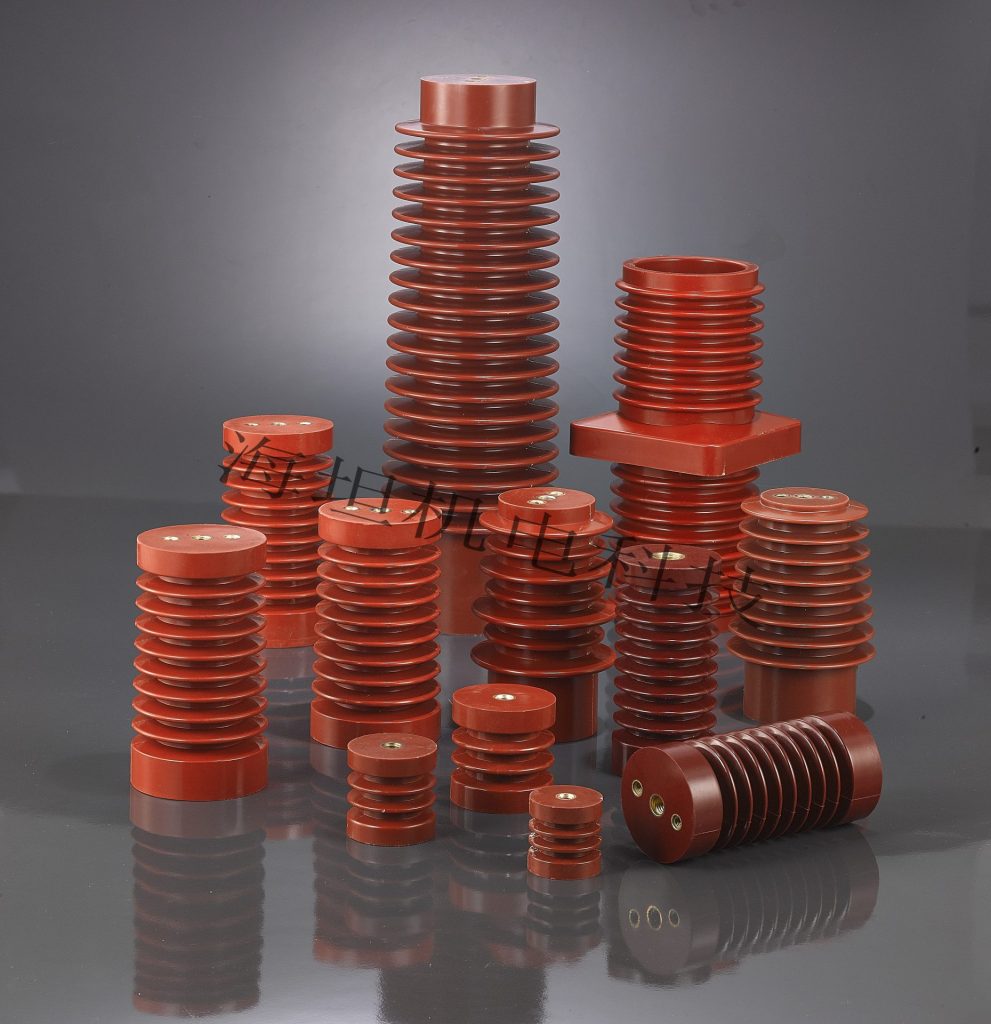
In the production of ฉนวน DMC (Dough Moulding Compound), consistency is not achieved by chance—it is engineered from the very beginning. The foundation of reliable electrical insulation performance lies in precision mold design and advanced manufacturing processes. From blueprint to finished product, every step must be tightly controlled to ensure dimensional accuracy, superior surface quality, and batch-to-batch stability.
Precision Mold Design: The Starting Point of Consistency
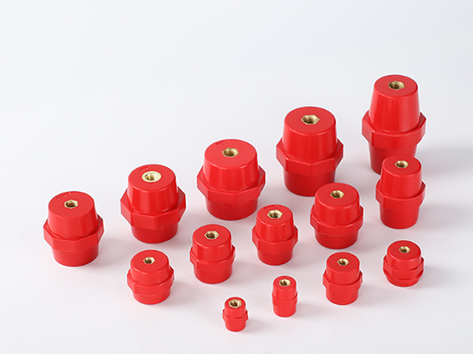
The journey begins with meticulous mold design. Since ฉนวน DMC are widely used in electrical systems where tolerance deviations can lead to performance issues, the mold must be engineered with extreme precision.
Key Design Considerations:
Dimensional Accuracy
CAD and simulation tools are used to define exact geometries, ensuring that critical dimensions such as creepage distance, wall thickness, and mounting interfaces meet strict standards.
Shrinkage Compensation
DMC materials exhibit predictable shrinkage during curing. Designers must incorporate compensation factors into the mold dimensions to ensure final product accuracy.
Flow Optimization
Proper gate and runner system design ensures uniform material flow, minimizing internal stress, air traps, and defects.
Ventilation Design
Effective venting channels prevent gas accumulation during compression molding, which directly impacts surface finish and structural integrity.
High-Precision Mold Manufacturing
Even the best design cannot deliver results without high-quality manufacturing. Precision machining ensures that the mold faithfully reflects the design intent.
Core Manufacturing Processes:
CNC Machining
High-speed CNC machines achieve micron-level tolerances, ensuring dimensional consistency across cavities.
Grinding and Polishing
Surface finishing processes are critical for achieving low roughness levels, directly influencing the final product’s surface quality.
Material Selection for Molds
High-grade tool steels with excellent wear resistance and thermal stability are selected to extend mold life and maintain precision over long production cycles.
Surface Quality Control: Beyond Appearance
The surface quality of ฉนวน DMC is not merely aesthetic—it directly affects electrical performance, including insulation resistance and contamination resistance.
How Mold Quality Impacts Surface Finish:
Polished Cavities
Mirror-like finishes reduce friction during demolding and produce smooth, defect-free surfaces.
Uniform Pressure Distribution
Well-designed molds ensure even compression, preventing flow lines, voids, or surface blemishes.
Anti-Sticking Treatments
Specialized coatings or surface treatments improve release performance and reduce product damage.
Ensuring Dimensional Stability in Production
Consistency across batches requires more than a good mold—it requires a system that maintains stability throughout the production lifecycle.
Critical Control Measures:
Temperature Control
Precise mold temperature regulation ensures uniform curing and prevents warping or dimensional drift.
Pressure Consistency
Stable compression pressure ensures uniform density and mechanical strength.
Process Standardization
Clearly defined molding parameters (time, temperature, pressure) eliminate variability between production runs.
Regular Mold Maintenance
Periodic inspection, cleaning, and re-polishing prevent wear-induced deviations.
Extending Mold Life for Long-Term Consistency
A high-quality mold is a long-term asset. Its durability directly impacts production efficiency and product uniformity.
Strategies for Longevity:
Wear-Resistant Coatings
Surface treatments such as nitriding enhance hardness and reduce abrasion.
Optimized Cooling Systems
Efficient cooling reduces thermal fatigue and prolongs mold lifespan.
Preventive Maintenance Programs
Scheduled servicing ensures the mold continues to perform within tolerance limits.
Batch Stability: The Ultimate Goal
Consistency in ฉนวน DMC production is measured over time. Achieving batch stability means every unit meets the same high standard.
Key Outcomes of Precision Mold Engineering:
Stable Dimensions Across Batches
Ensures compatibility with assembly systems and reduces rejection rates.
Uniform Mechanical Properties
Guarantees reliable performance under electrical and environmental stress.
Consistent Surface Quality
Enhances insulation performance and resistance to contamination.
บทสรุป
From blueprint to finished product, precision mold design and manufacturing form the backbone of ฉนวน DMC quality. By focusing on high-accuracy design, advanced machining processes, controlled molding conditions, and long-term mold durability, manufacturers can ensure exceptional consistency in every batch.
Ultimately, performance consistency is not an afterthought—it is built into the process from the very first line drawn on the blueprint.
คำถามที่พบบ่อย
1. Why is mold precision so important for DMC insulators?
Mold precision directly determines the dimensional accuracy and structural integrity of DMC insulators. Even small deviations can affect creepage distance, assembly compatibility, and overall insulation performance, leading to potential safety risks or product failure.
2. How does mold design influence product consistency?
A well-engineered mold ensures uniform material flow, proper shrinkage compensation, and balanced pressure distribution. These factors help eliminate defects such as warping, voids, or uneven surfaces, ensuring consistent quality across batches.
3. What role does material shrinkage play in mold design?
DMC materials shrink during the curing process. Designers must calculate and incorporate shrinkage rates into the mold dimensions to ensure that the final product meets exact specifications after molding.
4. How is surface quality of DMC insulators controlled?
Surface quality is primarily controlled by:
Mold cavity polishing (to reduce roughness)
Proper venting (to avoid air traps)
Stable molding parameters (temperature and pressure)
A high-quality mold surface results in smooth, defect-free insulators with better electrical performance.
5. What manufacturing technologies are used for high-precision molds?
Common technologies include:
CNC machining for high dimensional accuracy
EDM for complex and fine structures
Precision grinding and polishing for superior surface finish
These processes ensure the mold accurately reflects the design.
6. How can manufacturers ensure batch-to-batch consistency?
Consistency is achieved through:
Standardized molding parameters (temperature, pressure, time)
Controlled production environments
Regular mold inspection and maintenance
Strict quality control systems
7. What factors affect mold lifespan?
Mold lifespan depends on:
Material quality (e.g., high-grade tool steel)
Surface treatments (like nitriding or coatings)
Operating conditions (temperature and pressure cycles)
Maintenance frequency
Proper care significantly extends service life and maintains precision.
8. How often should molds be maintained?
Maintenance schedules depend on production volume, but typically include:
Routine cleaning after production cycles
Periodic inspection for wear or deformation
Re-polishing or repair when surface quality declines
Preventive maintenance is key to avoiding unexpected defects.
9. Can mold design reduce production defects?
Yes. Optimized gate design, proper venting, and balanced cavity layout can significantly reduce defects such as air bubbles, incomplete filling, and surface marks, improving overall yield.
10. What is the relationship between mold quality and electrical performance?
High-quality molds produce insulators with smooth surfaces and accurate dimensions, which enhance insulation resistance, reduce contamination risks, and ensure reliable long-term electrical performance.
--- จบ ---
 อีเมล์: [email protected]
  เลขที่ 20 ถนนหลิงหยุน ตงเฟิง
เขตอุตสาหกรรม เมือง Liushi เมือง Yueqing
เมือง มณฑลเจ้อเจียง


วีแชท
© ลิขสิทธิ์ 2024 China Haitan Electromechanical Technology Co., Ltd. สงวนลิขสิทธิ์สนับสนุนโดย:มิถุนายน นโยบายความเป็นส่วนตัว
 Thai
Thai  English (United States)
  English (South Africa)
  Arabic
  Belarusian
  Bengali
  Japanese
  Kazakh
  Korean
  Myanmar
  Russian
  Ukrainian
  Uzbek
Uzbek  Vietnamese
  Chinese