
Why DIN Rail Systems Are Still Growing in the Age of Smart Devices
บล็อก | ห้องข่าว | พ.ค. 16,2026
การแนะนำ
As industries move toward smart manufacturing, IoT connectivity, and intelligent power management, many traditional electrical components are being redesigned or replaced. Yet one technology continues to grow alongside modern automation systems: the DIN rail system.
Despite the rapid rise of smart devices, DIN rails remain a core part of electrical cabinets, industrial automation, renewable energy systems, and intelligent infrastructure. Their continued growth is not accidental—it is the result of unmatched compatibility, modularity, and adaptability.
What Is a DIN Rail System?
อัน DIN rail system is a standardized mounting framework used to install electrical and electronic devices inside control panels and distribution cabinets.
It supports components such as:
Circuit breakers
PLCs and controllers
Relays and contactors
มิเตอร์อัจฉริยะ
IoT modules
Power supplies
Surge protection devices
The most common standard is the 35mm top-hat DIN rail, widely adopted worldwide.
The Rise of Smart Devices in Electrical Systems
Modern electrical infrastructure is becoming increasingly intelligent. Today’s systems often include:
Remote monitoring
Real-time energy management
Smart sensors
Cloud-connected control systems
Industrial IoT devices
AI-assisted automation platforms
As devices become smarter, the demand for flexible and scalable installation systems also increases.
This is where DIN rail systems continue to prove their value.
Why DIN Rail Systems Continue to Grow
Perfect Match for Modular Smart Systems
Smart electrical systems are highly modular by nature. Devices are constantly being:
Added
Replaced
Upgraded
Reconfigured
DIN rails support this flexibility perfectly by allowing components to snap into place quickly without redesigning the cabinet.
This modular approach is essential for Industry 4.0 environments.
Universal Compatibility Across Manufacturers
One of the greatest strengths of DIN rail systems is standardization.
Smart devices from different manufacturers can often be mounted on the same DIN rail, including:
Smart relays
IoT gateways
Energy monitoring devices
Automation controllers
This compatibility simplifies engineering design and supply chain management.
Space Optimization for High-Density Cabinets
Modern smart systems require more devices inside smaller enclosures.
DIN rail layouts help engineers:
Maximize cabinet space
Improve cable management
Organize high-density device installations
Maintain airflow and thermal efficiency
Without DIN rails, compact smart control cabinets would be much harder to design.
Faster Installation and Maintenance
Smart systems require ongoing updates and maintenance. รางปีกนก mounting allows technicians to:
Install devices rapidly
Replace modules easily
Reduce downtime during upgrades
Improve troubleshooting efficiency
This is especially important for data centers, energy systems, and industrial automation.
Strong Support for Renewable Energy Systems
The growth of renewable energy has further accelerated รางปีกนก demand.
DIN rail systems are widely used in:
Solar combiner boxes
Energy storage systems (ESS)
EV charging stations
Smart grid infrastructure
As clean energy infrastructure expands globally, DIN rail installations continue to increase.
Reliable Mechanical Stability
Even in the age of digitalization, physical reliability remains critical.
DIN rails provide:
Vibration resistance
Stable mechanical support
Long service life
Reliable grounding structures
This makes them suitable for harsh industrial and transportation environments.
DIN Rails and Industry 4.0
Industry 4.0 emphasizes interconnected, intelligent, and scalable manufacturing systems.
DIN rails support these goals by enabling:
Rapid cabinet reconfiguration
Flexible automation architecture
Easy sensor integration
Distributed control systems
In many smart factories, DIN rails act as the physical platform supporting digital transformation.
Smart Devices Commonly Mounted on DIN Rails
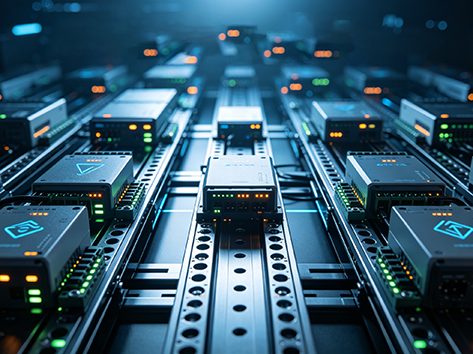
Today’s รางปีกนก systems support a wide range of intelligent devices, including:
Smart energy meters
Industrial IoT gateways
Ethernet switches
Remote I/O modules
Smart circuit breakers
Wireless communication modules
Edge computing controllers
This demonstrates how DIN rails have evolved from simple mounting hardware into critical infrastructure for smart systems.
Challenges Driving DIN Rail Innovation
As smart devices evolve, DIN rail technology is also improving to meet new demands.
Emerging trends include:
Lightweight high-strength materials
Better corrosion resistance
Integrated grounding solutions
Heat management improvements
Compact rail profiles for miniaturized electronics
Manufacturers are designing DIN rail systems specifically for modern digital applications.
Why DIN Rails Will Remain Important
Some technologies disappear as industries modernize. รางปีกนก have done the opposite—they have become even more relevant.
Their continued success comes from several key advantages:
Global standardization
Long-term compatibility
Mechanical simplicity
Scalability for future systems
Low installation cost
Adaptability to smart devices
Rather than being replaced by smart technology, DIN rails have become the foundation supporting it.
คำถามที่พบบ่อย
1. Are DIN rails still used in modern smart systems?
Yes. DIN rails are widely used in smart automation, IoT systems, renewable energy, and intelligent control cabinets.
2. Why are DIN rails important for Industry 4.0?
They support modular, scalable, and flexible control system design, which is essential for smart factories.
3. Can smart devices be mounted on standard DIN rails?
Most modern industrial smart devices are designed for standard DIN rail mounting.
4. What industries use DIN rail systems today?
Industrial automation, renewable energy, transportation, building management, and smart infrastructure all rely heavily on DIN rail systems.
5. Will DIN rails become obsolete?
Unlikely. Their simplicity, compatibility, and adaptability make them highly relevant even in advanced digital systems.
--- จบ ---
 อีเมล์: [email protected]
  เลขที่ 20 ถนนหลิงหยุน ตงเฟิง
เขตอุตสาหกรรม เมือง Liushi เมือง Yueqing
เมือง มณฑลเจ้อเจียง


วีแชท
© ลิขสิทธิ์ 2024 China Haitan Electromechanical Technology Co., Ltd. สงวนลิขสิทธิ์สนับสนุนโดย:มิถุนายน นโยบายความเป็นส่วนตัว
 Thai
Thai  English (United States)
  English (South Africa)
  Arabic
  Belarusian
  Bengali
  Japanese
  Kazakh
  Korean
  Myanmar
  Russian
  Ukrainian
  Uzbek
Uzbek  Vietnamese
  Chinese