Why Low Resistance Matters in Grounding Systems
บล็อก | ห้องข่าว | พ.ค. 20,2026
การแนะนำ
Grounding systems are one of the most important safety components in modern electrical infrastructure. Whether in industrial facilities, substations, telecommunications systems, renewable energy installations, or data centers, proper grounding protects equipment, personnel, and electrical networks from dangerous fault currents and voltage surges.
Among all grounding system characteristics, low resistance is one of the most critical factors. A low-resistance grounding system ensures that fault currents can safely flow into the earth with minimal impedance, reducing the risk of equipment damage, electrical shock, fire hazards, and system instability.
What Is Ground Resistance?
Ground resistance refers to the opposition encountered when electrical current flows from a grounding system into the earth.
A grounding system typically includes:
Ground rods
Ground grids
Copper ground bars
Ground conductors
Bonding connections
Earth electrodes
The lower the resistance, the easier it is for fault current or surge energy to dissipate safely into the ground.
Ground resistance is commonly measured in ohms (Ω).
Why Low Resistance Is Important
Improves Electrical Safety
The primary purpose of grounding is protecting people from electrical shock.
When a fault occurs, low resistance allows dangerous current to quickly travel to earth instead of passing through equipment enclosures or human bodies.
Without effective grounding:
Touch voltage may increase
Equipment surfaces may become energized
Shock hazards become more severe
A low-resistance grounding system significantly reduces these risks.
Protects Equipment from Damage
Electrical systems frequently experience:
Short circuits
Lightning strikes
Surge currents
Static discharge
Fault currents
Low grounding resistance helps safely dissipate excess electrical energy before it damages sensitive equipment.
Proper grounding protects:
Transformers
สวิตช์เกียร์
Industrial machinery
Communication equipment
Servers and data center systems
Renewable energy inverters
Enhances Lightning Protection
Lightning protection systems rely heavily on low-resistance grounding.
When lightning strikes a structure or transmission line, enormous surge currents must be safely transferred into the earth within milliseconds.
High resistance grounding may result in:
Dangerous voltage buildup
Equipment destruction
Fire hazards
Secondary flashovers
Low-resistance grounding improves the effectiveness of lightning arresters and surge protection systems.
Stabilizes Voltage Levels
Grounding systems help maintain stable voltage references throughout electrical networks.
Low resistance minimizes:
Voltage fluctuations
Electromagnetic interference (EMI)
Transient overvoltages
Electrical noise
This is especially important for:
Data centers
Telecommunications systems
Medical facilities
Automation equipment
Industrial control systems
Sensitive electronic devices require stable grounding conditions for reliable operation.
Supports Fast Fault Clearing
Protective devices such as circuit breakers and relays depend on sufficient fault current to operate properly.
A low-resistance grounding path allows fault current to flow quickly, enabling protection systems to disconnect faulty circuits faster.
This helps:
Prevent equipment overheating
Reduce arc flash risk
Minimize outage duration
Improve overall system reliability
Recommended Ground Resistance Values
The ideal grounding resistance depends on the application and industry standards.
Typical recommendations include:
| แอปพลิเคชัน | Recommended Resistance |
| Residential grounding | Below 25 Ω |
| Industrial facilities | 1–5 Ω |
| Data centers | Below 1 Ω |
| สถานีย่อย | Often below 1 Ω |
| Telecommunications systems | Less than 5 Ω |
| Lightning protection systems | As low as possible |
Critical infrastructure usually requires extremely low grounding resistance for maximum protection.
Factors That Affect Ground Resistance
Soil Resistivity
Soil resistivity is one of the biggest factors influencing grounding performance.
Low Resistivity Soils
Moist soil
Clay
Mineral-rich earth
These soils provide better conductivity.
High Resistivity Soils
Sand
Rock
Dry soil
These conditions make achieving low resistance more difficult.
Moisture Content
Water significantly improves soil conductivity.
Dry conditions increase grounding resistance, while moist soil lowers resistance.
Seasonal changes can therefore affect grounding system performance.
Temperature
Frozen soil has much higher resistance than normal soil.
Grounding systems in cold climates often require deeper electrodes to reach stable moisture levels below the frost line.
Electrode Material
Copper is widely preferred because of its:
Excellent electrical conductivity
Corrosion resistance
Long service life
Copper ground bars and copper-bonded ground rods are commonly used in low-resistance grounding systems.
Electrode Size and Depth
Larger and deeper grounding electrodes increase contact area with the earth, reducing resistance.
Multiple ground rods connected together can also improve grounding effectiveness.
Importance of Copper in Low-Resistance Grounding Systems
Copper plays a major role in modern grounding systems due to its superior conductivity.
Advantages of Copper Grounding Components
High Electrical Conductivity
Copper efficiently transfers fault current with minimal resistance.
Excellent Corrosion Resistance
Copper maintains stable performance even in harsh environments.
Long Service Life
Copper grounding components can operate reliably for decades with minimal degradation.
ความแข็งแรงทางกล
Copper ground bars and connectors provide durable grounding connections under demanding conditions.
Common Grounding Components for Low Resistance Systems
แท่งกราวด์ทองแดง
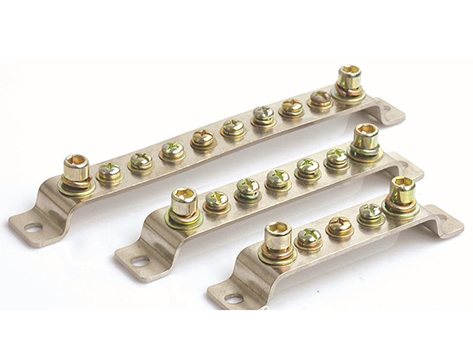
Copper ground bars provide centralized grounding and bonding points for electrical equipment.
They are commonly used in:
Distribution panels
Data centers
Telecom rooms
Industrial cabinets
ระบบพลังงานทดแทน
Ground Rods
Ground rods transfer current directly into the earth.
Common materials include:
Copper-bonded steel
Solid copper
Galvanized steel
Ground Grids
Substations and industrial plants often use grounding grids to distribute fault current over large areas.
Bonding Conductors
Bonding ensures all conductive components maintain equal electrical potential, reducing shock hazards.
How to Achieve Lower Ground Resistance
Increase Electrode Depth
Deeper rods reach moist soil layers with lower resistivity.
Use Multiple Ground Rods
Connecting several rods in parallel reduces overall resistance.
Improve Soil Conductivity
Ground enhancement materials may improve conductivity in poor soil conditions.
Use High-Quality Copper Components
Reliable copper ground bars and conductors reduce connection resistance.
Ensure Proper Bonding
Loose or corroded connections increase resistance and reduce grounding performance.
Maintenance of Grounding Systems
Even well-designed grounding systems require regular inspection and maintenance.
Common Maintenance Procedures
Ground resistance testing
Connection inspection
Corrosion checks
Thermal imaging
Bonding verification
Periodic maintenance ensures long-term grounding reliability.
Ground Resistance Testing Methods
Fall-of-Potential Test
One of the most widely used methods for measuring grounding resistance.
Clamp-On Ground Testing
Allows testing without disconnecting the grounding system.
Soil Resistivity Testing
Used during grounding system design to optimize electrode placement.
Industries That Require Low Resistance Grounding
ศูนย์ข้อมูล
Sensitive servers and networking equipment require stable grounding to prevent downtime.
ระบบพลังงานทดแทน
Solar and wind power installations rely on grounding for surge protection and operational safety.
Industrial Facilities
Factories with heavy machinery require reliable grounding to protect equipment and personnel.
Telecommunications
Low resistance grounding helps minimize signal interference and equipment damage.
Electrical Substations
Substations require highly effective grounding systems to handle large fault currents safely.
Future Trends in Grounding Technology
Grounding systems are becoming more advanced with technologies such as:
Smart grounding monitoring systems
IoT-enabled sensors
Predictive maintenance software
Corrosion-resistant advanced materials
AI-based fault diagnostics
These innovations improve safety, efficiency, and long-term reliability.
บทสรุป
Low resistance is essential for an effective grounding system. It improves electrical safety, protects equipment, supports lightning protection, stabilizes voltage levels, and ensures rapid fault clearing.
Achieving low grounding resistance requires proper system design, quality materials, reliable copper grounding components, and regular maintenance.
As modern electrical systems become increasingly complex and sensitive, low-resistance grounding will continue to play a vital role in ensuring safe, stable, and efficient power operation.
คำถามที่พบบ่อย
What is considered a good ground resistance value?
For most industrial applications, ground resistance below 5 ohms is considered good, while critical systems often require values below 1 ohm.
Why is copper commonly used in grounding systems?
Copper offers excellent electrical conductivity, corrosion resistance, durability, and long service life.
Can high ground resistance cause equipment damage?
Yes. High resistance limits fault current dissipation, increasing the risk of voltage buildup, surge damage, and electrical failure.
How often should grounding systems be tested?
Critical systems are often tested annually or more frequently depending on environmental conditions and operational requirements.
What factors increase grounding resistance?
Dry soil, rocky terrain, poor bonding, corrosion, and insufficient grounding electrodes can all increase resistance.
--- จบ ---
 อีเมล์: [email protected]
 เลขที่ 20 ถนนหลิงหยุน ตงเฟิง
เขตอุตสาหกรรม เมือง Liushi เมือง Yueqing
เมือง มณฑลเจ้อเจียง


วีแชท
© ลิขสิทธิ์ 2024 China Haitan Electromechanical Technology Co., Ltd. สงวนลิขสิทธิ์สนับสนุนโดย:มิถุนายน นโยบายความเป็นส่วนตัว
 Thai
Thai  English (United States)
  English (South Africa)
  Arabic
  Belarusian
  Bengali
  Japanese
  Kazakh
  Korean
  Myanmar
  Russian
  Ukrainian
  Uzbek
Uzbek  Vietnamese
  Chinese