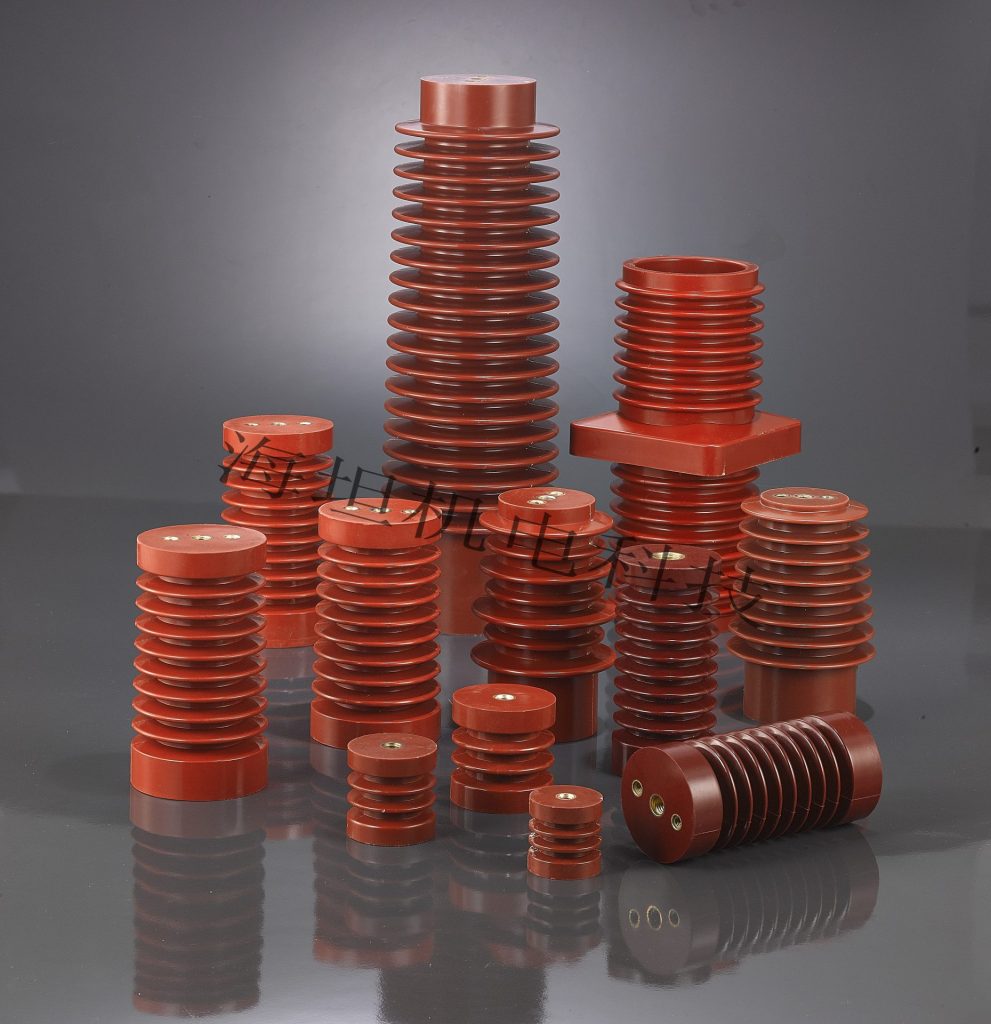
How Low Voltage Busbar Clamp Insulators Improve Electrical Safety
вступ
In low voltage power distribution systems, electrical safety is a critical priority. From switchgear and control panels to substations and industrial cabinets, the reliability of every component directly affects system stability and personnel protection. Among these components, low voltage busbar clamp insulators play a vital yet often overlooked role in improving overall electrical safety.
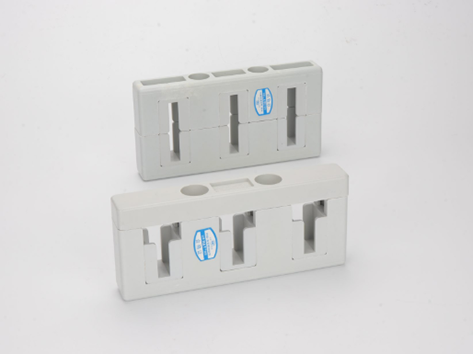
What Is a Low Voltage Busbar Clamp Insulator?
А low voltage busbar clamp insulator is a specialized insulating component designed to secure busbars mechanically while electrically isolating them from supporting structures or adjacent conductive parts. It combines mechanical fixing and insulation in a single solution, ensuring stable busbar positioning and safe current transmission.
These insulators are commonly made from high-performance materials such as DMC (компаунд для формування тіста), offering strong mechanical strength and excellent electrical insulation properties.
Preventing Electrical Short Circuits
One of the primary safety functions of busbar clamp insulators is to maintain adequate insulation distance between live busbars and grounded metal structures.
By securely clamping and isolating the busbar, the insulator:
Prevents accidental contact between phases
Eliminates the risk of busbar movement under electrical or thermal stress
Reduces the likelihood of phase-to-phase or phase-to-ground short circuits
Stable insulation spacing is especially important in compact low voltage panels where clearance is limited.
Reducing Risk of Electric Shock to Personnel
Exposed or poorly fixed busbars can pose a serious shock hazard during installation, maintenance, or inspection. Low voltage busbar clamp insulators provide:
Reliable electrical isolation from enclosures and frames
Secure mechanical fixing to prevent unexpected movement
Enhanced safety during manual operation and maintenance
By minimizing the possibility of accidental contact with live conductors, these insulators help protect technicians and maintenance personnel.
Enhancing Mechanical Stability Under Fault Conditions
During short-circuit events, busbars can be subjected to high electromagnetic forces. Without proper support, these forces may cause busbars to bend, shift, or collide, leading to severe electrical faults.
Busbar clamp insulators:
Firmly anchor busbars in place
Withstand high mechanical loads
Maintain insulation integrity during fault conditions
This mechanical stability is crucial for preventing cascading failures and ensuring system safety during abnormal operating conditions.
Improving Fire Safety and Heat Resistance
Low voltage systems often carry high currents, generating significant heat. High-quality busbar clamp insulators are designed to withstand:
Elevated operating temperatures
Thermal cycling
Short-term overload conditions
Materials such as DMC offer excellent heat resistance and arc resistance, reducing the risk of insulation breakdown, overheating, and fire hazards within electrical panels.
Maintaining Long-Term Insulation Performance
Over time, environmental factors such as humidity, dust, and pollution can degrade insulation materials. High-performance busbar clamp insulators resist:
Moisture absorption
Surface tracking and erosion
Aging and material fatigue
This long-term insulation stability ensures consistent electrical safety throughout the system’s service life, reducing the risk of hidden insulation failures.
Supporting Compliance with Electrical Safety Standards
Low voltage busbar clamp insulators help electrical systems comply with relevant safety and performance standards by ensuring:
Proper insulation clearances
Secure mechanical support
Reliable operation under rated conditions
Their use is essential in meeting industry and regulatory requirements for switchgear, distribution boards, and control equipment.
Applications Where Electrical Safety Is Critical
Low voltage busbar clamp insulators широко використовуються в:
Switchgear and distribution panels
Control cabinets and motor control centers
Substations and transformer rooms
Renewable energy and energy storage systems
In each application, they play a key role in protecting both equipment and personnel.
Висновок
Low voltage busbar clamp insulators are more than just mounting components—they are a critical safety element in electrical systems. By preventing short circuits, improving mechanical stability, reducing shock risk, and maintaining long-term insulation performance, they significantly enhance electrical safety in low voltage power distribution.
For engineers, system integrators, and electrical contractors, selecting high-quality busbar clamp insulators is a fundamental step toward building safer, more reliable electrical installations.
FAQ
1. Why are busbar clamp insulators necessary in low voltage systems?
Busbar clamp insulators are essential because they secure busbars mechanically while providing reliable electrical insulation. They help prevent short circuits, electric shock, and mechanical displacement, significantly improving overall system safety.
2. How do busbar clamp insulators help prevent short circuits?
By maintaining proper insulation distance and firmly fixing the busbar position, busbar clamp insulators prevent unintended contact between live conductors, grounded structures, or different phases—reducing the risk of phase-to-phase and phase-to-ground faults.
3. Do busbar clamp insulators improve personnel safety?
Yes. These insulators reduce the risk of electric shock by isolating live busbars from enclosures and frames, and by preventing unexpected movement during operation or maintenance, they help protect technicians and maintenance personnel.
4. Can busbar clamp insulators withstand short-circuit forces?
High-quality low voltage busbar clamp insulators are designed to withstand electromagnetic forces generated during short-circuit conditions. Their mechanical strength helps keep busbars stable, preventing deformation or collision that could lead to severe electrical faults.
5. What materials are commonly used for low voltage busbar clamp insulators?
Busbar clamp insulators are commonly made from materials such as DMC (компаунд для формування тіста), which offers excellent dielectric strength, mechanical durability, heat resistance, and arc resistance—ideal for safety-critical applications.
6. How do busbar clamp insulators contribute to fire safety?
By providing heat resistance, arc resistance, and stable insulation performance, busbar clamp insulators reduce the risk of insulation breakdown, overheating, and internal arcing, helping to minimize fire hazards in low voltage panels.
7. Are busbar clamp insulators suitable for long-term operation?
Yes. High-performance busbar clamp insulators resist aging, moisture, and surface tracking, ensuring consistent insulation performance over long service periods and reducing the risk of hidden safety issues.
--- КІНЕЦЬ ---
 Електронна адреса: [email protected]
 No. 20 Lingyun Road, Dongfeng
Промислова зона, місто Ліуші, Юецін
Місто, провінція Чжецзян


© Copyright 2024 China Haitan Electromechanical Technology Co., Ltd. Усі права захищено.ЗА ПІДТРИМКУ:JUNJ Політика конфіденційності
 Ukrainian
  English (United States)
  English (South Africa)
  Arabic
  Belarusian
  Bengali
  Japanese
  Kazakh
  Korean
  Myanmar
  Russian
  Thai
Thai  Uzbek
Uzbek  Vietnamese
  Chinese