
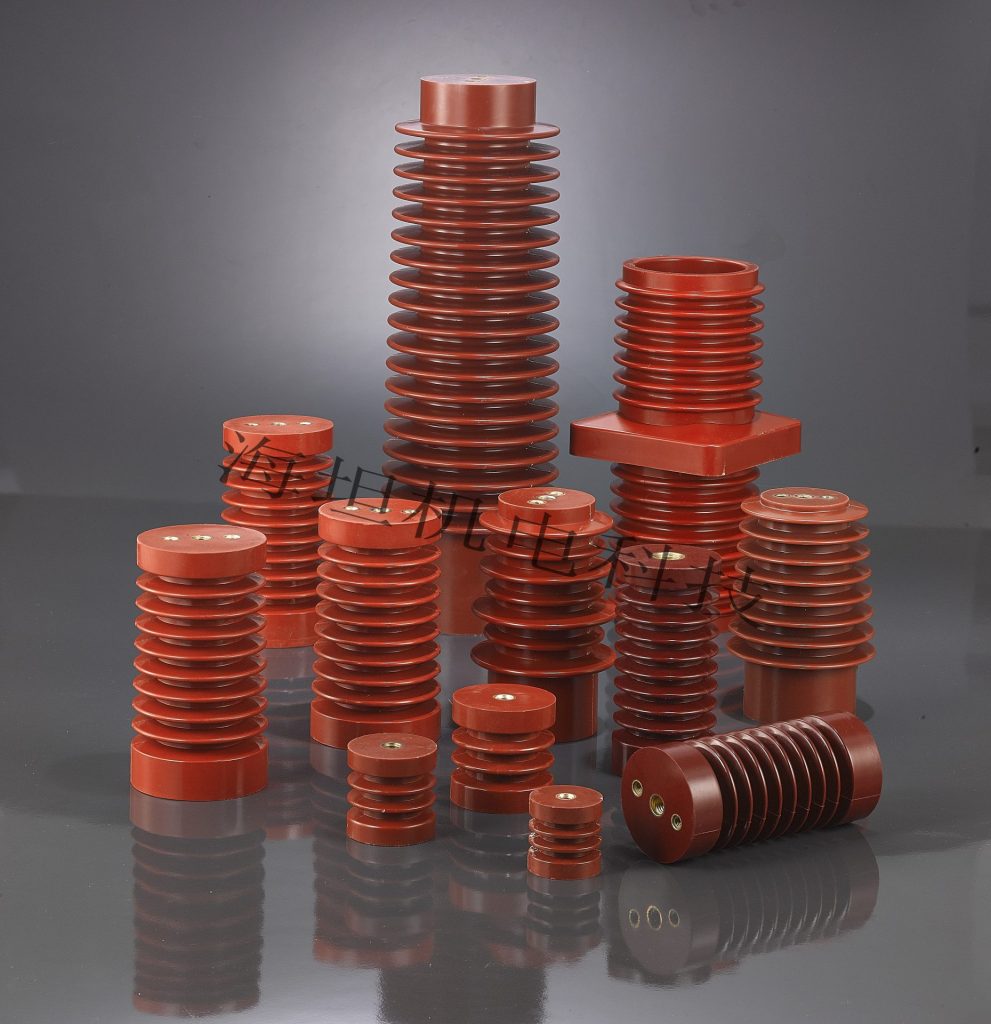
Understanding Epoxy Busbar Support Insulators: Structure, Materials, and Functions
вступ
In modern electrical power systems, reliability and safety depend not only on major components such as transformers and switchgear, but also on critical insulating parts. Epoxy busbar support insulators are one such essential component, widely used in low and medium voltage power distribution systems.
This article provides a detailed overview of the structure, materials, and functions of epoxy busbar support insulators and explains why they are crucial in today’s electrical installations.
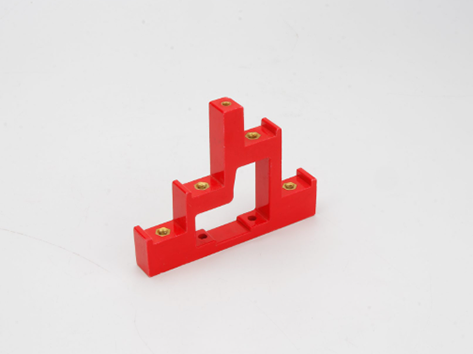
What Is an Epoxy Busbar Support Insulator?
Ан epoxy busbar support insulator is an insulating and load-bearing component designed to support, fix, and electrically isolate busbars within electrical equipment. These insulators are commonly used in:
Transformers
Low voltage and medium voltage switchgear
Distribution cabinets and control panels
Their main purpose is to ensure safe electrical insulation while providing strong mechanical support.
Structure of Epoxy Busbar Support Insulators
Epoxy busbar support insulators are typically designed as standoff-type structures, which raise the busbar above the mounting surface. Key structural features include:
Main Insulating Body
The main body is molded from epoxy resin and forms the core insulating structure. It provides:
High dielectric strength
Stable creepage and clearance distances
Resistance to tracking and electrical breakdown
Mounting Interfaces
Most epoxy busbar supports include:
Embedded metal inserts or threaded holes
Flat or contoured mounting surfaces
These features ensure secure installation onto metal frames or cabinet bases.
Busbar Fixing Area
The upper section is designed to:
Hold copper or aluminum busbars securely
Distribute mechanical load evenly
Prevent movement during thermal expansion or short-circuit events
Materials Used in Epoxy Busbar Support Insulators
Епоксидна смола
Epoxy resin is the primary insulating material, offering:
Excellent electrical insulation properties
Strong adhesion and molding flexibility
Good thermal and chemical resistance
Reinforcing Fillers
To improve mechanical strength, epoxy busbar supports often include:
Glass fibers
Mineral fillers
These reinforcements enhance load capacity, impact resistance, and dimensional stability.
Flame Retardant Additives
Сучасний epoxy busbar support insulators are typically formulated to meet UL94 V-0 flame retardant standards, helping reduce fire risks in electrical systems.
Functions of Epoxy Busbar Support Insulators
Electrical Insulation
The primary function is to electrically isolate live busbars from grounded metal structures, preventing leakage current, flashover, and short circuits.
Механічна підтримка
Epoxy busbar supports provide high mechanical strength to:
Carry the weight of busbars
Withstand electrodynamic forces during short circuits
Maintain stable alignment under vibration and thermal stress
Maintaining Safety Distances
By design, these insulators help maintain:
Required creepage distances
Adequate clearance between conductors
This ensures compliance with electrical safety standards.
Improving System Reliability
Stable insulation and mechanical support reduce the risk of:
Loose connections
Insulation failure
Unexpected system downtime
Advantages of Epoxy Busbar Support Insulators
High dielectric strength and insulation reliability
Excellent mechanical load capacity
Flame retardant and fire-safe performance
Resistance to heat, moisture, and chemicals
Long service life with low maintenance requirements
These advantages make epoxy busbar support insulators ideal for demanding industrial and power applications.
Типові програми
Epoxy busbar support insulators are widely used in:
Power and distribution transformers
Low voltage and medium voltage switchgear
Industrial distribution cabinets
Renewable energy systems such as solar inverters and energy storage units
Висновок
Epoxy busbar support insulators play a vital role in ensuring electrical safety, mechanical stability, and long-term reliability in modern power systems. Their well-designed structure, advanced composite materials, and essential functions make them indispensable in transformers, switchgear, and distribution equipment.
Selecting high-quality epoxy busbar support insulators is a key step toward building safe, efficient, and durable electrical systems.
--- КІНЕЦЬ ---
 Електронна адреса: [email protected]
  No. 20 Lingyun Road, Dongfeng
Промислова зона, місто Ліуші, Юецін
Місто, провінція Чжецзян


© Copyright 2024 China Haitan Electromechanical Technology Co., Ltd. Усі права захищено.ЗА ПІДТРИМКУ:JUNJ Політика конфіденційності
 Ukrainian
  English (United States)
  English (South Africa)
  Arabic
  Belarusian
  Bengali
  Japanese
  Kazakh
  Korean
  Myanmar
  Russian
  Thai
Thai  Uzbek
Uzbek  Vietnamese
  Chinese