How to Ensure Safe Bonding in Electrical Cabinets
Blog | Yangiliklar xodimi | May 21,2026
Kirish
Elektr shkaflari are essential components in industrial automation, power distribution, telecommunications, renewable energy systems, and commercial electrical infrastructure. Inside these cabinets, numerous electrical devices, conductors, and metal components operate together under varying voltage and current conditions.
To ensure safety and reliable operation, proper bonding is critical. Safe bonding in electrical cabinets helps maintain equal electrical potential between conductive parts, reduces shock hazards, improves fault current paths, and supports effective grounding performance.
Improper bonding may lead to electrical faults, equipment damage, electromagnetic interference, or even fire and safety risks. This article explains how to ensure safe bonding in electrical cabinets, including best practices, common mistakes, and key design considerations.
What Is Electrical Bonding?
Electrical bonding is the process of electrically connecting conductive components together to maintain the same electrical potential.
In electrical cabinets, bonding typically connects:
Cabinet enclosures
Mounting plates
Doors and panels
Ground bars
Din relslari
Cable trays
Metallic conduit systems
Equipment frames
Bonding creates a low-resistance path for fault current, helping protective devices operate correctly during electrical faults.
Difference Between Bonding and Grounding
Although bonding and grounding are closely related, they are not identical.
Grounding
Grounding connects an electrical system directly to earth for fault current dissipation and voltage stabilization.
Bonding
Bonding connects conductive components together to eliminate voltage differences between them.
Both systems work together to improve electrical safety and system reliability.
Why Safe Bonding Matters in Electrical Cabinets
Prevents Electrical Shock Hazards
Without proper bonding, exposed metal surfaces may become energized during a fault condition.
Safe bonding ensures fault current flows through designated grounding paths instead of through personnel or equipment surfaces.
This significantly reduces electric shock risks.
Improves Fault Current Path Efficiency
Protective devices such as circuit breakers and fuses rely on sufficient fault current to disconnect faulty circuits quickly.
Low-resistance bonding connections help:
Increase fault current flow
Accelerate breaker operation
Reduce arc flash risks
Prevent equipment overheating
Reduces Electromagnetic Interference (EMI)
Poor bonding may create unwanted electrical noise and electromagnetic interference.
Proper cabinet bonding helps improve:
Signal stability
Communication reliability
Equipment performance
Industrial automation accuracy
This is especially important in:
Data centers
Telecom systems
PLC control cabinets
Industrial automation systems
Supports Lightning and Surge Protection
During lightning strikes or surge events, bonding equalizes voltage potential between conductive parts and reduces dangerous voltage differences.
This helps protect:
Sensitive electronics
Power supplies
Communication equipment
Monitoring systems
Key Components of Safe Cabinet Bonding
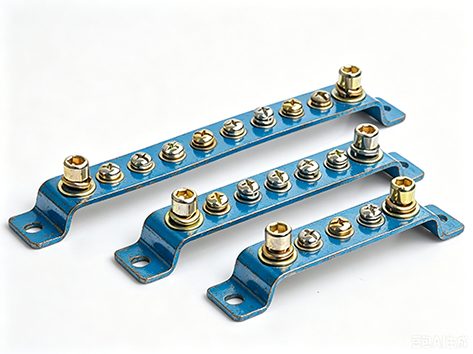
Copper ground bars provide centralized grounding and bonding points inside electrical cabinets.
Advantages include:
Excellent conductivity
Low resistance
Strong corrosion resistance
Reliable long-term performance
Copper ground bars are commonly used in industrial control panels and distribution cabinets.
Flexible bonding jumpers connect moving or removable components such as cabinet doors.
These conductors maintain electrical continuity even during movement or vibration.
Ground conductors connect cabinet bonding systems to the facility grounding network.
Proper conductor sizing is critical for safe fault current handling.
DIN rails used for mounting electrical components should be properly bonded to prevent floating voltage conditions.
Best Practices for Safe Bonding in Electrical Cabinets
Use Low-Resistance Connections
All bonding connections should provide minimal electrical resistance.
To achieve this:
Use clean conductive surfaces
Remove paint or coatings at bonding points
Tighten hardware properly
Use high-quality copper conductors
Low-resistance connections improve fault current flow and reduce heating.
Properly Bond Cabinet Doors and Panels
Cabinet doors are often overlooked during installation.
Since hinges alone may not provide reliable electrical continuity, flexible bonding straps should be installed between:
Cabinet doors
Removable side panels
Main cabinet structure
This ensures continuous bonding even after repeated opening and closing.
Use Correct Conductor Sizing
Bonding conductors must safely carry expected fault current without overheating.
Conductor size depends on:
Fault current level
System voltage
Protective device rating
Applicable electrical standards
Undersized conductors increase safety risks and reduce bonding effectiveness.
Minimize Bonding Path Length
Shorter bonding paths reduce resistance and improve performance.
Avoid:
Unnecessary bends
Long routing paths
Loose conductor arrangements
Compact bonding layouts improve reliability and reduce impedance.
Ensure Corrosion Protection
Corrosion increases connection resistance and weakens bonding performance over time.
To reduce corrosion risks:
Use tin-plated copper components
Apply anti-corrosion treatments
Avoid dissimilar metal contact
Perform periodic inspections
This is especially important in humid or coastal environments.
Bond All Metallic Components
Every conductive component inside the cabinet should be properly bonded, including:
Mounting plates
Cable shields
Din relslari
Cable trays
Metallic conduits
Equipment frames
Unbonded metal parts may become dangerous during fault conditions.
Follow International Standards
Electrical cabinet bonding should comply with relevant standards such as:
IEC standards
NEC requirements
UL certifications
IEEE guidelines
Compliance helps ensure safety, reliability, and legal conformity.
Common Bonding Mistakes to Avoid
Painted surfaces or loose mounting hardware may prevent effective electrical continuity.
Dedicated bonding conductors are often necessary.
Unbonded cabinet doors are a common safety issue.
Always install bonding straps on movable panels.
Small conductors may overheat during fault conditions and fail to carry sufficient fault current.
Oxidation, paint, dirt, or grease increase connection resistance.
Bonding points should be clean and conductive.
Bonding systems degrade over time due to vibration, corrosion, and environmental exposure.
Regular inspection is essential.
Bonding and Grounding in Different Applications
Industrial Control Cabinets
Proper bonding improves electrical noise control and equipment protection.
Reliable bonding helps maintain stable signal integrity and protects sensitive servers.
Solar and wind systems require effective bonding for lightning protection and inverter safety.
Bonding minimizes electromagnetic interference and communication disruptions.
Low-resistance bonding improves fault clearing and operational safety.
Testing and Inspection of Bonding Systems
Continuity Testing
Checks whether conductive parts are electrically connected properly.
Measures bonding resistance to ensure low-impedance connections.
Infrared inspections help identify overheating caused by loose bonding points.
Visual Inspection
Technicians should regularly inspect for:
Corrosion
Loose hardware
Damaged conductors
Discoloration
Mechanical wear
Maintenance Tips for Bonding Systems
To maintain safe cabinet bonding:
Tighten connections periodically
Clean bonding surfaces
Replace damaged conductors
Monitor corrosion
Verify continuity regularly
Preventive maintenance improves long-term safety and reliability.
Future Trends in Electrical Cabinet Bonding
Modern electrical systems are adopting advanced bonding technologies such as:
Smart grounding monitoring systems
IoT-enabled cabinet diagnostics
Corrosion-resistant conductive materials
Integrated EMC protection solutions
Predictive maintenance platforms
As electrical infrastructure becomes more complex, advanced bonding systems will play an increasingly important role.
Xulosa
Safe bonding in electrical cabinets is essential for electrical safety, equipment protection, fault current management, and electromagnetic compatibility.
By using low-resistance connections, properly bonding all conductive components, selecting high-quality copper grounding materials, and following recognized standards, engineers can significantly improve cabinet safety and reliability.
Regular inspection and preventive maintenance further ensure long-term bonding performance in demanding industrial and commercial environments.
As modern electrical systems continue evolving, safe bonding will remain a fundamental requirement for reliable and efficient power distribution.
TSS
What is the purpose of bonding in electrical cabinets?
Bonding equalizes electrical potential between conductive parts and provides a safe path for fault current.
Why should cabinet doors be bonded?
Cabinet hinges alone may not provide reliable electrical continuity. Bonding straps ensure safe grounding during fault conditions.
What material is best for bonding conductors?
Copper is widely preferred due to its excellent conductivity, corrosion resistance, and durability.
How often should bonding systems be inspected?
Inspection frequency depends on the operating environment, but annual inspections are commonly recommended.
Can poor bonding cause electromagnetic interference?
Yes. Inadequate bonding may increase electrical noise and negatively affect sensitive electronic equipment.
--- OXIRI ---
 Elektron pochta: [email protected]
 № 20 Lingyun yo'li, dongfeng
Sanoat zonasi, liushi shahri, yuqish
Shahar, Jejian viloyati

G'altak

Sho'x
© Copyright 2024 Xitoy Gaitan elektromexanik texnologiya Co., Ltd. Barcha huquqlar himoyalangan.Qo'llab-quvvatlash: Junj Maxfiylik siyosati
 Uzbek
Uzbek  English (United States)
  English (South Africa)
  Arabic
  Belarusian
  Bengali
  Japanese
  Kazakh
  Korean
  Myanmar
  Russian
  Thai
Thai  Ukrainian
  Vietnamese
  Chinese