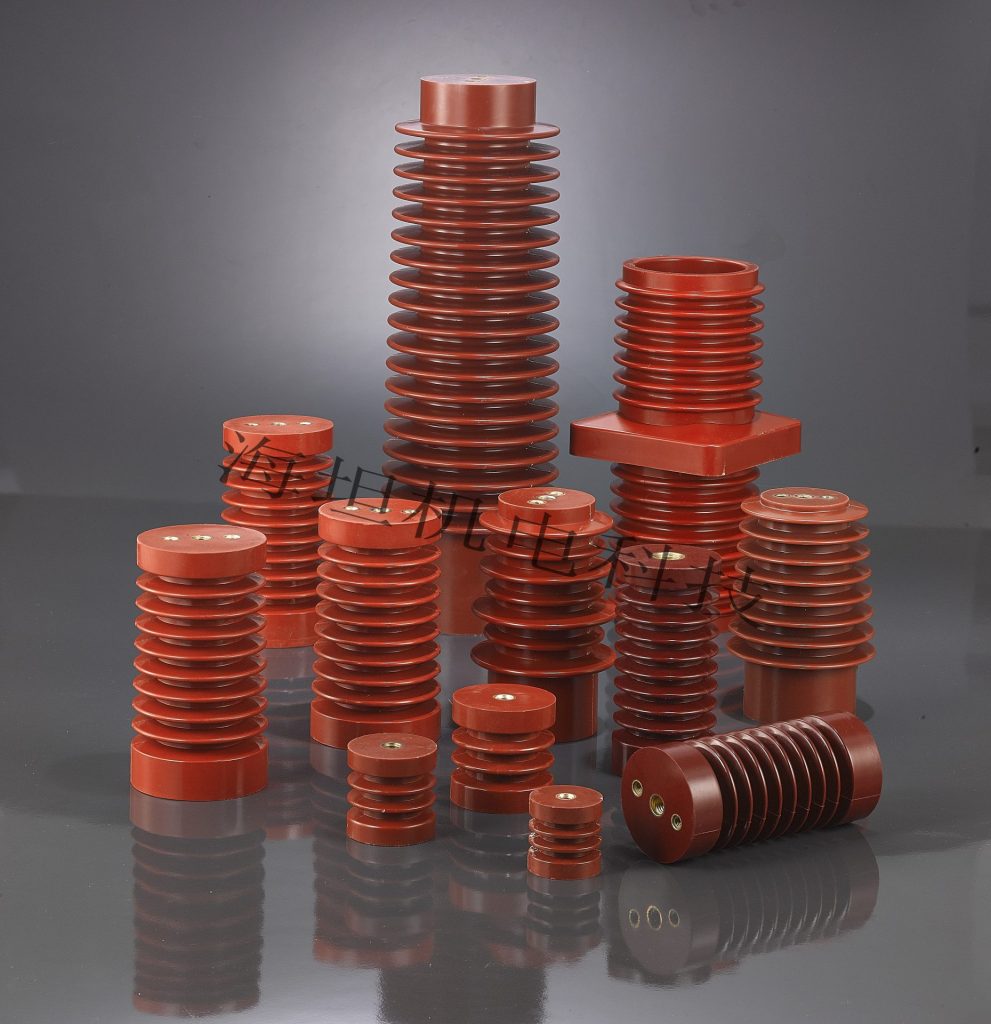
Behind the UL94 V-0 Rating: How BMC Insulators Deliver Self-Extinguishing and Low-Smoke Performance in Fire Conditions
Blog | Yangiliklar xodimi | Iyul 07,2026
When you specify insulation materials for switchgear, busbar systems, or high-voltage panels, fire safety is not a checkbox on a datasheet — it is a liability question you carry into every project. If a fault current ignites an insulator, how fast does it self-extinguish? How much smoke does it release into a control room where your technicians are standing? These questions sit behind a single, widely-referenced specification: the UL94 V-0 rating. This guide walks you through what that rating actually measures, why BMC (Bulk Molding Compound) insulators are engineered to meet it, and what this means for the safety, compliance, and long-term reliability of your electrical systems.
What Does the UL94 V-0 Rating Actually Test?
The UL94 vertical burn test is the industry benchmark you will see referenced on almost every fire resistant insulation material datasheet. A test specimen is clamped vertically, exposed to an open flame for 10 seconds, and then evaluated on how it behaves once the flame source is removed. To qualify for flammability UL94 V-0, your material must meet strict criteria:
- Each specimen must self-extinguish within 10 seconds after the flame is removed.
- Total flaming time for five specimens (two flame applications each) must not exceed 50 seconds.
- No specimen may produce flaming drips that ignite a cotton indicator below it.
- No specimen may burn completely to the holding clamp.
In other words, a true UL94 V-0 rating is not about whether a material can catch fire — almost anything can under enough heat. It is about how quickly and predictably it stops burning once the ignition source is gone. That predictability is exactly what your compliance team, your insurer, and your end customer are looking for.
UL94 Flammability Rating Comparison
| Rating | Self-Extinguish Time | Flaming Drips Allowed | Typical Use Case |
|---|---|---|---|
| HB | No requirement (slow horizontal burn) | Yes | Low-risk, non-critical enclosures |
| V-2 | ≤30 sec per specimen | Yes, but must not sustain burning | Consumer housings |
| V-1 | ≤30 sec per specimen | No | General electrical components |
| V-0 | ≤10 sec per specimen | No | Busbar insulators, switchgear, high-voltage panels |
| 5VA / 5VB | ≤60 sec cumulative, larger flame exposure | No (5VA) / minor (5VB) | Thicker structural enclosures |
Why BMC Insulators Are Built for Self-Extinguishing Performance
A BMC bulk molding compound insulator is not simply plastic with a fire-retardant label slapped on. Its self-extinguishing behavior comes from its formulation:
- Thermoset resin matrix — unlike thermoplastics that melt and drip when heated, thermoset BMC cross-links permanently, so it chars rather than flows.
- Flame-retardant mineral fillers (such as aluminum trihydrate) release water vapor under heat, cooling the surface and diluting combustible gases.
- Glass fiber reinforcement forms a rigid char layer that insulates the underlying material from further heat exposure, interrupting the burn cycle.
This is why a properly formulated BMC insulator consistently reaches UL94 V-0 without relying on halogenated additives that create other safety trade-offs. If you want a deeper technical comparison of how BMC performs against SMC in mechanical and thermal properties, you can review this breakdown of BMC vs SMC busbar insulator properties and performance.
The Low-Smoke Advantage: Why It Matters for Your Facility
A material can technically self-extinguish and still create a dangerous situation if it releases dense, toxic smoke while doing so. For your business, this matters in two very practical ways: it affects how quickly personnel can evacuate or respond, and it affects how much corrosive residue settles on nearby equipment after an incident.
Smoke Density and Toxicity: BMC vs Common Alternatives
| Material | Relative Smoke Density | Halogen Content | Corrosive Byproducts |
|---|---|---|---|
| BMC (Haitan formulation) | Past | Halogen-free options available | Minimal |
| Rigid PVC | Baland | Yes | Hydrochloric acid gas |
| Standart epoksi | Mo''tadil | Depends on additives | Mo''tadil |
| Unfilled Polyester | Baland | Depends on additives | Mo''tadil |
This is why, when you are sourcing a fire resistant insulation material for enclosed switchgear rooms or panel boards, the UL94 V-0 rating alone should not be your only filter — smoke density and toxic gas emission data deserve equal weight in your technical evaluation.
How This Translates to Real-World Fire Safety for Your Business
Whether you are procuring components for a substation, a switchgear panel, or a busbar support system, self-extinguishing and low-smoke performance directly protect three things you are accountable for: your personnel, your equipment, and your compliance record. If you are still evaluating which insulation material fits your application, this overview of what you need to know about busbar insulation material can help you compare options before you commit to a supplier.
And if part of your sourcing process includes vetting manufacturers themselves — not just material specs — you may find it useful to review this list of leading busbar support insulator manufacturers for additional context on how suppliers are evaluated in this space.
What to Ask Your Supplier Before You Buy
| Question to Ask | Why It Matters to Your Business |
|---|---|
| Can you provide a current UL94 V-0 test certificate? | Confirms third-party verification, not just a marketing claim. |
| Is the rating tested at the thickness you are actually shipping? | V-0 ratings are thickness-dependent; a thinner part may not qualify. |
| Do you test smoke density and toxic gas emission separately? | UL94 does not measure smoke density on its own. |
| How consistent is fire performance across production batches? | Protects you from variance between sample approval and bulk orders. |
Haitan’s Approach to Certified Fire-Safe BMC Insulators
Securing your long-term infrastructure investment requires a supplier that prioritizes electrical protection and commercial flexibility. Every BMC insulator from Haitan is precision-molded to meet international safety criteria, keeping your equipment safe during extreme electrical loads.
Our production facilities operate under strict quality controls to deliver rugged components that handle real-world challenges. Beyond engineering excellence, we offer flexible terms to keep your assembly line moving smoothly, featuring an accessible MOQ of 1,000 pieces, fast sample logistics within 7 days, and full OEM customization capabilities for large projects.
Talk to Haitan’s Engineering Team About V-0 BMC Insulators
FAQlar
What does UL94 V-0 rating mean for a BMC insulator?
It means the material self-extinguishes within 10 seconds after a flame is removed, produces no flaming drips, and meets strict cumulative burn-time limits across test samples — the highest common rating for vertical burn tests.
Is UL94 V-0 the same as fireproof?
No. V-0 means the material stops burning quickly once the ignition source is removed; it does not mean the material cannot burn at all under sustained, high-intensity heat.
Why is BMC often chosen over SMC for fire-critical components?
BMC generally offers finer filler dispersion and greater formulation flexibility for flame-retardant additives, which supports more consistent V-0 performance in complex insulator geometries.
Does a thicker BMC part automatically get a better fire rating?
Not automatically, but UL94 ratings are thickness-specific. A part tested and certified at 3mm does not guarantee the same rating at 1.5mm — always request thickness-matched test data.
Are BMC insulators halogen-free?
Many BMC formulations can be produced halogen-free using mineral-based flame retardants, which reduces corrosive and toxic gas release during a fire event. Confirm this specifically with your supplier if it is required.
What test standard covers smoke density for insulation materials?
Smoke density is typically evaluated separately, for example under standards like ASTM E662 or IEC 61034, and should be requested alongside UL94 documentation.
Can BMC insulators be customized for specific busbar or switchgear designs?
Yes. BMC’s compression molding process supports custom geometries, insert molding, and varied wall thicknesses while maintaining fire performance, provided the formulation is validated at the final part thickness.
How do I verify a supplier’s UL94 V-0 claim is legitimate?
Ask for the UL yellow card or an independent lab report referencing the exact resin grade and thickness tested, rather than a generic datasheet statement.
Does UL94 V-0 rating affect the mechanical strength of BMC insulators?
High loadings of flame-retardant filler can influence mechanical properties, which is why a well-balanced formulation is important — a supplier should optimize for fire performance without sacrificing structural integrity.
What industries typically require V-0 rated BMC insulators?
Power distribution, switchgear manufacturing, transformer components, and industrial electrical panel production commonly require V-0 rated insulation materials as part of safety compliance.
--- OXIRI ---
 Elektron pochta: [email protected]
 № 20 Lingyun yo'li, dongfeng
Sanoat zonasi, liushi shahri, yuqish
Shahar, Jejian viloyati

G'altak

Sho'x
© Copyright 2024 Xitoy Gaitan elektromexanik texnologiya Co., Ltd. Barcha huquqlar himoyalangan.Qo'llab-quvvatlash: Junj Maxfiylik siyosati
 Uzbek
Uzbek  English (United States)
  English (South Africa)
  Arabic
  Belarusian
  Bengali
  Japanese
  Kazakh
  Korean
  Myanmar
  Russian
  Thai
Thai  Ukrainian
  Vietnamese
  Chinese