
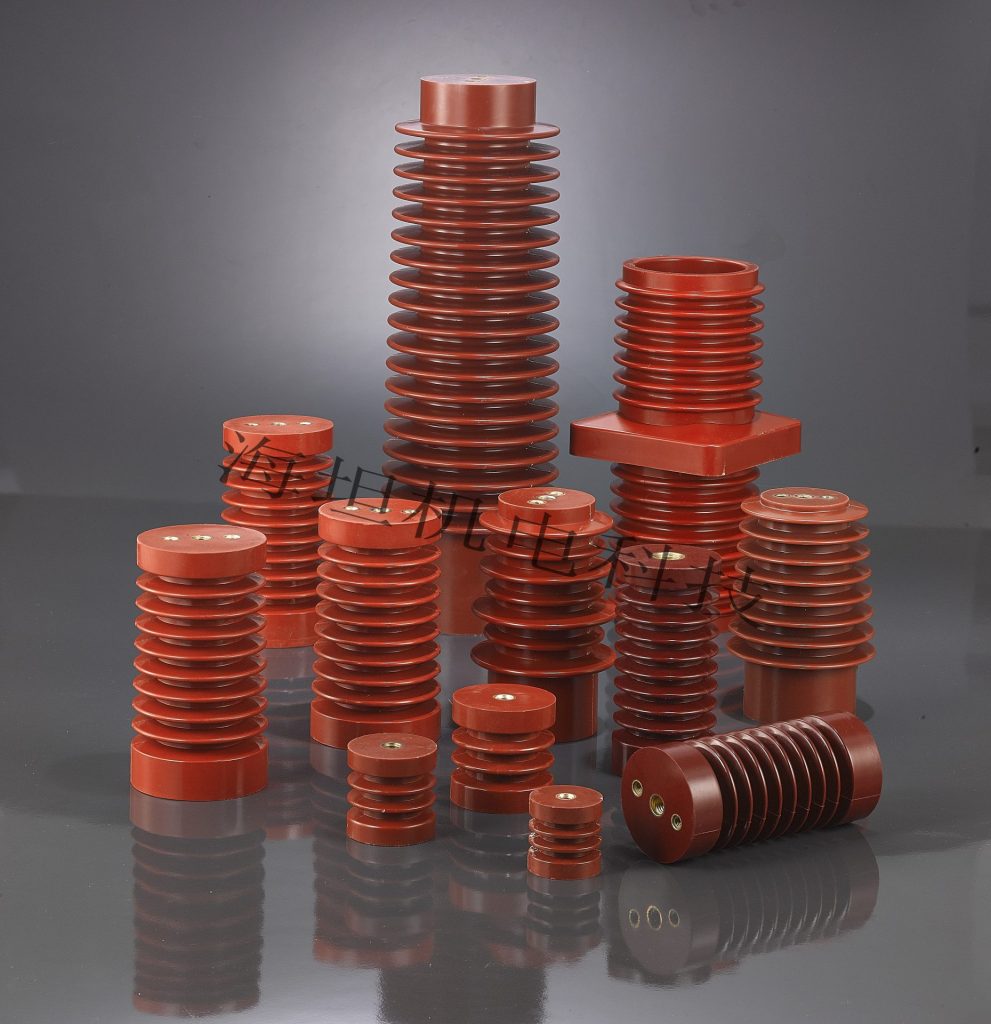
New Energy Insulators: High-Strength Insulation for EV, Solar, and 5G Systems
Blog | Phòng tin tức | Th9 08,2026
If your business builds electric vehicle battery systems, charging infrastructure, solar power equipment, or 5G communication cabinets, you’re working in one of the fastest-growing corners of the electrical component market — and also one of the least forgiving. New energy equipment tends to pack more current into less space than conventional panels, gets installed in places that are harder to service (rooftop, roadside, integrated into a vehicle chassis), and is expected to run reliably for a decade or more without the routine maintenance a substation might get. The insulation components inside that equipment don’t get much attention until they fail, which is exactly why they’re worth understanding before you specify them.

This guide covers what “new energy insulator” actually means as a product category, why these applications demand more from insulation components than standard distribution panels, and how a compact, high-strength design like the SB series fits into EV, charging, and 5G equipment specifically.
What “New Energy Insulator” Actually Means
“New energy insulator” isn’t a distinct electrical technology so much as a category label for insulation and busbar support components engineered for the equipment powering the newer end of the energy sector — electric vehicles and their integrated chassis cabinets, EV charging piles, 5G communication cabinets, and renewable generation equipment such as solar installations. Functionally, these components do the same two jobs as any busbar support insulator: they physically fix and mount conductors in place, and they electrically isolate those conductors from each other and from surrounding structures. What changes is the operating environment they’re designed for — typically higher mechanical demands packed into a smaller footprint than a conventional low voltage distribution panel.
Why New Energy Applications Demand More From Insulation Components
EV battery packs and charging piles put insulation components under real mechanical stress in a small space — vibration from vehicle operation, thermal cycling from charge and discharge activity, and often tighter creepage margins simply because there’s less room to work with than in a full-size distribution panel. Outdoor solar installations bring a different set of demands entirely: components installed on a rooftop array or a high-altitude solar farm face sustained UV exposure, temperature swings, and in many cases exposure to acids or alkalis, none of which a component tucked inside a climate-controlled indoor panel ever has to deal with.
Across the renewable energy sector more broadly, this combination of demands is a large part of why insulator materials have shifted over time from traditional ceramic toward composite materials — composites offer the mechanical strength needed to keep conductors stable under structural stress while also standing up to the acid, alkali, UV, and temperature-fluctuation exposure that outdoor renewable installations routinely face.
Sourcing insulation for EV, solar, or 5G equipment?
Key Properties to Evaluate for New Energy Applications
| Tài sản | Tại sao nó quan trọng |
|---|---|
| Độ bền cơ học | Keeps conductors stable under vibration and structural stress in compact EV and charging equipment |
| Compact footprint | Fits the reduced panel space typical of EV battery packs and 5G cabinets without compromising isolation |
| UV and weathering resistance | Critical for outdoor solar installations exposed to sustained sunlight and weather cycling |
| Chemical resistance | Relevant for coastal solar installations exposed to salt air, acids, or alkalis |
| Chống cháy | Important given the elevated fire risk profile of battery and high-current charging equipment |
| Cabinet compatibility | Determines whether a component can be dropped into an existing panel design or requires redesign |
The SB Series: A Compact, High-Strength Option Built for This Category
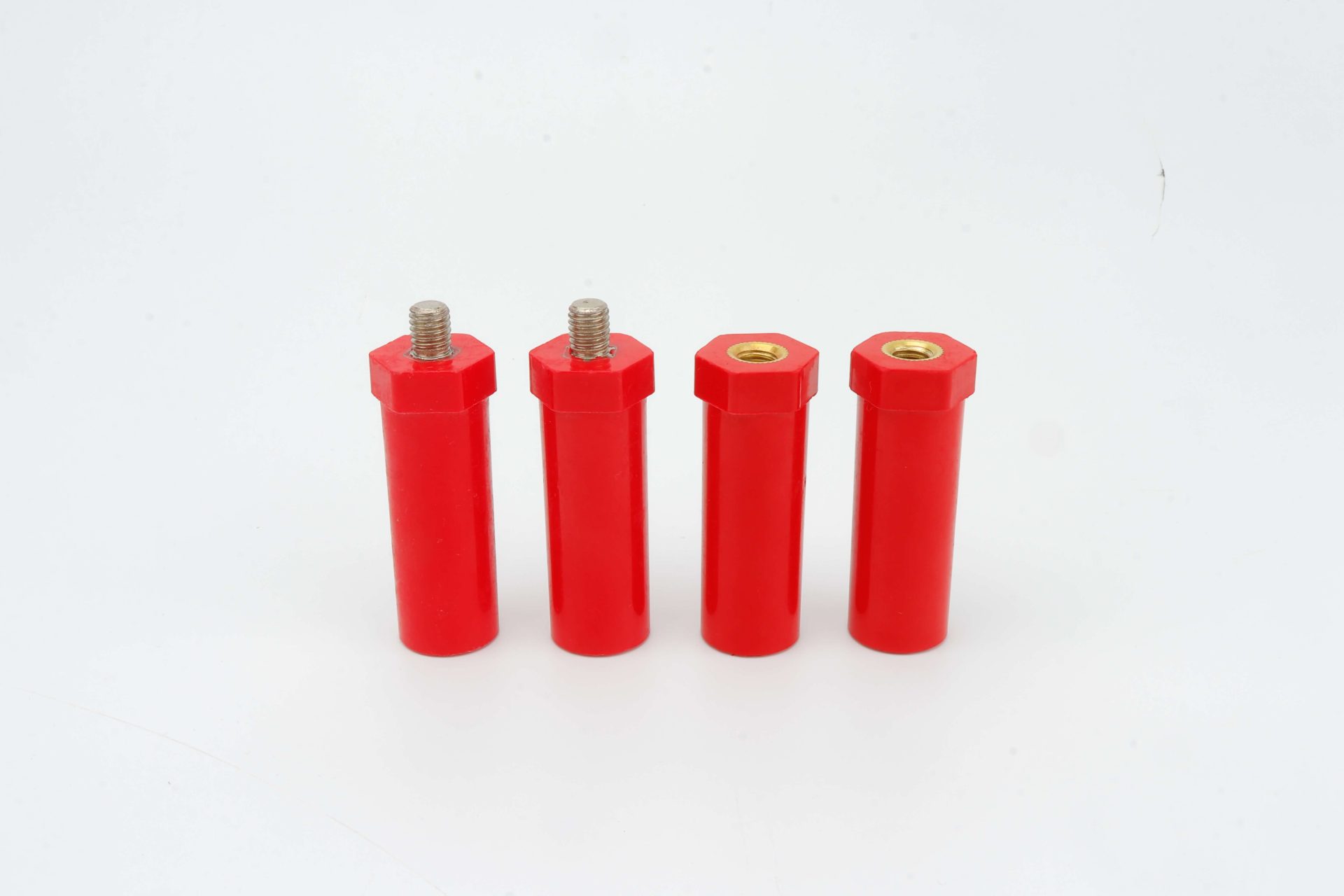
các Dòng SB is positioned specifically for this category rather than adapted from a conventional distribution design. It’s molded from BMC/SMC composite, built as a high-strength, environmentally protective insulator, and developed as an upgraded product line targeting new energy vehicle battery systems, 5G communication cabinets, and EV charging piles specifically. Compared to more conventional insulator formats, it’s designed with a smaller volume to meet the tighter space requirements typical of this equipment, while still being compatible with conventional cabinet designs — meaning it can generally be integrated without requiring a full panel redesign around it.
Where New Energy Insulators Are Used
Across the industry, the broader “new energy insulator” category shows up wherever power-related equipment intersects with the newer segments of the energy sector — power transmission and distribution equipment, 5G communication infrastructure, solar energy installations, and the automotive industry, with wind energy equipment as a related but separate application area. The SB Series specifically targets the electric vehicle, EV charging, and 5G communication segment of that broader category. The common requirement across all of these applications is the same: reliable fixed support and electrical isolation for conductors, delivered in a format that fits increasingly compact and often harsher-than-average operating environments.
What to Verify Before You Specify
Before committing a new energy insulator to your design, confirm a few specifics rather than relying on the product category name alone. Check the certifications that apply to the specific part — CE, RoHS, UL94, and relevant national marks such as CQC or CCC — and the stated operating temperature range, since EV and outdoor renewable applications often see wider thermal swings than indoor panels. If your equipment will be installed outdoors or in a coastal or offshore environment, ask specifically about UV and chemical resistance data rather than assuming general “weather resistant” language covers your exact exposure conditions. And confirm physical compatibility with your existing cabinet or panel design early, since a compact footprint on paper doesn’t always translate to a drop-in fit for your specific mounting layout.
Need a compact, high-strength insulator for EV, charging, or 5G equipment?
Câu hỏi thường gặp
What makes an insulator suitable for “new energy” applications specifically?
It generally comes down to a combination of higher mechanical strength, a more compact footprint, and — for outdoor installations — better UV and chemical resistance than a standard indoor distribution panel insulator typically needs.
Can the SB series be used in conventional distribution cabinets, not just EV or 5G equipment?
Yes. It’s described as compatible with conventional cabinet designs, so it isn’t limited exclusively to new energy applications even though that’s its primary target use case.
Why have composite materials largely replaced ceramic in renewable energy insulators?
Composite materials offer strong mechanical support while better withstanding the acid, alkali, UV, and temperature-fluctuation exposure common in outdoor renewable installations like high-altitude solar farms, which is why the industry has shifted toward them over traditional ceramic designs for many applications.
Do EV battery insulators need a different temperature rating than standard panel insulators?
Often yes — EV battery systems experience thermal cycling from charge and discharge activity that a typical indoor distribution panel doesn’t see, so it’s worth confirming the specific operating temperature range against your battery system’s actual thermal profile rather than a general datasheet figure.
What certifications should I check for new energy insulator components?
CE, RoHS, and UL94 flammability certification are common baseline checks, along with relevant national marks like CQC or CCC depending on your target market. Confirm these apply to the specific product and configuration you’re sourcing.
Are new energy insulators more expensive than standard busbar support insulators?
Pricing depends on the specific design, material, and volume, but compact high-strength formats aren’t necessarily a significant premium over standard components — the more relevant comparison is total cost including rework risk if a standard-format part doesn’t actually fit your compact equipment layout.
Is UV resistance only relevant for outdoor solar applications?
Largely, yes — UV degradation is primarily a concern for components with direct or indirect sunlight exposure, which also applies to wind power equipment in outdoor installations. Indoor EV battery and 5G cabinet components typically prioritize mechanical strength and thermal stability over UV resistance, though this can vary by specific installation.
Get insulation that fits your new energy equipment, not the other way around.
Related Resources
- Advanced Insulators for New Energy
- What Is SMC Busbar Support?
- Ưu điểm về ứng dụng và hiệu suất của vật liệu DMC trong chất cách điện hạ thế
- Chất cách điện thanh cái: Hướng dẫn đầy đủ
--- KẾT THÚC ---
 Email: [email protected]
  Số 20 đường Lingyun, Đông Phong
Khu công nghiệp, thị trấn Liushi, Nhạc Thanh
Thành phố, tỉnh Chiết Giang


© Bản quyền 2024 Công ty TNHH Công nghệ Cơ điện Haitan Trung Quốc. Mọi quyền được bảo lưu.HỖ TRỢ BỞI: JUNJ Chính sách bảo mật
 Vietnamese
  English (United States)
  English (South Africa)
  Arabic
  Belarusian
  Bengali
  Japanese
  Kazakh
  Korean
  Myanmar
  Russian
  Thai
Thai  Ukrainian
  Uzbek
Uzbek  Chinese