
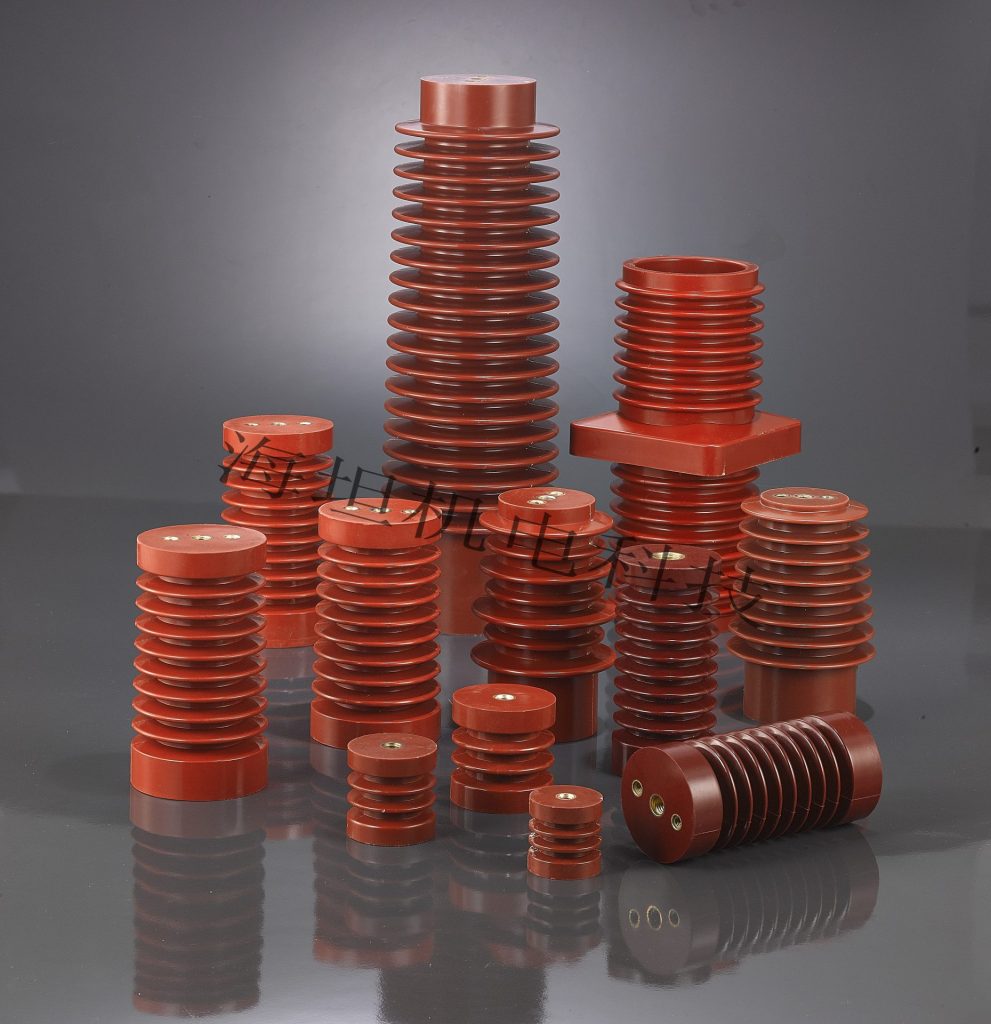
Analysis of DMC Insulators’ Application in Moisture-Proofing and Salt Spray Protection
介绍
In coastal regions and other high-humidity, high-salt environments, maintaining stable insulation in power distribution systems is a significant challenge. Traditional ceramic insulators often suffer from condensation and surface water films, which can lead to insulation degradation, flashovers, and system instability.
DMC(面团模塑料)绝缘体 provide an advanced solution to these problems, thanks to their inherent hydrophobic properties and excellent salt corrosion resistance. This article explores how DMC insulators enhance performance in moisture- and salt-prone environments, and why customized solutions are sometimes required for effective protection.
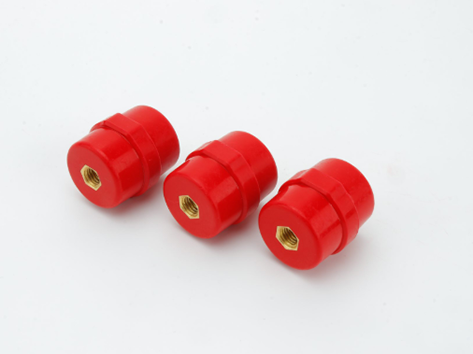
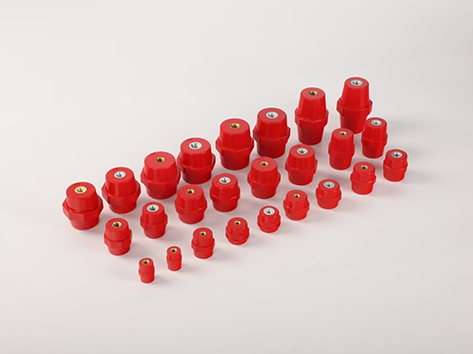
Hydrophobic Properties of DMC Insulators
DMC绝缘子 are made from a thermosetting composite material with embedded fillers that give them a naturally hydrophobic surface. Unlike traditional ceramic insulators, DMC surfaces do not form continuous water films during high humidity or light condensation.
Benefits of Hydrophobicity
Prevents continuous water layers: Continuous water films on ceramic insulators can significantly reduce surface insulation, increasing the risk of leakage currents and flashovers. DMC insulators avoid this problem.
Improves leakage current performance: Droplets on DMC surfaces tend to bead and roll off, limiting conductive paths.
Maintains stable insulation: Even in humid conditions, DMC insulators retain higher surface resistivity compared to conventional ceramic materials.
Salt Spray and Corrosion Resistance
Coastal and marine environments expose electrical equipment to salt-laden air, which accelerates corrosion and surface degradation of insulating components. DMC绝缘子 exhibit:
High chemical and salt resistance: The composite matrix resists ion penetration and chemical attack, unlike metal or ceramic surfaces with coatings.
Durable surface performance: The hydrophobic surface prevents accumulation of salty moisture films, reducing the risk of surface tracking.
Longer service life in coastal installations: Reduced corrosion extends operational stability and lowers maintenance costs.
Addressing Condensation Challenges in Traditional Insulators
Ceramic insulators in humid environments are prone to condensation, forming water films that:
Reduce surface insulation
Increase the likelihood of partial discharges
Lead to leakage currents and possible flashovers
DMC insulators overcome these limitations due to their hydrophobic nature, which prevents continuous water films and limits the negative impact of condensation on insulation performance. This ensures stable operation of the power system even under prolonged high humidity or salt spray conditions.
Customization for Salt Spray Protection
Effective protection in coastal or high-salt environments often requires customized DMC绝缘子 solutions:
Tailored shapes and sizes: To match specific mounting, spacing, and mechanical requirements in distribution cabinets or substations.
Optimized hydrophobic surfaces: Enhancements like micro-texturing or additive fillers can improve water beading and salt resistance.
Special coatings or formulations: For extreme marine environments, additional surface treatments can further increase salt spray durability.
Customization ensures that the insulators meet project-specific environmental challenges, while providing long-term reliability and operational stability.
Applications in High-Humidity and Coastal Power Systems
DMC insulators with moisture-proof and salt-resistant properties are widely used in:
Coastal substations and power transmission lines
Offshore wind farms and marine power installations
High-humidity industrial environments
Electrical equipment in tropical or monsoon-prone regions
By leveraging DMC material properties, operators can reduce maintenance frequency, prevent insulation failure, and ensure continuous power delivery in challenging conditions.
结论
DMC绝缘子 provide a superior solution for moisture-proofing and salt spray protection in coastal and high-humidity environments. Their inherent hydrophobicity prevents the formation of continuous water films, while their salt corrosion resistance ensures long-term durability.
Unlike traditional ceramic insulators, which are prone to condensation and insulation degradation, DMC insulators maintain stable electrical performance, improving the reliability of power systems. Customization of DMC insulators allows further adaptation to project-specific challenges, making them an ideal choice for high-risk environments.
常问问题
Q1: Why are DMC insulators effective in high-humidity environments?
DMC insulators are inherently hydrophobic, meaning their surfaces do not form continuous water films. This prevents surface leakage paths, maintains insulation performance, and reduces the risk of flashovers even in humid conditions.
Q2: How do DMC insulators resist salt spray and coastal corrosion?
这 composite polyester matrix of DMC insulators is chemically stable and resistant to ion penetration. Combined with their hydrophobic surfaces, they prevent accumulation of saltwater films, reducing corrosion and surface tracking.
Q3: What problems do DMC insulators solve compared to traditional ceramic insulators?
Traditional ceramic insulators can accumulate condensation, forming water films that reduce insulation and increase leakage currents. DMC insulators avoid continuous water films, maintaining stable insulation under high humidity and salt exposure.
Q4: Are DMC insulators suitable for extreme coastal or marine environments?
Yes. DMC insulators can be customized with specific shapes, sizes, surface treatments, and additive formulations to enhance hydrophobicity and salt spray resistance for extreme marine or high-salt locations.
Q5: Where are DMC moisture-proof and salt-resistant insulators typically used?
Coastal substations and transmission lines
Offshore wind farms and marine power systems
High-humidity industrial environments
Tropical and monsoon-prone regions
Q6: Can DMC insulators be customized for specific applications?
Yes. Customization options include:
Tailored mechanical dimensions for specific mounting requirements
Optimized surface hydrophobicity
Special coatings or formulations for extreme environments
This ensures project-specific protection and long-term reliability.
Q7: How do DMC insulators contribute to stable power system operation?
By preventing condensation and salt-induced insulation degradation, DMC insulators reduce leakage currents, minimize flashover risk, and maintain consistent system reliability even in harsh environments.
- - 结尾 - -
 邮箱:
邮箱: 东风市凌云路20号

 Chinese
  English (United States)
  English (South Africa)
  Arabic
  Belarusian
  Bengali
  Japanese
  Kazakh
  Korean
  Myanmar
  Russian
  Thai
Thai  Ukrainian
  Uzbek
Uzbek  Vietnamese