
DIN Rail Explained: Purpose, History, and Why It’s Widely Used
介绍
DIN rails are a fundamental component in modern electrical and industrial control systems. From low-voltage distribution panels to complex automation cabinets, DIN rails provide a standardized, efficient, and reliable mounting solution for electrical devices. This article explains what a DIN rail is, its purpose, historical background, and the key reasons why it is widely used worldwide.
What Is a DIN Rail?
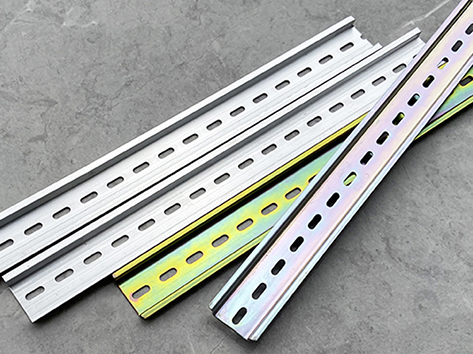
一个 DIN导轨 is a standardized metal rail used for mounting electrical and industrial control components inside panels, enclosures, and cabinets. The standard originates from DIN (Deutsches Institut für Normung), the German Institute for Standardization.
DIN rails are typically manufactured from:
Galvanized steel
Stainless steel
铝
They are designed to securely hold components such as:
Circuit breakers
Terminal blocks
Relays and contactors
Power supplies
PLC modules
Most DIN rail mounted devices use a snap-on mechanism, allowing quick installation and removal without special tools.
The Purpose of DIN Rails
The main purpose of a DIN rail is to provide a uniform, modular, and organized mounting system for electrical components.
Key purposes include:
Standardized mounting across different manufacturers
Fast installation and replacement of components
Improved panel organization and space efficiency
Enhanced safety and accessibility during maintenance
By using DIN rails, electrical panels become easier to design, assemble, expand, and service.
A Brief History of DIN Rails
DIN rails were first developed in Germany in the early 20th century as part of efforts to standardize industrial components. As electrical and control systems became more complex, the need for a universal mounting standard grew.
Key milestones:
Initially used in industrial electrical panels in Europe
Adoption of formal DIN and EN standards
Global acceptance through IEC standards
Today, DIN rails are used worldwide and have become the default mounting solution for low-voltage and automation systems.
Common Types of DIN Rails
While this article focuses on the concept and purpose, it is helpful to understand the most common DIN rail profiles:
Top Hat DIN Rail (TS35) – The most widely used type, compatible with most devices
G-Type DIN Rail (TS32) – Used for heavier components
Mini DIN Rail (TS15) – Suitable for compact installations
这 35 mm top hat DIN rail is by far the most common standard in industrial and commercial applications.
Why DIN Rails Are Widely Used
Global Standardization
DIN rails follow internationally recognized standards (DIN, EN, IEC), ensuring compatibility between devices from different manufacturers. This eliminates vendor lock-in and simplifies system design.
Easy Installation and Maintenance
Most components can be mounted or removed by simply snapping them onto the rail. This:
Reduces installation time
Simplifies troubleshooting
Minimizes system downtime
Maintenance personnel can replace components quickly without dismantling the entire panel.
Modular and Scalable Design
DIN rail systems support modular expansion. Additional components can be added easily as system requirements grow, making them ideal for evolving industrial and automation applications.
Space Optimization and Clean Layout
DIN rails help create a neat and organized panel layout, improving airflow, reducing wiring complexity, and making panels easier to inspect and document.
Strong Mechanical and Electrical Reliability
Made from durable metals, DIN rails offer:
机械强度高
Vibration resistance
Reliable grounding when properly installed
This makes them suitable for industrial environments, transportation systems, and power distribution cabinets.
Typical Applications of DIN Rails
DIN rails are used across a wide range of industries, including:
Low-voltage power distribution
Industrial automation and control systems
Renewable energy installations
Building management systems
Transportation and infrastructure projects
Their versatility has made DIN rails a core element of modern electrical design.
结论
DIN导轨 have become an essential part of electrical and industrial control systems due to their standardization, ease of use, modularity, and reliability. From their origins in German industrial standards to global adoption, DIN rails continue to support efficient and scalable system design.
For engineers, panel builders, and system integrators, DIN rails remain a simple yet powerful solution for mounting and organizing electrical components in today’s low-voltage and automation systems.
常问问题
What does DIN rail stand for?
DIN rail is named after DIN (Deutsches Institut für Normung), the German Institute for Standardization. It refers to a standardized metal rail used for mounting electrical and industrial control components inside panels and enclosures.
What is the most commonly used DIN rail type?
The most widely used DIN rail is the 35 mm Top Hat DIN Rail (TS35). It is compatible with the majority of DIN-rail-mounted devices such as circuit breakers, terminal blocks, relays, and power supplies.
What materials are DIN rails made of?
DIN rails are typically made from:
Galvanized steel (most common, cost-effective)
Stainless steel (for corrosive or outdoor environments)
铝 (lightweight applications)
The material choice depends on load requirements, environmental conditions, and corrosion resistance needs.
Are DIN rails standardized worldwide?
Yes. DIN rails follow international standards, including DIN, EN, and IEC specifications. This ensures global compatibility and allows components from different manufacturers to be mounted on the same rail.
How are components mounted on a DIN rail?
Most DIN-rail-mounted devices use a snap-on or clip-on mechanism. Components can be installed or removed without special tools, making panel assembly and maintenance faster and more efficient.
Do DIN rails provide grounding?
DIN rails can assist with grounding when properly installed and bonded, especially when using metal rails and grounding accessories. However, grounding requirements depend on system design and local electrical standards and should always be verified.
- - 结尾 - -
 邮箱:
邮箱: 东风市凌云路20号

 Chinese
  English (United States)
  English (South Africa)
  Arabic
  Belarusian
  Bengali
  Japanese
  Kazakh
  Korean
  Myanmar
  Russian
  Thai
Thai  Ukrainian
  Uzbek
Uzbek  Vietnamese