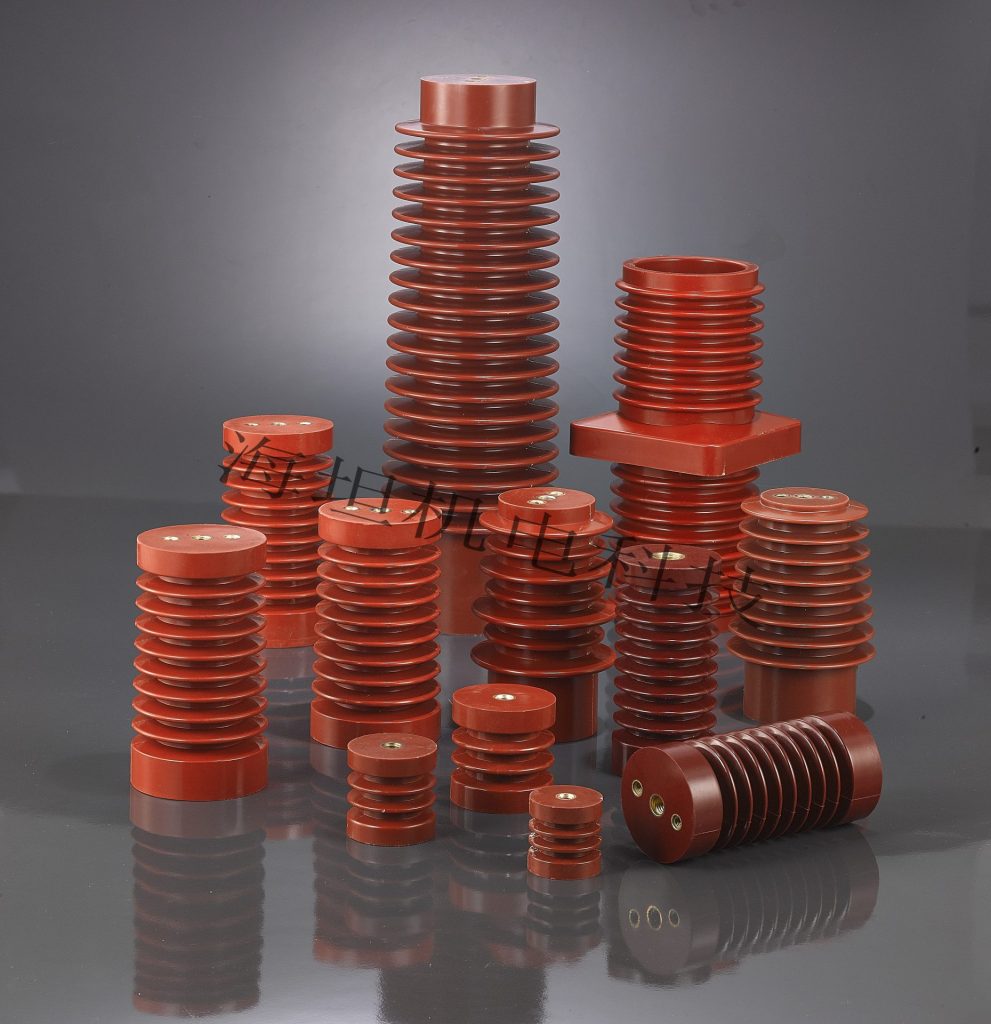
High Mechanical Strength and Electrical Safety: Advantages of DMC Low Voltage Busbar Support Insulators
介绍
In low-voltage power distribution systems, busbar support insulators are critical components that directly influence both 机械稳定性 和 electrical safety. As modern switchgear and distribution panels trend toward higher current ratings, compact layouts, and longer service life, the performance requirements placed on busbar support insulators continue to increase.
Among the available material options, DMC (Dough Molding Compound) low-voltage busbar support insulators stand out due to their exceptional mechanical strength and reliable electrical insulation performance. This article examines how DMC insulators enhance system safety, withstand extreme operating conditions, and support the long-term reliability of low-voltage electrical equipment.
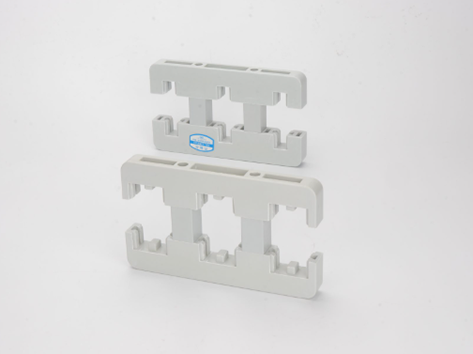
The Dual Role of Busbar Support Insulators
母线支撑绝缘子 serve two essential functions within low-voltage systems:
机械支撑 – Holding busbars securely in position and resisting electrodynamic forces during short-circuit events
Electrical Insulation – Maintaining safe clearance and creepage distances to prevent breakdown, tracking, and flashover
Any compromise in either function can result in insulation failure, equipment damage, or safety hazards. DMC busbar support insulators are engineered to address both challenges simultaneously.
High Mechanical Strength for Short-Circuit Conditions
During short-circuit faults, extremely high currents generate strong electrodynamic forces that act on busbars. These forces can cause sudden movement, vibration, or deformation, potentially leading to insulation failure or conductor contact.
Mechanical Advantages of DMC Busbar Support Insulators
High compressive strength, allowing secure support of heavy busbars
Excellent flexural strength, resisting bending under dynamic loads
Glass-fiber reinforcement, improving impact and vibration resistance
Thanks to these properties, DMC busbar support insulators help maintain precise busbar alignment and spacing, even during fault conditions, ensuring that insulation coordination remains intact.
Reliable Electrical Insulation Performance
Electrical safety in low-voltage systems depends heavily on the stability of insulating components under continuous voltage stress and transient overvoltages.
DMC busbar support insulators provide:
High dielectric strength, reducing the risk of electrical breakdown
Stable insulation characteristics under varying load and voltage conditions
Low leakage current, minimizing localized heating and degradation
These features allow DMC insulators to reliably isolate live conductors and maintain required clearance distances, supporting compliance with electrical safety standards.
Resistance to Tracking and Surface Degradation
In practical installations, low-voltage equipment may be exposed to dust, moisture, industrial pollution, or chemical vapors. These environmental factors can promote surface tracking and insulation deterioration.
DMC busbar support insulators are designed with:
High surface resistivity, reducing leakage currents
Excellent anti-tracking properties, limiting the formation of conductive paths
Stable surface insulation in humid or polluted environments
This resistance to surface degradation significantly lowers the risk of flashover and enhances operational safety.
Thermal Stability and Long-Term Reliability
Low-voltage switchgear often operates under elevated temperatures due to continuous current flow and compact enclosure design. Insulating materials must maintain performance without softening or mechanical deformation.
As a thermosetting composite material, DMC offers:
High heat resistance, maintaining structural integrity at elevated temperatures
Low thermal expansion, reducing stress on mounted busbars
Excellent aging resistance, ensuring consistent performance over long service periods
These characteristics contribute to extended equipment life and reduced maintenance requirements.
Supporting Insulation Coordination and System Safety
From an insulation coordination perspective, DMC busbar support insulators contribute to:
| System Requirement | Advantage of DMC Insulators |
| Mechanical stability | High strength under electrodynamic forces |
| Electrical safety | High dielectric strength |
| Creepage control | Anti-tracking surface properties |
| Environmental resistance | Heat, moisture, and aging resistance |
By maintaining both mechanical and electrical integrity, DMC insulators help ensure that designed insulation clearances and creepage distances remain effective throughout the system’s lifecycle.
典型的应用
DMC low-voltage busbar support insulators are widely used in:
Low-voltage switchgear assemblies
Power distribution panels
Motor control centers (MCCs)
Industrial control cabinets
Their ability to support high-current busbar systems while maintaining electrical safety makes them an ideal choice for modern power distribution equipment.
结论
High mechanical strength and electrical safety are non-negotiable requirements for busbar support insulators in low-voltage systems. DMC low-voltage busbar support insulators deliver a robust combination of structural stability, reliable insulation performance, and environmental durability.
By effectively resisting short-circuit forces, preventing electrical breakdown, and maintaining long-term performance, DMC insulators play a crucial role in enhancing the safety, reliability, and service life of low-voltage power distribution equipment.
- - 结尾 - -
 邮箱:
邮箱: 东风市凌云路20号

 Chinese
  English (United States)
  English (South Africa)
  Arabic
  Belarusian
  Bengali
  Japanese
  Kazakh
  Korean
  Myanmar
  Russian
  Thai
Thai  Ukrainian
  Uzbek
Uzbek  Vietnamese