
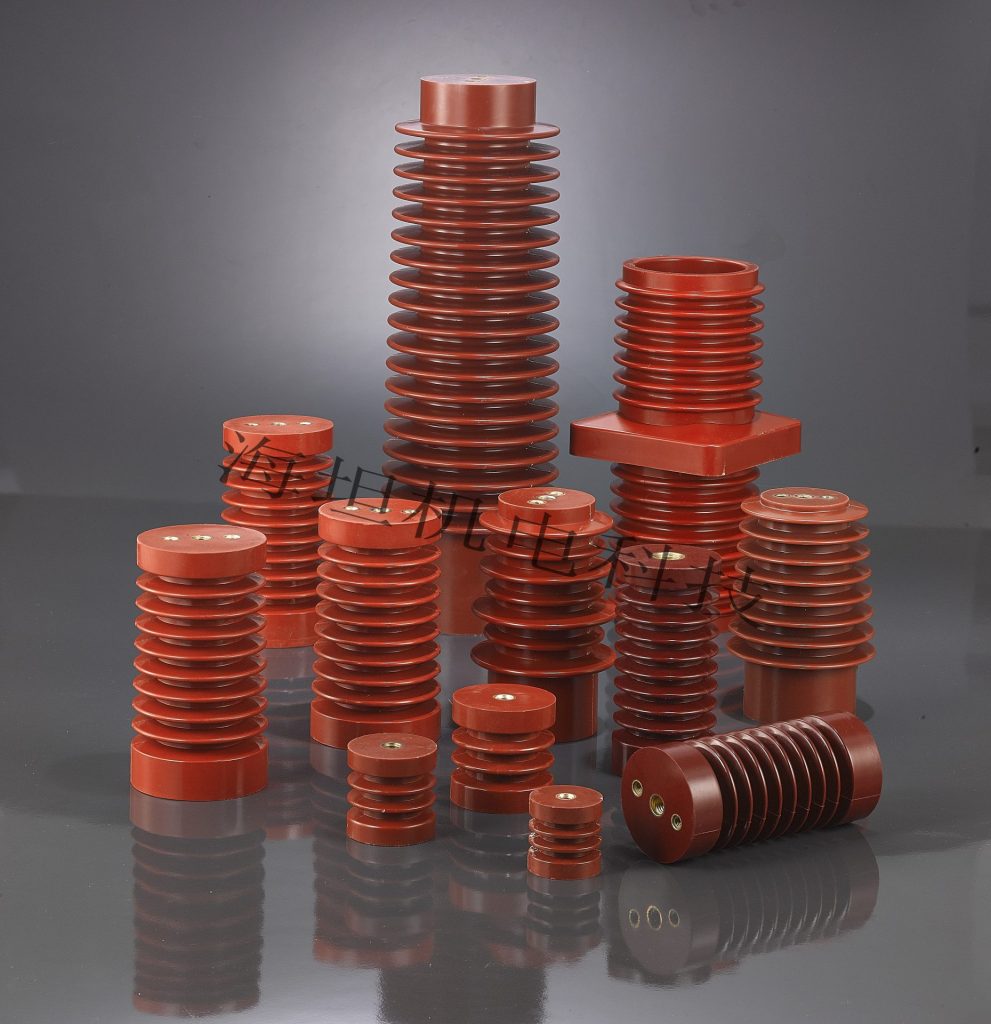
Got a Drawing or Sample? Haitan Quotes Fast and Match the Original Spec Exactly
You have a drawing from your engineering team, or an old part on your desk that needs a replacement source, and a project clock that’s already running. The fastest way to stall that sourcing job is to send a supplier half the information and wait for the questions to come back. Most quoting delays on custom or replacement insulators don’t come from the factory — they come from the back-and-forth needed to find out what the part actually has to be.
This guide covers what a supplier needs to quote from a drawing, what a physical sample can and can’t tell them, what “matching the original spec” really involves, and how to confirm the match before you commit to a bulk order.
What a Supplier Needs to Quote From a Drawing
A drawing shows geometry, but a price depends on more than geometry. Your quote request moves faster when the drawing arrives together with the details a drawing usually leaves out. Here is what an insulator supplier typically needs to see in one package:
| Information | Why the Supplier Needs It |
|---|---|
| Dimensions and tolerances | Determines tooling, fit in your panel, and how tight production control must be |
| Material and color | BMC, SMC, DMC, epoxy, and nylon behave differently in heat, moisture, and load |
| Insert type, thread size, and plating | Affects mounting strength and compatibility with your hardware |
| Electrical requirements such as withstand voltage | Cannot be read from a drawing or a physical part, so it must be stated |
| Operating environment | Indoor, outdoor, humid, or high-temperature use changes the material choice |
| Order quantity and destination | Drives pricing tiers, lead time, and shipping and packaging planning |
If your drawing came from a sister company or an older project, check that it’s the current revision before it goes out. A quote built on an outdated drawing is a quote you’ll have to redo.
Sending a Sample Instead: What It Can and Can’t Tell a Supplier
When there’s no drawing, a physical sample is a perfectly reasonable starting point, and it communicates things a drawing can’t: the actual finish, the feel of the material, how the insert sits, and how the part was designed to mount. A supplier can measure the dimensions and replicate the shape from it.
What a sample can’t tell anyone is its electrical rating, the exact resin and filler formulation, or the tolerance range the original maker was holding. Those need to come from you, from the original datasheet, or from testing. If you’re unsure what material your current part is made of, this overview of porcelain, composite, and glass insulator types is a useful refresher on how the main insulator materials differ before you specify a replacement. It also makes a practical point that applies to samples in transit: inspect any insulator on arrival, because transport damage is one of the most common causes of cracked or chipped parts.
Have a drawing or sample ready to send?
What “Matching the Original Spec” Actually Means
“Match the original” sounds simple, but it covers several separate things, and any one of them can be the reason a replacement part doesn’t fit or perform the way the original did. A real match means the replacement agrees with the original on:
- Physical fit: overall height, hole spacing, thread size, and insert position, within the tolerance your panel can accept.
- Material behavior: heat resistance, moisture absorption, and mechanical strength comparable to the part it replaces.
- Electrical performance: withstand voltage and creepage distance at least equal to what your design requires.
- Appearance and marking: color, surface finish, and any logo or identification your own customers expect to see.
The only reliable way to confirm all four is to approve a sample before releasing a production order. Install it in your actual equipment, check it against the original side by side, and ask for the electrical and material data in writing. A quote tells you what a supplier intends to deliver; an approved sample tells you what they can deliver.
Busbar Frames: The Details That Define the Part
Busbar support frames are a good example of why spec details matter, because the geometry depends entirely on your copper bar layout. It’s worth having these on hand before you send an inquiry:
| Detail to Confirm | Options Listed |
|---|---|
| Number of phases | Single-phase, three-phase, four-phase, five-phase |
| Phase-to-phase spacing (mm) | Common values: 55, 80, 100, 110, 120, 130, 140, 150, 160, 175, 180 |
| Copper bars per phase | Single row, double row, three row, four row |
| Copper bar specification | Confirm your own bar size first |
| Mounting screw hole size | Confirm against your panel |
For broader background on how busbar insulators work and how the different formats compare, the complete guide to busbar insulators is a good companion read.
What Speeds Up the Quote, and What to Confirm About Samples
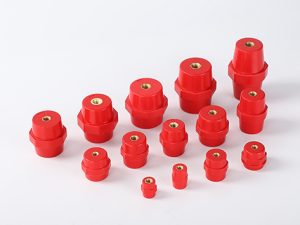
Speed on your side comes from sending a complete package once rather than in three installments: drawing or sample, material and electrical requirements, quantity, and destination. On the supplier’s side, it helps to work with a manufacturer that publishes its response commitments. For busbar supports, our MOQ is 500 pieces, and large quantities can be customized with your logo under OEM. A free sample can be provided for bulk order inquiries. Sample lead time is listed as 3 to 7 days, against 10 to 15 working days for bulk orders depending on quantity. Whichever supplier you use, confirm these terms for your specific part before you plan a schedule around them.
Send your specs once and get a clear quote back.
Before You Release the Bulk Order
Once a sample passes your fit check, three confirmations protect you from surprises at volume. Ask how consistency is controlled between the sample and the production run. Confirm that the certifications you need (CE, RoHS, UL, or the national marks for your market) apply to the production part itself. And get a bulk lead time quoted separately from the sample lead time, since they’re different production paths.
常见问题解答
Do I need to send both a drawing and a sample?
Not always. A clear drawing with tolerances and material details can be enough for a quote. A sample is most useful when no drawing exists, or when you want the supplier to see the finish and insert design. Sending both removes the most ambiguity.
Can a supplier reproduce a part exactly from a sample alone?
A sample lets a supplier measure and replicate the geometry, but it doesn’t reveal the electrical rating or the exact material formulation. Treat the first replica as a candidate, and approve it against your fit, material, and electrical requirements before ordering in bulk.
What is the minimum order quantity for custom parts?
For busbar supports, Haitan’s MOQ is 500 pieces, with custom logo and OEM support for large quantities. For a custom shape, confirm the MOQ and any tooling cost directly, since custom work can differ from catalog parts.
How do I protect a proprietary drawing?
If your drawing is confidential, ask about confidentiality terms or request a non-disclosure agreement before sending it. It’s a normal request in B2B sourcing and best handled before files are shared.
What if the production batch doesn’t match the approved sample?
Agree on acceptance criteria before the order is placed: the critical dimensions, the material, and the test data you expect. With those written down, any deviation in the production batch is easy to identify and discuss.
Got a drawing or a sample? Send it over and see what a quote looks like.
Related Resources
- - 结尾 - -
 邮箱:
邮箱: 东风市凌云路20号

 Chinese
  English (United States)
  English (South Africa)
  Arabic
  Belarusian
  Bengali
  Japanese
  Kazakh
  Korean
  Myanmar
  Russian
  Thai
Thai  Ukrainian
  Uzbek
Uzbek  Vietnamese