
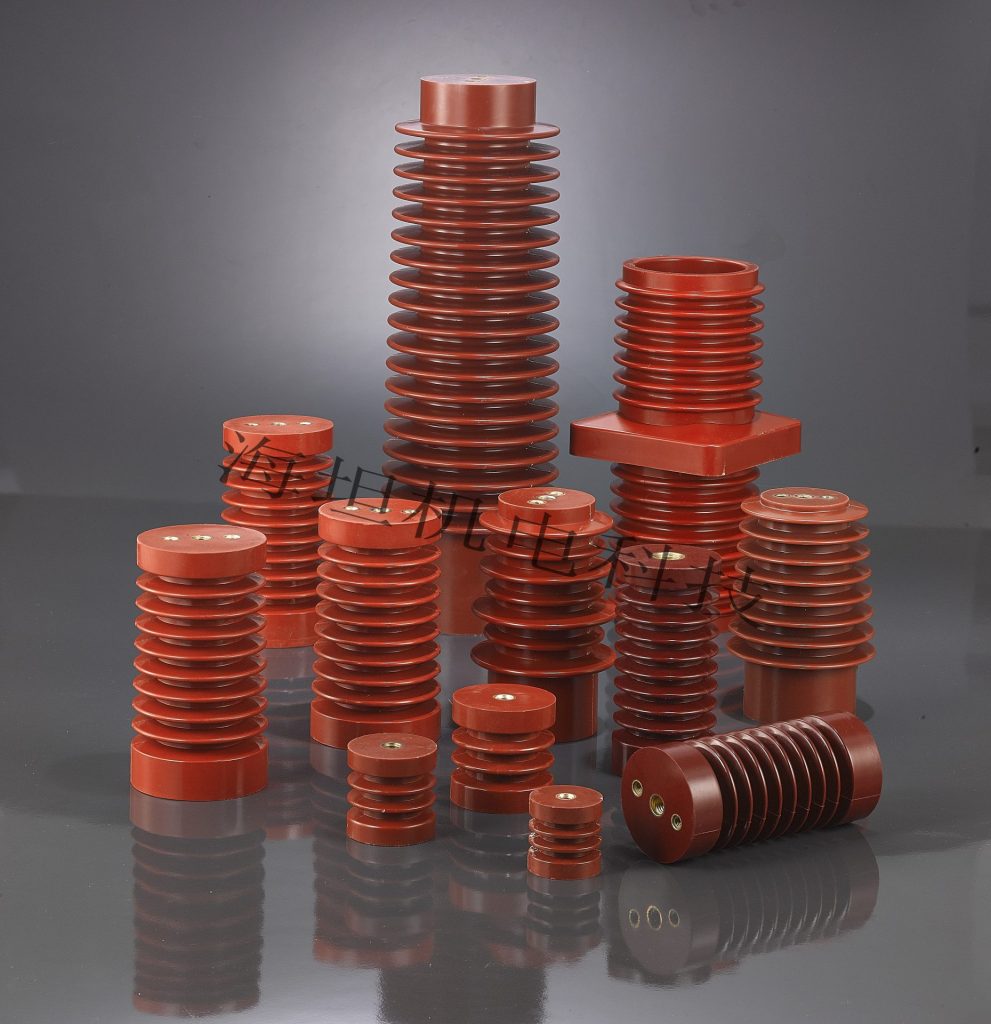
Mechanical Strength and Insulation Performance of Hexagon Busbar Support Insulators
介绍
In low-voltage electrical systems such as switchgear, distribution boards, and control panels, busbars are responsible for transmitting electrical power between different components. Because busbars carry high current and are often exposed to mechanical stress and thermal loads, reliable support and insulation are essential for safe operation.
Hexagon busbar support insulators are specifically designed to provide both mechanical stability and electrical insulation for busbar systems. Manufactured from high-performance materials such as DMC(面团模塑料) 或者 BMC composite materials, these insulators ensure that busbars remain securely mounted while maintaining safe electrical separation from grounded structures.
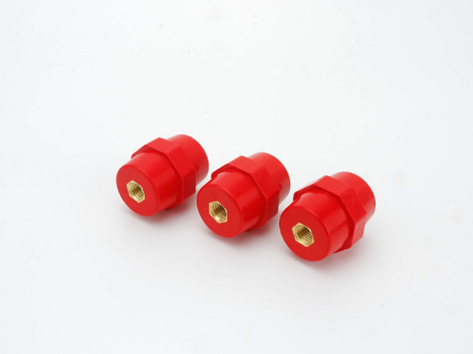
Structure of Hexagon Busbar Support Insulators
Hexagon busbar support insulators typically consist of the following components:
Hexagonal insulating body made of DMC or BMC material
Embedded metal threaded inserts or studs for mounting
Fixing bolts and washers used to secure busbars
The hexagonal body design offers improved torque resistance during installation and prevents rotation when tightening with a wrench. This structure also allows the insulator to handle mechanical loads more effectively compared with some traditional cylindrical designs.
Mechanical Strength of Hexagon Busbar Support Insulators
Mechanical strength is a critical requirement for busbar support insulators because they must withstand the weight of busbars, installation forces, and possible vibrations during operation.
High Compressive Strength
Hexagon busbar support insulators made from DMC materials typically exhibit excellent compressive strength, allowing them to support heavy copper or aluminum busbars without deformation.
This capability ensures:
Stable positioning of busbars
Resistance to mechanical pressure from mounting bolts
Long-term durability in electrical cabinets
High compressive strength is particularly important in switchgear systems where busbars may carry high currents and generate mechanical stress.
Resistance to Mechanical Vibration
Electrical equipment often experiences vibration caused by mechanical switching operations or environmental conditions.
Hexagon busbar support insulators provide good vibration resistance due to their rigid thermosetting composite structure. This helps prevent loosening or shifting of busbars during long-term operation.
As a result, electrical connections remain stable and secure.
Structural Stability
The hexagonal design enhances structural stability in several ways:
Provides better grip during installation
Reduces the risk of rotation when tightening
Ensures secure mechanical fixation
This design improves the overall reliability of the busbar mounting system inside electrical panels.
绝缘性能
In addition to mechanical strength, busbar support insulators must deliver reliable electrical insulation to prevent faults and ensure system safety.
高介电强度
Hexagon busbar support insulators offer high dielectric strength, allowing them to withstand significant electrical voltage without breakdown.
Typical dielectric strength values for DMC materials are:
10–18 kV/mm
This ensures effective insulation between busbars and grounded structures within electrical equipment.
Excellent Surface Insulation
Surface insulation is critical in environments where humidity, dust, or contaminants may be present.
DMC busbar support insulators typically provide:
High surface resistivity
Strong resistance to electrical tracking
Stable insulation performance under varying environmental conditions
These properties reduce the risk of electrical leakage and surface discharge.
Adequate Creepage and Clearance Support
Electrical standards require proper creepage and clearance distances between conductive parts.
Busbar support insulators help maintain these distances by holding busbars at a fixed height and position. This prevents electrical arcing between phases or between conductors and grounded metal surfaces.
Thermal and Environmental Performance
Mechanical and insulation performance are closely related to the material’s ability to withstand environmental stress.
Hexagon busbar support insulators made from DMC materials offer several environmental advantages.
耐热性
Typical operating temperature range:
–40°C to 130°C
This allows the insulator to maintain structural and electrical integrity even when busbars generate heat during high-current operation.
阻燃性
Many DMC insulators meet UL94 V-0 flame-retardant standards, which reduce fire risks in electrical equipment.
耐湿性
Low water absorption helps maintain insulation performance even in humid environments, making them suitable for industrial applications.
Applications in Electrical Equipment
Because of their mechanical strength and insulation performance, hexagon busbar support insulators are widely used in:
Low-voltage switchgear assemblies
Electrical distribution panels
Motor control centers (MCC)
Industrial control cabinets
Renewable energy power distribution systems
In these applications, they ensure that busbars remain securely supported while maintaining reliable electrical insulation.
Advantages Over Conventional Insulators
Compared with some traditional cylindrical busbar insulators, hexagon busbar support insulators offer several advantages:
Easier installation with standard tools
Improved resistance to rotation during tightening
High mechanical load capacity
Reliable electrical insulation performance
Long service life in demanding industrial environments
These features make them a practical and efficient solution for modern electrical panel design.
结论
Hexagon busbar support insulators combine high mechanical strength with excellent electrical insulation performance, making them essential components in low-voltage electrical systems. Their durable DMC construction allows them to withstand mechanical loads, electrical stress, and environmental conditions commonly found in switchgear and distribution panels.
By providing stable busbar support, maintaining safe electrical clearance, and delivering reliable insulation, these insulators contribute significantly to the safety, efficiency, and longevity of electrical power distribution equipment.
常问问题
1. Why is mechanical strength important for busbar support insulators?
Mechanical strength is essential because busbar support insulators must carry the weight of copper or aluminum busbars and withstand forces generated during installation and operation. High mechanical strength ensures that the insulator can maintain structural stability without cracking, bending, or deforming, which helps keep busbars securely fixed inside electrical panels.
2. What materials provide strong mechanical performance for busbar support insulators?
Most high-quality hexagon busbar support insulators are made from DMC(面团模塑料) 或者 BMC composite materials reinforced with glass fibers. These thermosetting materials offer excellent compressive strength, impact resistance, and dimensional stability, making them suitable for supporting heavy electrical conductors.
3. How do busbar support insulators ensure electrical insulation?
Busbar support insulators provide electrical insulation by separating conductive busbars from grounded metal structures inside switchgear or distribution panels. Their high dielectric strength prevents electrical current from passing through the insulating body, reducing the risk of short circuits and electrical leakage.
4. What is the typical dielectric strength of DMC busbar support insulators?
DMC busbar support insulators typically have a dielectric strength ranging from about 10 kV/mm to 18 kV/mm. This high insulation capability ensures reliable electrical isolation between conductive components in low-voltage electrical equipment.
5. Can hexagon busbar support insulators withstand high temperatures?
Yes. Busbar support insulators made from DMC materials generally operate within a temperature range of –40°C to around 130°C. This allows them to maintain both mechanical strength and insulation performance even when busbars generate heat during high-current operation.
6. How do busbar support insulators resist electrical tracking?
High-quality busbar support insulators are designed with materials that provide high surface resistivity and strong resistance to electrical tracking. This prevents the formation of conductive paths on the surface of the insulator when exposed to moisture, dust, or contamination.
- - 结尾 - -
 邮箱:
邮箱: 东风市凌云路20号

 Chinese
  English (United States)
  English (South Africa)
  Arabic
  Belarusian
  Bengali
  Japanese
  Kazakh
  Korean
  Myanmar
  Russian
  Thai
Thai  Ukrainian
  Uzbek
Uzbek  Vietnamese