
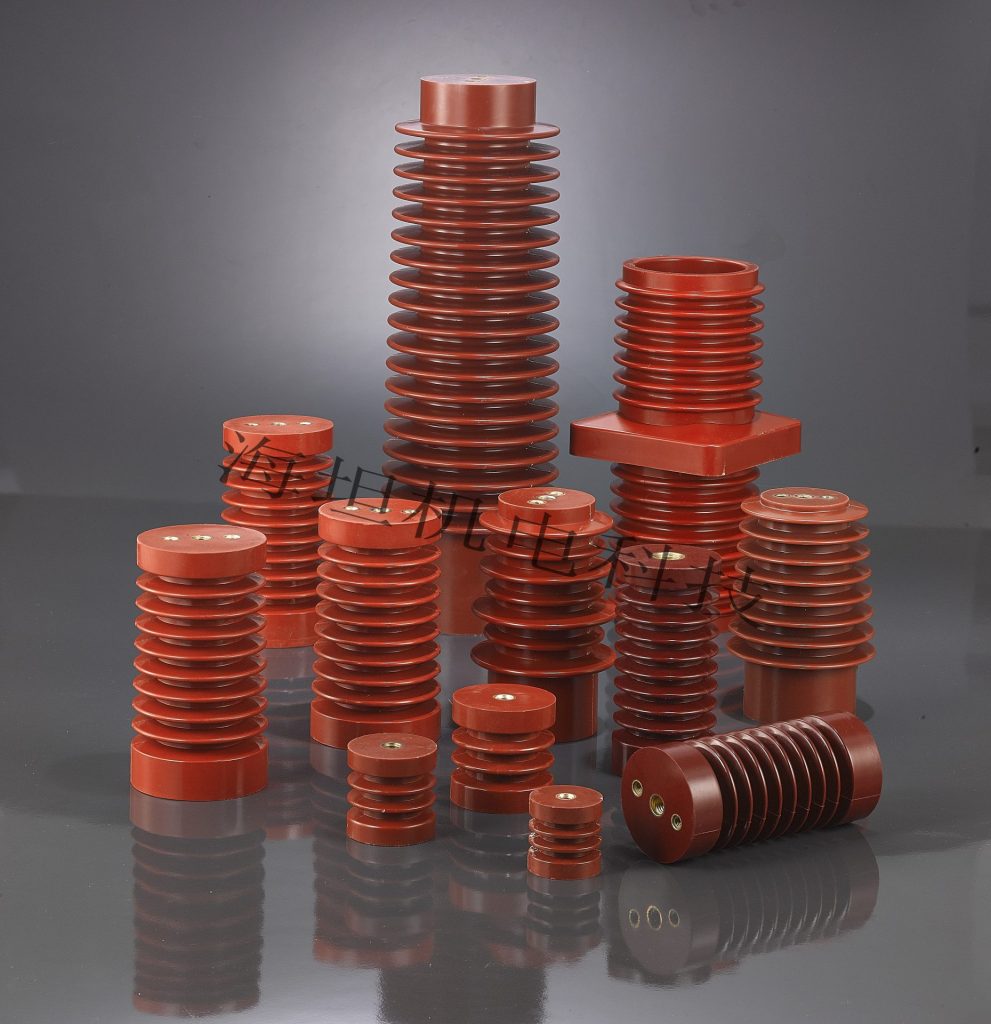
DMC Material Formulation Optimization: Key to Improving the Mechanical and Electrical Properties of Low-Voltage Insulators
Introduction
Low-voltage electrical systems continue to evolve toward higher safety, reliability, and efficiency. As equipment becomes more compact and demanding, the materials used for insulation must deliver exceptional mechanical strength, electrical stability, and long-term performance. Dough Molding Compound (DMC), a thermoset composite widely used in electrical components, has become a preferred option due to its excellent balance of mechanical and electrical properties.
However, the performance of a DMC electrical insulator is not determined by its base materials alone. Instead, the true determinant of quality lies in the DMC material formulation—the precise adjustment of resin systems, glass fibers, fillers, and additives. Through targeted DMC formulation optimization, manufacturers can significantly enhance both the mechanical and electrical behavior of low-voltage insulators, ensuring better durability and safety.
This article explores how optimizing DMC formulations improves DMC insulator performance and offers insights into the most effective strategies for achieving superior results.
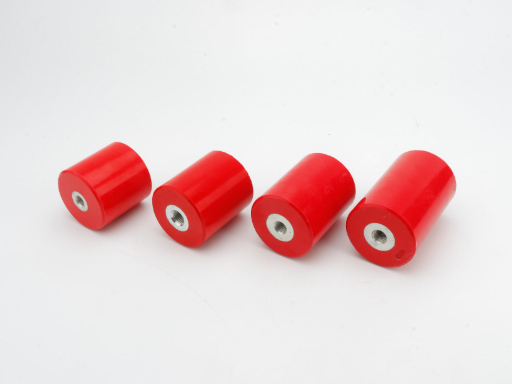
Understanding DMC Material: Composition and Basic Properties
What Is Dough Molding Compound (DMC)?
DMC is a ready-to-mold, fiber-reinforced thermoset composite material commonly used in electrical and automotive applications. Its combination of high strength, electrical insulation, dimensional stability, and cost-effectiveness makes it an ideal choice for low-voltage insulator materials.
Breakdown of DMC Material Composition
A standard DMC composite material contains:
Resin (Unsaturated Polyester Resin): Provides bonding, chemical resistance, and electrical insulation.
Glass Fibers: Short chopped strands that increase structural strength.
Fillers (CaCO₃, ATH, etc.): Improve bulk properties, reduce shrinkage, and enhance electrical performance.
DMC Material Additives: Including low-shrink agents, lubricants, catalysts, pigments, and flame retardants.
This combination allows DMC to be tailored for specific electrical or mechanical requirements, making DMC resin formulation a crucial design step.
Key Mechanical and Electrical Properties of DMC Composite Material
DMC offers:
High tensile and flexural strength
Excellent dimensional stability
Good heat resistance
Superior electrical insulation, dielectric strength, and tracking resistance
High arc resistance
Flame retardancy (depending on formulation)
These inherent characteristics provide a strong foundation on which to build optimized insulator designs.
Typical Applications of DMC Electrical Insulators and DMC Low-Voltage Insulators
DMC is widely used in:
Terminal blocks
Switchgear components
Busbar supports
Meter housings
Circuit breaker parts
Transformer accessories
Wiring device enclosures
Its versatility makes DMC a dominant material in low-voltage electrical equipment.
DMC vs Traditional Insulating Materials (Ceramic, Phenolic, Epoxy)
Compared to other insulating materials:
Ceramic: Excellent dielectric performance but heavier, brittle, and costly.
Phenolic: Good mechanical strength but lower electrical performance.
Epoxy: Strong and reliable but more expensive and slower to produce.
DMC provides an optimal balance of cost, strength, electrical performance, and manufacturability, positioning it as a highly competitive thermoset composite insulator material.
Why Formulation Matters: The Foundation of Insulator Performance
Why Formulation Determines DMC Mechanical Properties
The ratio of resin to glass fibers, fiber length, filler content, and additive selection directly impacts:
Flexural strength
Tensile strength
Impact resistance
Dimensional stability
Therefore, optimized formulation is essential for improving insulator mechanical properties.
How Formulation Affects DMC Electrical Properties
DMC electrical properties—such as electrical strength, dielectric breakdown voltage, insulation resistance, and tracking resistance—are highly dependent on:
Resin purity
Filler type and particle size
Additives that enhance dielectric performance
The right formulation significantly elevates electrical strength of DMC insulators.
Impact on DMC Insulator Performance and Service Life
A well-optimized formulation leads to:
Higher thermal resistance
Improved resistance to moisture and environmental stress
Reduced internal stress and cracking
Longer operational life
Consistent formulation is essential for guaranteeing DMC insulation reliability.
Key Components in DMC Formulation and Their Functional Roles
Unsaturated Polyester Resin
Acts as the core matrix
Determines adhesion, surface finish, and electrical insulation
Resin structure and crosslinking level influence thermal performance
Glass Fiber Reinforcement
Provides mechanical reinforcement
Affects load-bearing capacity and toughness
Properly dispersed fibers improve overall performance in glass fiber reinforced DMC
Fillers (CaCO₃, ATH, etc.)
Improve dimensional stability
Enhance arc and tracking resistance
ATH contributes additional flame retardancy
Affects both mechanical and electrical performance depending on particle size and purity
Additives and Modifiers
Additives control:
Curing behavior
Flow characteristics
Surface smoothness
Shrinkage rate
Electrical stability in humid environments
Optimizing additives is a key part of DMC formulation optimization.
Optimization Strategies for Improving Mechanical Properties
Adjusting Glass Fiber Content
Increasing fiber content enhances strength but reduces flowability. The challenge is balancing:
Reinforcement
Moldability
Final part consistency
Modifying Resin Viscosity and Crosslinking Density
Proper resin formulation improves:
Structural integrity
Heat resistance
Load-bearing capability
Optimizing Filler Type, Size, and Surface Treatment
Filler improvements can:
Improve toughness
Reduce brittleness
Increase impact resistance
Enhance compatibility with the resin matrix
Practical Examples
Optimized formulations can increase the mechanical strength of DMC insulators by:
+20–30% flexural strength
Higher impact resistance
Improved dimensional accuracy
Optimization Strategies for Enhancing Electrical Properties
Selecting High-Purity Resins
High-quality resin systems maintain:
Higher dielectric strength
Improved insulation stability
Better resistance to electrical breakdown
Understanding Filler Influence
ATH and other fillers significantly improve:
Tracking resistance
Arc resistance
Surface insulation properties
Electrical-Grade Additives
Additives can improve performance under:
High humidity
Temperature fluctuations
Pollution and surface contamination
Improving DMC Insulation Reliability
Through optimized formulation, electrical performance improves by:
Higher dielectric constant stability
Reduced leakage current
Better moisture resistance
Processing–Formulation Interaction: Why Both Must Work Together
Effects of Molding Parameters
Critical molding parameters include:
Temperature
Pressure
Curing time
Incorrect conditions can damage fiber distribution or cause incomplete curing.
Avoiding Common Defects
Defects such as:
Porosity
Voids
Fiber exposure
Sink marks
Incomplete crosslinking
can severely reduce both mechanical and electrical performance.
Importance of Synergy
Superior DMC insulator performance requires alignment between:
Formulation design
Material processing
Mold design
Case Study: Performance Improvements from Optimized DMC Formulations
Conventional vs Optimized DMC
Optimized formulations typically show:
Higher mechanical strength
Better dielectric properties
Improved moldability
More consistent surface finish
Performance Improvements
Key enhancements include:
+15–35% flexural and tensile strength
+10–25% dielectric strength
Superior tracking and arc resistance
Higher heat resistance and dimensional accuracy
Real-World Applications
Optimized formulations have demonstrated excellent performance in:
Terminal blocks
Switch housings
Busbar supports
Electrical connectors
These improvements translate directly to greater product reliability and longer service life.
Conclusion
Optimizing DMC material formulation is the most effective strategy for enhancing the mechanical and electrical properties of low-voltage insulators. By carefully adjusting resin composition, glass fiber content, filler characteristics, and functional additives, manufacturers can create optimized DMC formulations that outperform traditional insulating materials.
As demand for safe, efficient electrical systems continues to grow, advanced thermoset composite insulator materials like DMC will play an increasingly important role in the industry.
FAQ
What affects the mechanical strength of DMC insulators?
Glass fiber content, resin crosslinking density, filler characteristics, and overall DMC material formulation are the key influencers.
How can DMC electrical properties be improved?
Using high-purity resins, electrical-grade fillers, and functional additives significantly improves dielectric strength and tracking resistance.
Why is DMC preferred over traditional insulating materials?
DMC offers a better combination of mechanical strength, electrical stability, processability, and cost-effectiveness.
What is the role of additives in DMC?
DMC material additives control curing behavior, shrinkage, insulation reliability, moisture resistance, and flame retardancy.
Can processing conditions affect final DMC performance?
Absolutely. Molding temperature, pressure, and curing parameters must align with the formulation to ensure optimal DMC insulator performance.
--- END ---
 E-mail: [email protected]
  No. 20 Lingyun Road, Dongfeng
Industrial Zone, Liushi Town, Yueqing
City,Zhejiang Province


© Copyright 2024 China Haitan Electromechanical Technology Co., Ltd. All rights reserved.SUPPORT BY:JUNJ Privacy Policy
 English (South Africa)
  English (United States)
  Arabic
  Belarusian
  Bengali
  Japanese
  Kazakh
  Korean
  Myanmar
  Russian
  Thai
Thai  Ukrainian
  Uzbek
Uzbek  Vietnamese
  Chinese