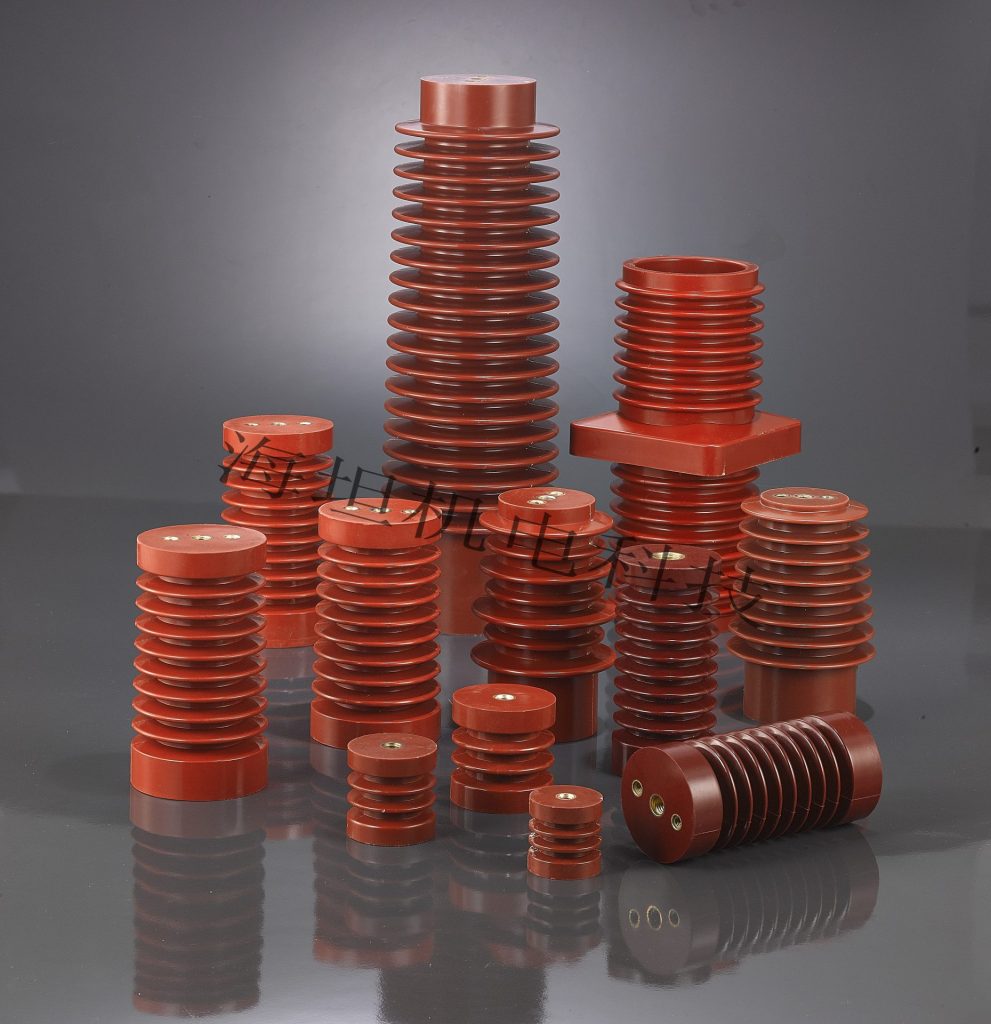
Lifecycle Cost Perspective: Why DMC Insulators Are a More Economical Choice
вступ
When selecting insulators for power distribution and electrical equipment, the initial purchase price is often only one part of the decision. For utilities, EPC contractors, and industrial operators, lifecycle cost—the total cost of ownership from installation to end of service life—is a far more meaningful metric.
From this perspective, Ізолятори DMC (Dough Molding Compound). stand out as a highly economical choice compared with traditional porcelain or epoxy insulators. Their material properties, durability, and low maintenance requirements translate into significant long-term savings.
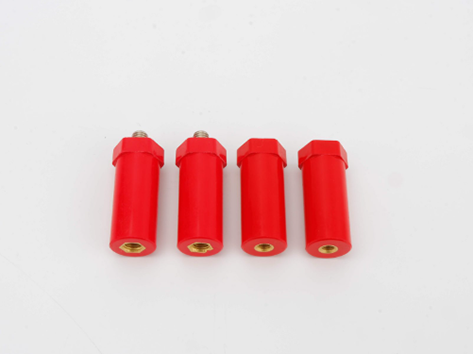
Understanding Lifecycle Cost in Insulator Selection
Lifecycle cost typically includes:
Initial material and procurement cost
Transportation and installation expenses
Operation and maintenance costs
Downtime and failure-related losses
Replacement and disposal costs
An insulator with a slightly higher upfront price can still be the most economical option if it reduces maintenance, improves reliability, and extends service life.
Lower Maintenance Costs Over Long-Term Operation
Ізолятори DMC are known for their excellent mechanical strength, electrical insulation performance, and surface stability. Unlike porcelain insulators, they are:
Resistant to cracking and chipping
Less prone to surface degradation
Not affected by moisture absorption
These characteristics reduce the need for frequent inspections, cleaning, and replacements, especially in harsh environments such as high humidity, pollution, or coastal areas.
Result: Fewer maintenance interventions and lower labor costs throughout the service life.
Longer Service Life and Reduced Replacement Frequency
Thanks to their high thermal resistance, arc resistance, and aging resistance, Ізолятори DMC maintain stable performance under long-term electrical and environmental stress.
Compared with conventional materials, DMC insulators:
Perform reliably under temperature fluctuations
Resist tracking and erosion
Retain mechanical strength over time
This extended service life significantly reduces replacement cycles, which directly lowers material, installation, and outage-related costs.
Reduced Installation and Transportation Costs
Ізолятори DMC are lighter than porcelain insulators, which brings multiple cost advantages:
Easier handling during installation
Lower transportation and logistics costs
Reduced risk of breakage during shipping
For large-scale power projects or remote installations, these savings can be substantial when evaluated across hundreds or thousands of units.
Improved Reliability Minimizes Downtime Losses
Insulator failure can lead to:
Power outages
Equipment damage
Safety hazards
Regulatory penalties
DMC insulators offer high dielectric strength and stable insulation performance, reducing the risk of flashover or mechanical failure. Improved reliability means fewer unexpected shutdowns and lower indirect costs related to system downtime.
From a lifecycle cost standpoint, avoiding even a single major failure event can justify the investment in higher-performance insulators.
Environmental Resistance Reduces Total Ownership Cost
DMC material performs well in challenging conditions, including:
UV exposure
Industrial pollution
High humidity and salt spray
Because they do not corrode or degrade easily, Ізолятори DMC require fewer protective measures and replacements, further lowering long-term ownership costs in outdoor and industrial environments.
Better Cost Predictability for Long-Term Projects
For utilities and infrastructure operators, predictable costs are essential. The durability and consistency of DMC insulators allow for:
More accurate maintenance planning
Lower unexpected repair expenses
Stable long-term budgeting
This predictability is especially valuable in smart grid, renewable energy, and large-scale distribution projects where lifecycle optimization is a key objective.
Висновок
While the initial price of an insulator is important, it should never be the sole decision factor. When evaluated from a lifecycle cost perspective, Ізолятори DMC clearly offer superior economic value through:
Reduced maintenance and replacement needs
Longer service life
Lower installation and transportation costs
Improved system reliability and uptime
For power utilities, industrial facilities, and infrastructure projects aiming to optimize total cost of ownership, DMC insulators are not just a technical choice—but a smart economic investment.
FAQ
1. What does “lifecycle cost” mean when evaluating insulators?
Lifecycle cost refers to the total cost of ownership of an insulator over its entire service life, not just the initial purchase price. It includes installation, operation, maintenance, downtime risk, replacement, and disposal costs. From this perspective, DMC insulators often prove more economical than traditional alternatives.
2. Are DMC insulators more expensive than porcelain insulators upfront?
In some cases, DMC insulators may have a slightly higher initial unit price than porcelain insulators. However, their longer service life, lower maintenance requirements, and reduced failure rates typically result in significantly lower total lifecycle costs.
3. How do DMC insulators reduce maintenance costs?
DMC insulators feature excellent resistance to moisture, pollution, UV exposure, and electrical tracking. This minimizes surface degradation, cracking, and insulation failure, reducing the need for frequent inspections, cleaning, and replacements.
4. Do DMC insulators perform well in harsh environments?
Yes. DMC insulators are highly suitable for coastal, industrial, high-humidity, and polluted environments. Their non-porous structure and chemical stability help maintain consistent electrical and mechanical performance where traditional materials may degrade faster.
5. How does the lightweight design of DMC insulators impact total cost?
Because DMC insulators are lighter than porcelain insulators, they:
Lower transportation and logistics costs
Reduce installation labor and equipment requirements
Minimize breakage during handling and shipping
These advantages contribute directly to reduced project and lifecycle costs.
6. Are DMC insulators reliable for long-term power grid operation?
DMC insulators offer high dielectric strength, strong mechanical performance, and excellent aging resistance. These characteristics improve system reliability and reduce the risk of outages, making them well-suited for long-term use in power distribution and smart grid applications.
7. Can DMC insulators help reduce unplanned downtime?
Yes. By providing stable insulation performance and high resistance to electrical and environmental stress, DMC insulators significantly reduce the likelihood of sudden failures, which helps prevent costly unplanned outages and maintenance interventions.
8. Are DMC insulators suitable for modern power and renewable energy projects?
Absolutely. DMC insulators are widely used in distribution networks, substations, renewable energy systems, and smart grids, where lifecycle cost optimization, reliability, and durability are key requirements.
--- КІНЕЦЬ ---
 Електронна адреса: [email protected]
 No. 20 Lingyun Road, Dongfeng
Промислова зона, місто Ліуші, Юецін
Місто, провінція Чжецзян


© Copyright 2024 China Haitan Electromechanical Technology Co., Ltd. Усі права захищено.ЗА ПІДТРИМКУ:JUNJ Політика конфіденційності
 Ukrainian
  English (United States)
  English (South Africa)
  Arabic
  Belarusian
  Bengali
  Japanese
  Kazakh
  Korean
  Myanmar
  Russian
  Thai
Thai  Uzbek
Uzbek  Vietnamese
  Chinese