
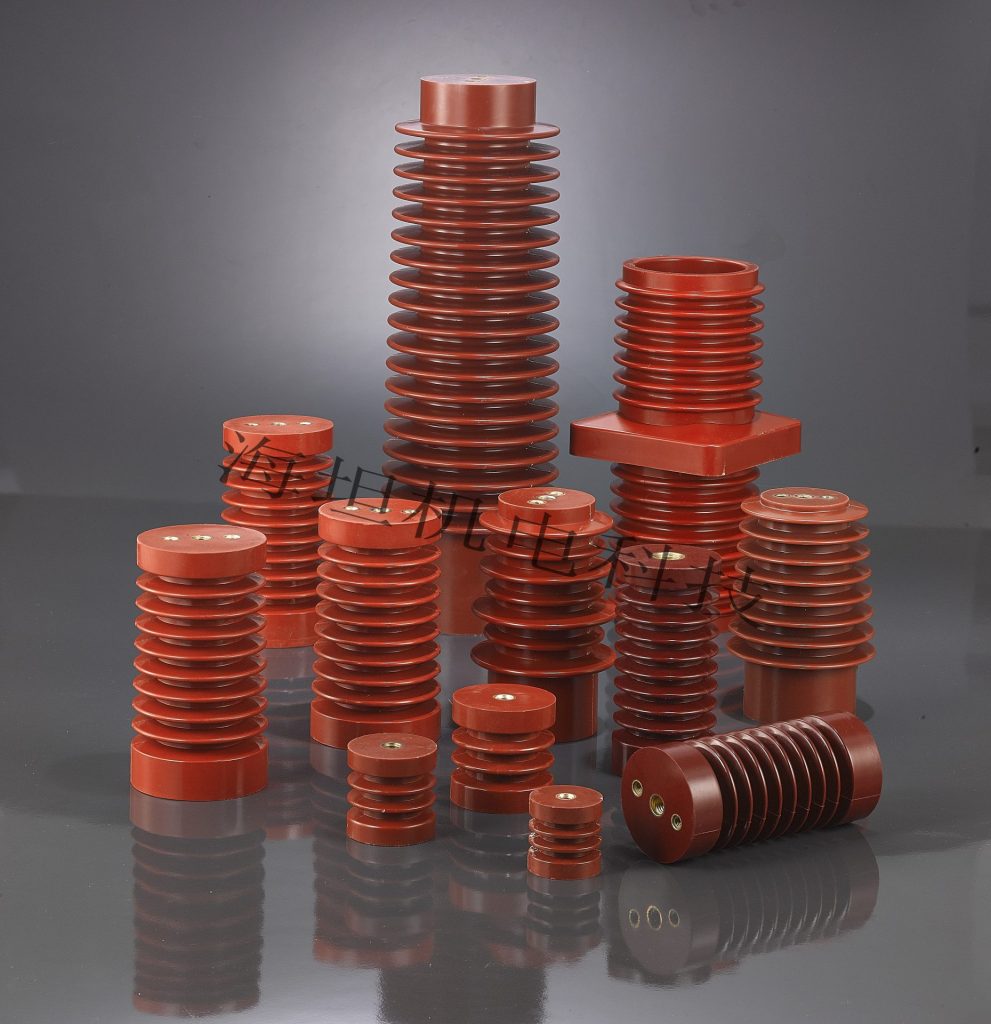
From 690V to 1000V: One Supplier for All Your Low Voltage Insulator Grades
Blog | Phòng tin tức | Th8 17,2026
Picture a fairly ordinary industrial project: a 400V panel feeding office and lighting loads, a 690V motor control center running the compressors, and a 1000V DC string tied to a rooftop solar array. Three voltage classes, one building. If your team is sourcing the busbar insulators for all three, the frustrating part usually isn’t finding a supplier — it’s finding one whose product line is documented well enough across the entire range that you’re not stitching together specs from three different catalogs.
This article covers what “690V to 1000V” actually spans under the low voltage standard, how engineers determine the creepage and clearance an insulator needs at each tier, and how Haitan’s insulator families — built around different mounting styles rather than a single universal design — map to the equipment you’re likely specifying across that range.
What “690V to 1000V” Actually Means
IEC 61140 sets the ceiling for low voltage at 1000V AC RMS or 1500V DC. Everything from a 400V lighting circuit to a 1000V PV string technically sits inside that same regulatory band — which is part of why the term “low voltage” can be misleading for procurement purposes. A 400V distribution panel, a 690V motor control center, and a 1000V DC energy storage string are all “low voltage” by definition, but they don’t share the same insulation requirements, the same fault current profile, or the same margin for error.
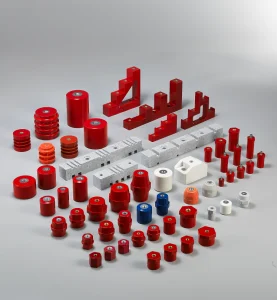
690V shows up specifically because it’s a common rated voltage for three-phase industrial motor circuits in much of the world — heavy machinery, pumps, and compressors are routinely wired at this level rather than at standard 400V distribution voltage, because it allows lower current for the same power, which means lighter cabling. That’s a different design driver than the 1000V DC ceiling you see in PV strings and some energy storage architectures, where the goal is usually maximizing string voltage to reduce the number of parallel strings and associated combiner hardware. Same low voltage band, two very different reasons for landing near the top of it.
How Creepage and Clearance Actually Get Calculated
This is the part that trips up teams who are used to thinking of “voltage rating” as a single number on a datasheet. Under IEC 60664-1, an insulator’s required creepage distance and clearance are calculated separately, from different inputs, and neither one is simply “the system voltage plus a safety margin.”
Clearance — the shortest path through air between two conductors — is derived from the rated impulse withstand voltage, which itself depends on the nominal system voltage and the overvoltage category assigned to that part of the installation. Creepage — the shortest path along the insulator’s surface — is derived from the working voltage, the pollution degree of the installation environment, and the insulating material’s group classification, which is based on its Comparative Tracking Index (CTI). IEC 60664-1 groups materials into Class I, II, IIIa, and IIIb bands by CTI range, with higher-CTI materials permitted shorter creepage distances at the same voltage.
To make this concrete: published engineering references working through IEC 60664-1’s tables show that an 800V DC application at Pollution Degree 2 on a Material Group IIIa insulator (CTI in the 175–249 range) lands around 8mm of required creepage — while a 1000–1500V DC breaker application under similar pollution conditions is commonly cited in the 10–16mm creepage range. Those are illustrative figures from published IEC 60664-1 worked examples, not a claim about any specific product — the point is that the required distance climbs meaningfully as you move from the 400V tier toward the 1000V tier, and pollution degree alone can double or quadruple the creepage requirement at a fixed voltage. An indoor, climate-controlled panel and an outdoor cabinet exposed to dust and condensation are not the same calculation, even at identical voltage.
Need documentation that actually specifies creepage and clearance for your voltage tier?
Where Haitan’s Insulator Families Fit Across This Range
Rather than one universal design stretched across every application, Haitan’s low voltage catalog is organized as a family of related product lines — including SM, CT/CJ, MNS, EL, and SB insulators — each built around a specific mounting style and mechanical role rather than a specific voltage tier. The SM standoff insulator is a spindle-shaped design intended for wrench installation, commonly used in distribution boxes, inverters, and general panel work. The CT bus support insulator is a frame-style component built to support multi-phase busbar systems at different mounting heights within the same equipment. The MNS insulator is cylindrical with reinforced inserts for higher mechanical strength. And the SB series — designed as a higher-strength, smaller volume design — is positioned specifically for newer applications like electric vehicle battery packs.
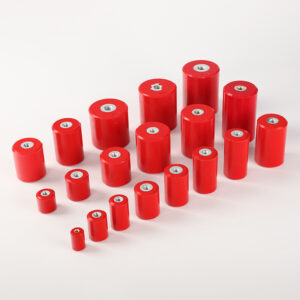
Across the range, Haitan lists ISO9001, CQC, CE, and RoHS certification along with UL94 V0 fire safety compliance, and a stated operating temperature range of -40°C to 130°C. Those are catalog-level claims worth verifying against the current datasheet for whatever specific model and voltage tier you’re specifying — certifications and operating limits can vary by exact part number, and a general company-level certification isn’t the same as a per-product test report.
Insulator Family Overview by Mounting Style
| Insulator Family | Mounting Style | Common Application |
|---|---|---|
| SM | Spindle-shaped standoff, wrench installation | Distribution boxes, inverters, general panels |
| CT | Bus support frame, multiple mounting heights | Multi-phase busbar systems |
| MNS | Cylindrical with reinforced inserts | Low-voltage distribution lines and communication lines |
| SB | Compact, higher-strength design | EV battery packs, 5G cabinets, EV charging piles |
This is a starting point for narrowing down which family fits your panel layout — the exact voltage rating, dielectric withstand figure, and CTI value for any specific model should always come from the current datasheet, not from a general product category alone.
What to Ask For Before You Specify Across Multiple Voltage Tiers
Regardless of which supplier you’re working with, a few documents separate a genuinely verified selection from an assumed one. Ask for the CTI test result and the material group it corresponds to under IEC 60112 — this is what actually determines the creepage distance your design needs, not the voltage rating alone. Ask for the dielectric withstand test voltage and duration used, since a general “1000V rated” claim without a stated test method tells you very little. And if your project runs anywhere near the top of the 690V–1000V range, ask specifically what overvoltage category the impulse withstand rating was tested against — a component adequate for Category II switching equipment isn’t automatically adequate for Category III distribution equipment closer to the supply origin.
It’s also worth asking how mechanical load was tested for the specific family you’re specifying, since higher voltage tiers commonly carry heavier busbars and higher fault currents. A part that clears the electrical requirements but wasn’t tested under a representative mechanical load is still the wrong choice for a 690V motor control center carrying substantial fault current.
Working across 400V, 690V, and 1000V equipment on the same project?
Câu hỏi thường gặp
Does “low voltage” really cover a range as wide as 400V to 1000V?
Yes. IEC 61140 defines low voltage as up to 1000V AC RMS or 1500V DC — a single regulatory band that includes standard distribution voltages, industrial motor circuits, and the DC side of many solar and battery storage systems.
Why is 690V specifically common for industrial motor circuits?
Higher voltage allows the same power to be delivered at lower current, which reduces conductor size and cable cost for heavy machinery. It’s a common design choice for motor control centers and large HVAC or pumping systems for that reason.
Is creepage distance the same thing as voltage rating?
No. Voltage rating is a single figure; creepage distance is calculated separately under IEC 60664-1 from the working voltage, the environment’s pollution degree, and the insulating material’s CTI-based group classification. Two insulators with the same voltage rating can require different creepage distances depending on where they’re installed.
Why does pollution degree matter so much for outdoor or industrial installations?
Higher pollution degrees assume more dust, condensation, and contamination on the insulator surface, which increases the risk of tracking. IEC 60664-1 responds to this by requiring longer creepage distances at higher pollution degrees, even at the same voltage.
What is CTI and why does it affect creepage distance?
Comparative Tracking Index measures how resistant a material is to forming a conductive path across its surface under repeated contamination and voltage stress, per IEC 60112. Materials with a higher CTI are permitted shorter creepage distances for the same voltage class under IEC 60664-1.
What certifications should I check for low voltage insulators sourced for this range?
CE, RoHS, and relevant national marks such as CQC or CCC are common baseline certifications, alongside UL94 flammability ratings for fire safety. Confirm these apply to the specific product and voltage tier you’re sourcing, not just the manufacturer as a company.
One catalog, one point of contact, across your full 690V–1000V equipment list.
--- KẾT THÚC ---
 Email: [email protected]
  Số 20 đường Lingyun, Đông Phong
Khu công nghiệp, thị trấn Liushi, Nhạc Thanh
Thành phố, tỉnh Chiết Giang


© Bản quyền 2024 Công ty TNHH Công nghệ Cơ điện Haitan Trung Quốc. Mọi quyền được bảo lưu.HỖ TRỢ BỞI: JUNJ Chính sách bảo mật
 Vietnamese
  English (United States)
  English (South Africa)
  Arabic
  Belarusian
  Bengali
  Japanese
  Kazakh
  Korean
  Myanmar
  Russian
  Thai
Thai  Ukrainian
  Uzbek
Uzbek  Chinese