Types of Wiring Ducts: Slotted, Solid, and Flexible Explained
Blog | Phòng tin tức | Th1 21,2026
Giới thiệu
Ống dẫn dây are essential components in electrical cabinets and control panels, helping organize cables, improve safety, and simplify maintenance. With multiple designs available, choosing the right type of wiring duct can significantly impact panel performance and efficiency. This article explains the three main types of wiring ducts—slotted, solid, and flexible, highlighting their structures, advantages, and typical applications.
What Is a Wiring Duct?
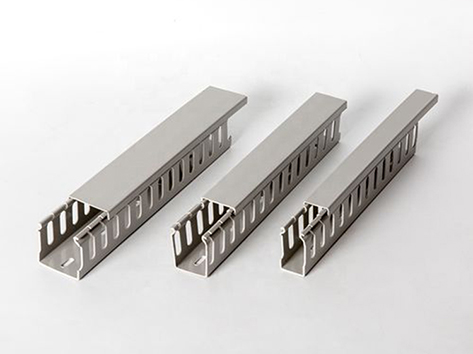
MỘT wiring duct (also known as a wire duct or cable duct) is a cable management channel used to route and protect electrical wires inside enclosures. Wiring ducts help prevent cable damage, reduce clutter, and ensure a clean, professional panel layout.
They are commonly manufactured from:
PVC
Halogen-free plastic
Metal (for special environments)
Slotted Wiring Duct
Structure and Design
Slotted wiring ducts feature open slots or fingers along both side walls. These slots allow cables to be easily inserted or removed at any point along the duct length.
Ưu điểm chính
Easy cable routing and modification
Improved airflow and heat dissipation
Clean and organized wiring layout
Faster installation and maintenance
Ứng dụng điển hình
Industrial control cabinets
PLC and automation panels
Low-voltage distribution boards
Slotted wiring ducts are the most widely used type due to their flexibility and ease of use.
Solid Wiring Duct
Structure and Design
Solid wiring ducts have fully enclosed side walls without slots. Cables enter and exit only at the ends or through custom cut-outs.
Ưu điểm chính
Maximum cable protection
Reduced dust and debris entry
Cleaner exterior appearance
Ứng dụng điển hình
Areas requiring high mechanical protection
Environments with dust or contamination
Panels where wiring changes are infrequent
Solid wiring ducts are often chosen when protection and appearance are higher priorities than frequent wiring access.
Flexible Wiring Duct
Structure and Design
Flexible wiring ducts được làm từ bendable or corrugated materials, allowing them to adapt to curved or irregular paths.
Ưu điểm chính
Excellent flexibility for tight or complex spaces
Absorbs vibration and movement
Easy installation in dynamic environments
Ứng dụng điển hình
Moving equipment and machinery
Door-mounted components
Applications with vibration or repeated motion
Flexible wiring ducts are ideal when rigid ducting is impractical.
Comparison of Wiring Duct Types
| Tính năng | Slotted Duct | Solid Duct | Flexible Duct |
| Cable Access | Xuất sắc | Limited | Tốt |
| Protection Level | Trung bình | Cao | Trung bình |
| Tính linh hoạt | Thấp | Thấp | Cao |
| Installation Speed | Fast | Vừa phải | Fast |
| Typical Use | Control panels | Protected areas | Dynamic wiring |
How to Choose the Right Wiring Duct
When selecting a wiring duct, coi như:
Cable quantity and size
Frequency of wiring changes
Environmental conditions (dust, heat, chemicals)
Panel layout and available space
Safety and compliance requirements
In many control cabinets, slotted wiring ducts are used as the primary solution, with solid or flexible ducts applied in specific areas as needed.
Phần kết luận
Understanding the differences between slotted, solid, and flexible wiring ducts helps ensure efficient cable management and long-term system reliability. Each type offers unique advantages, making it suitable for different panel designs and operating conditions.
By choosing the right wiring duct type, panel builders and engineers can improve safety, organization, and maintenance efficiency in electrical and automation systems.
Câu hỏi thường gặp
What is the most commonly used type of wiring duct?
các slotted wiring duct is the most commonly used type in electrical control panels. Its open-slot design allows easy cable insertion, routing, and future modifications, making it ideal for automation and low-voltage distribution systems.
When should I choose a solid wiring duct?
Solid wiring ducts are best used when maximum cable protection is required or when the environment contains dust, debris, or contaminants. They are suitable for panels where wiring changes are infrequent and a clean exterior appearance is important.
What applications are flexible wiring ducts used for?
Flexible wiring ducts are commonly used in:
Moving machinery
Door-mounted panel components
Applications with vibration or repeated motion
Their flexibility helps prevent cable stress and damage in dynamic environments.
What materials are wiring ducts made from?
Wiring ducts are typically manufactured from:
PVC (cost-effective and widely used)
Halogen-free plastics (for enhanced fire safety)
Metal (for extreme mechanical or environmental protection)
Material selection depends on safety standards, temperature, and environmental conditions.
Are wiring ducts flame retardant?
Most industrial wiring ducts are designed to be flame retardant and comply with standards such as UL or IEC. Always verify material specifications and certifications for safety-critical applications.
How do I size a wiring duct correctly?
Wiring ducts should be sized to allow sufficient space for current cables plus future expansion. A common guideline is to use no more than 50–60% of the duct’s internal capacity to maintain airflow and simplify maintenance.
Can different types of wiring ducts be used in the same panel?
Yes. Many control panels use slotted wiring ducts as the main routing system, combined with solid or flexible ducts in specific areas to address protection or movement requirements.
How do wiring ducts improve panel safety?
Wiring ducts reduce cable congestion, prevent insulation damage, improve airflow, and make wiring paths easier to inspect. This helps lower the risk of short circuits, overheating, and maintenance errors.
--- KẾT THÚC ---
 Email: [email protected]
 Số 20 đường Lingyun, Đông Phong
Khu công nghiệp, thị trấn Liushi, Nhạc Thanh
Thành phố, tỉnh Chiết Giang


© Bản quyền 2024 Công ty TNHH Công nghệ Cơ điện Haitan Trung Quốc. Mọi quyền được bảo lưu.HỖ TRỢ BỞI: JUNJ Chính sách bảo mật
 Vietnamese
  English (United States)
  English (South Africa)
  Arabic
  Belarusian
  Bengali
  Japanese
  Kazakh
  Korean
  Myanmar
  Russian
  Thai
Thai  Ukrainian
  Uzbek
Uzbek  Chinese