How DMC Insulators Respond to Updated Safety Requirements for Low-Voltage Electrical Products
Introduction
With the continuous upgrading of electrical safety regulations, low-voltage electrical products such as switchgear, distribution boards, and control panels must comply with stricter requirements related to insulation coordination, fire safety, and thermal stability. International standards such as IEC 60664-1 (Insulation Coordination), IEC 60112 (Comparative Tracking Index test), and fire-safety requirements like UL94 flame-retardant ratings are now widely referenced in national and industry standards for electrical equipment.
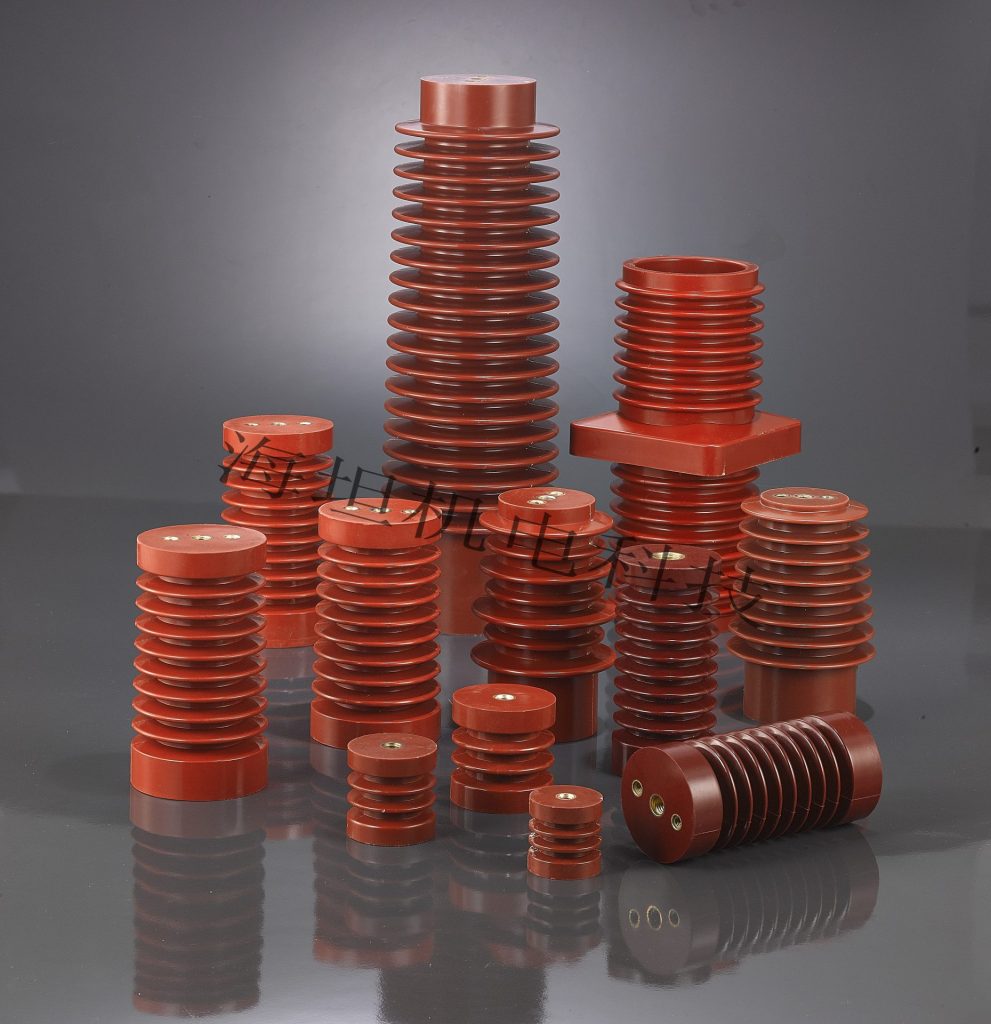
As a thermosetting composite material made from unsaturated polyester resin, glass fiber, and fillers, DMC (Dough Molding Compound) insulators provide a balanced combination of electrical insulation, mechanical strength, and environmental resistance. These characteristics allow DMC insulators to meet the evolving safety requirements of modern low-voltage electrical systems.
Material Group Compliance: Tracking Resistance and Insulation Coordination
One of the most important safety indicators for insulating materials in low-voltage equipment is the Comparative Tracking Index (CTI), defined in IEC 60112. The CTI measures the ability of an insulating material to resist electrical tracking caused by moisture, contamination, and electrical stress.
According to IEC 60664-1, insulating materials are divided into four groups based on CTI values:
| Material Group | CTI Range |
| Group I | ≥ 600 V |
| Group II | 400–599 V |
| Group IIIa | 175–399 V |
| Group IIIb | 100–174 V |
High-quality DMC insulating materials typically achieve CTI ≥ 600 V, which places them in Material Group I, the highest classification.
Why this matters for safety
A higher CTI rating provides several design advantages:
Reduced risk of surface tracking failure
Improved resistance to contamination and humidity
Shorter creepage distances allowed in equipment design
For low-voltage switchgear and busbar support systems, compliance with Material Group I or II significantly improves insulation reliability under pollution conditions defined in IEC standards.
Thermal Resistance: Meeting Long-Term Temperature Requirements
Thermal stability is another key requirement in modern electrical safety standards. Electrical components must withstand continuous operating temperatures and temporary overload heating without degrading insulation performance.
DMC insulators typically provide the following thermal characteristics:
Continuous operating temperature: −40 °C to about 130–135 °C
Relative Thermal Index (RTI): about 130 °C (mechanical) and 105 °C (electrical)
Insulation class: Class B (130 °C) according to insulation system classifications
These values satisfy the thermal endurance requirements commonly applied to low-voltage switchgear and controlgear assemblies, which often follow insulation system classifications similar to IEC and JIS standards.
Practical safety benefits
Stable insulation under high current load
Busbars and terminals generate heat during operation. DMC maintains mechanical strength and dielectric performance even at elevated temperatures.
Reduced risk of insulation aging
Thermosetting polyester resin structures resist thermal deformation and creep better than many thermoplastics.
Compatibility with modern compact equipment
As electrical panels become more compact and heat density increases, high thermal endurance materials are increasingly required.
Flame Retardancy and Fire Safety Compliance
Electrical safety regulations also emphasize fire prevention and self-extinguishing properties of insulating materials.
Most DMC compounds are designed to meet:
UL94 V-0 flame-retardant rating
Glow-wire ignition test up to 960 °C (IEC 60695-2-13)
UL94 V-0 requirements
To meet the UL94 V-0 classification, the material must:
Self-extinguish within 10 seconds
Produce no flaming drips
Prevent fire propagation
These characteristics are particularly important for switchgear enclosures, busbar supports, and power distribution equipment, where insulation materials are located close to live conductors.
Glow-wire test significance
The IEC 60695 glow-wire test simulates overheating caused by faulty electrical connections. Materials that pass the 960 °C glow-wire ignition test demonstrate strong resistance to ignition and flame propagation.
Additional Electrical Safety Properties
Beyond material classification, thermal resistance, and flame retardancy, DMC insulators also provide several electrical properties essential for compliance with low-voltage safety standards:
Typical values include:
Dielectric strength: about 10–17 kV/mm
Surface resistivity: around 10¹³ Ω
Arc resistance: greater than 180 seconds
Water absorption: typically <0.2%
These characteristics help ensure:
Stable insulation performance in humid environments
High resistance to electrical arcing
Long service life in industrial power distribution systems
Why DMC Insulators Are Widely Used in Low-Voltage Equipment
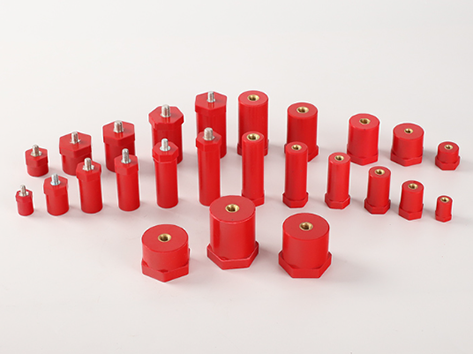
Due to their compliance with modern safety standards, DMC insulators are widely used in:
Low-voltage switchgear assemblies
Busbar support systems
Motor control centers (MCC)
Power distribution cabinets
Industrial control panels
Their combination of high CTI, thermal endurance, and flame retardancy allows designers to meet strict safety regulations while maintaining compact equipment layouts and long-term reliability.
Conclusion
As safety requirements for low-voltage electrical products continue to evolve, insulating materials must provide higher levels of electrical reliability, thermal stability, and fire resistance.
DMC insulators effectively meet these demands by offering:
High CTI values that satisfy IEC insulation material group requirements
Thermal endurance up to Class B (130 °C) for stable operation under load
UL94 V-0 flame retardancy and glow-wire resistance for improved fire safety
Excellent dielectric strength and moisture resistance
These properties make DMC insulators a reliable choice for modern low-voltage electrical systems where safety compliance, durability, and performance are essential.
--- END ---
 E-mail: [email protected]
 No. 20 Lingyun Road, Dongfeng
Industrial Zone, Liushi Town, Yueqing
City,Zhejiang Province


© Copyright 2024 China Haitan Electromechanical Technology Co., Ltd. All rights reserved.SUPPORT BY:JUNJ Privacy Policy
 English (United States)
  English (South Africa)
  Arabic
  Belarusian
  Bengali
  Japanese
  Kazakh
  Korean
  Myanmar
  Russian
  Thai
Thai  Ukrainian
  Uzbek
Uzbek  Vietnamese
  Chinese