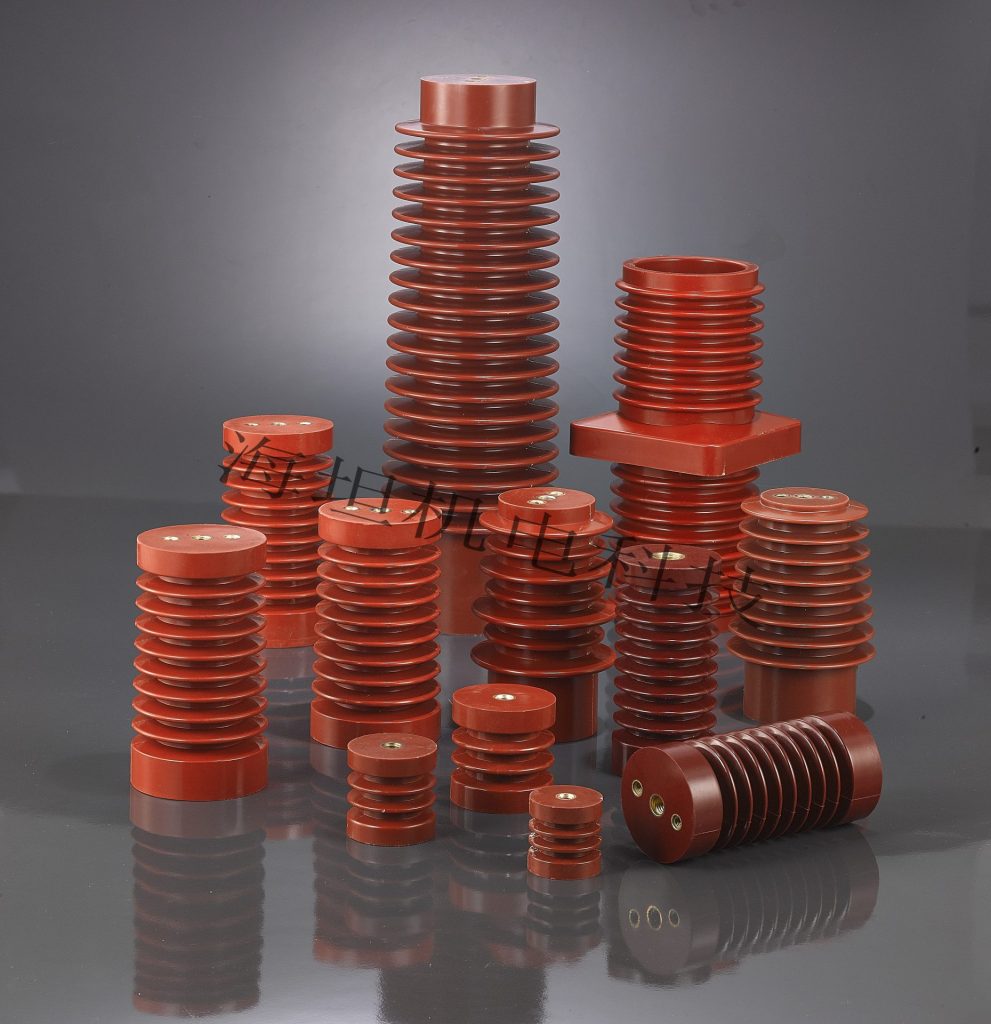
Factory Direct DMC Low Voltage Insulator for Switchgear & Distribution Cabinets
Introduction
As modern power systems continue to expand in complexity, the demand for reliable, durable, and high-performance insulation components is growing rapidly. Among these, DMC (Dough Molding Compound) low voltage insulators have become essential for ensuring safe and stable operation in switchgear and distribution cabinets.
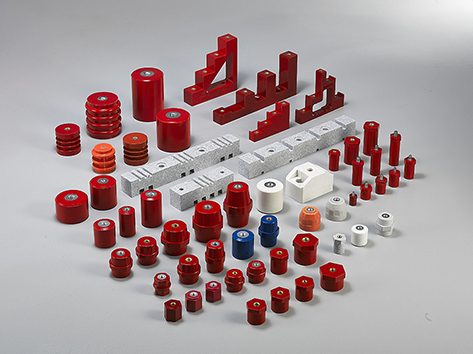
Rather than relying on a single standardized design, today’s electrical systems incorporate a variety of busbar support insulation posts, each tailored to specific structural and functional requirements. This is where different insulator types—such as CJ, CT, CY, DY, EL, EN, MNS, PT, SB, SE, and SM insulators—play a crucial role.
Why DMC Molded Insulators Are Widely Used
DMC and BMC molded insulators are engineered using glass fiber-reinforced thermosetting materials, offering a combination of electrical and mechanical advantages:
High dielectric strength for insulation reliability
Strong mechanical support for heavy busbars
Excellent heat and flame resistance
Resistance to moisture, dust, and chemicals
Long-term durability with minimal maintenance
These properties make them ideal for supporting conductive components while maintaining electrical isolation in compact and high-load environments.
Integrated Use of Different Insulator Types
In real-world applications, multiple insulator models are often used together within the same system to meet different installation and performance needs.
For example, in standard distribution panels, CJ Insulators are commonly selected for their compact structure and cost-effectiveness, while CT Insulators are preferred in positions requiring higher mechanical strength to support heavier busbars. In more space-constrained assemblies, CY Insulators provide flexibility due to their optimized design, whereas DY Insulators are often applied in environments where vibration resistance and stability are critical.
Within switchgear cabinets, especially enclosed systems, EL Insulators and EN Insulators are widely used due to their adaptability to mounting structures and consistent insulation performance. In modular systems such as MNS switchgear, MNS Insulators are specifically designed to match standardized configurations, ensuring easy installation and compatibility.
For specialized electrical functions, different insulators serve targeted purposes. PT Insulators, for instance, are frequently used in potential transformer mounting, while SB Insulators are suitable for unique busbar fixing requirements. To enhance insulation performance in demanding conditions, SE Insulators are often applied, and SM Insulators remain a common choice in standardized and widely used switchgear assemblies.
Role in Switchgear and Distribution Systems
These insulators collectively perform several critical functions:
Supporting and fixing busbars securely
Maintaining proper electrical clearance and creepage distance
Preventing short circuits and leakage currents
Enhancing overall system safety and reliability
Their use spans across:
Low and medium voltage switchgear
Electrical distribution cabinets
Control panels and enclosures
Renewable energy systems such as solar and wind power
Industrial automation and power control systems
High Voltage Insulator Applications
While DMC insulators are primarily used in low voltage environments, high voltage insulators are essential for systems operating under significantly higher electrical stress. These insulators are designed with increased creepage distance and superior dielectric performance, making them suitable for:
High voltage switchgear
Substations
Power transmission and distribution networks
They ensure system stability even under extreme environmental and electrical conditions.
Benefits of Factory Direct Supply
Sourcing insulators directly from manufacturers offers clear advantages:
Better pricing through elimination of intermediaries
Strict quality control throughout production
Customization options for size, structure, and performance
Faster response and delivery times
This is particularly important for projects requiring tailored insulation solutions or bulk procurement.
Conclusion
DMC low voltage insulators are not just individual components—they form a complete insulation system within electrical equipment. By integrating different types such as CJ, CT, CY, DY, EL, EN, MNS, PT, SB, SE, and SM insulators, engineers can achieve optimal performance, safety, and structural efficiency.
Whether applied in standard distribution panels or complex switchgear systems, these BMC/DMC molded insulators provide the reliability and flexibility needed for modern electrical infrastructure.
FAQ
Q1: Why are there so many types of low voltage insulators?
Different designs meet specific mechanical, spatial, and electrical requirements within complex systems.
Q2: Can multiple insulator types be used in one cabinet?
Yes, combining models like CJ, CT, and MNS insulators helps optimize performance and installation.
Q3: What material is best for busbar support insulators?
DMC and BMC materials are preferred due to their strength, insulation performance, and durability.
Q4: Are these insulators customizable?
Yes, factory manufacturers typically provide customization based on project requirements.
Q5: When should high voltage insulators be used?
They are required when operating conditions involve higher voltage levels and stricter insulation demands.
--- END ---
 E-mail: [email protected]
 No. 20 Lingyun Road, Dongfeng
Industrial Zone, Liushi Town, Yueqing
City,Zhejiang Province


© Copyright 2024 China Haitan Electromechanical Technology Co., Ltd. All rights reserved.SUPPORT BY:JUNJ Privacy Policy
 English (United States)
  English (South Africa)
  Arabic
  Belarusian
  Bengali
  Japanese
  Kazakh
  Korean
  Myanmar
  Russian
  Thai
Thai  Ukrainian
  Uzbek
Uzbek  Vietnamese
  Chinese