
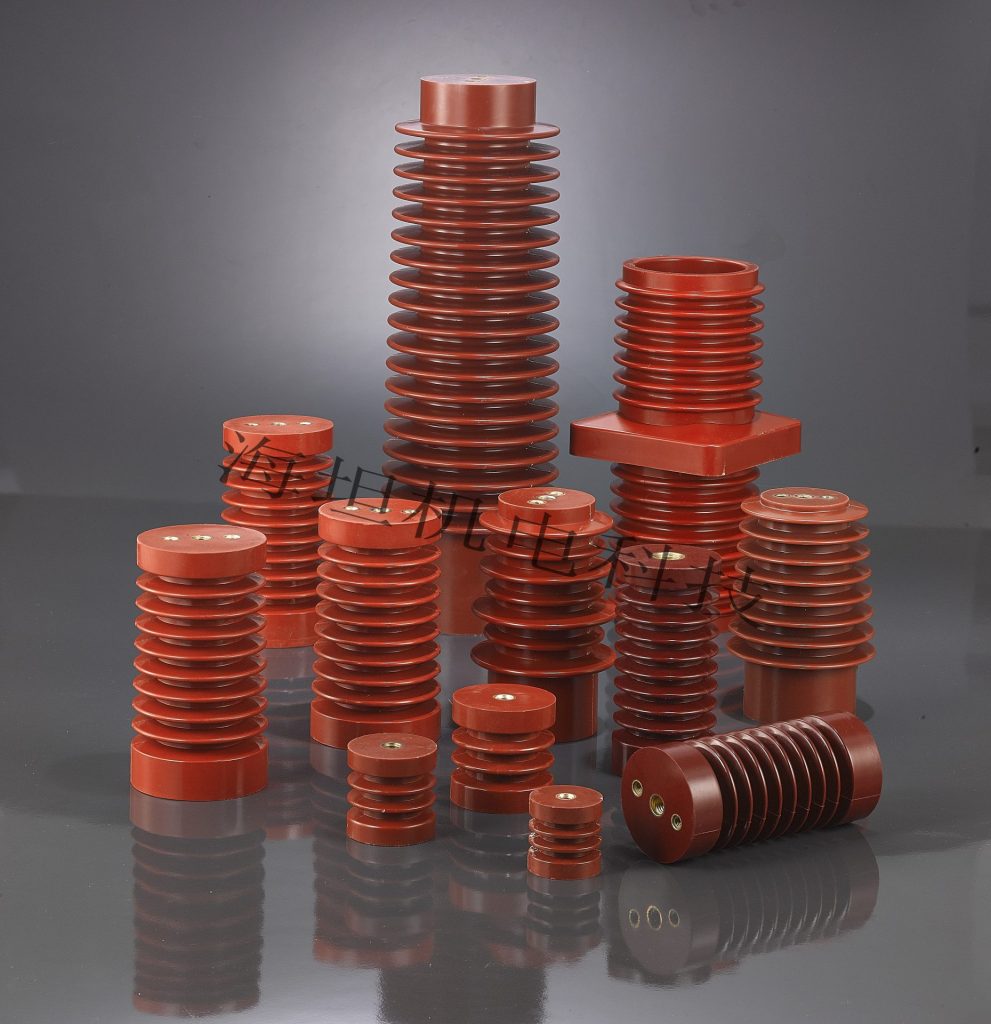
Supply Chain Transparency Practices: Traceability and Quality Consistency Assurance of Key Raw Materials for DMC Insulators
Introduction
In the manufacturing of DMC (Dough Molding Compound) insulators, product performance is fundamentally determined by the quality and consistency of upstream raw materials. Core components such as unsaturated polyester resin, glass fiber, fillers, and additives directly influence electrical insulation, mechanical strength, thermal resistance, and long-term reliability.
To ensure stable product performance across batches, leading manufacturers are increasingly implementing supply chain transparency and traceability systems. These practices enable precise control from raw material sourcing to final product delivery, forming a robust foundation for quality assurance.
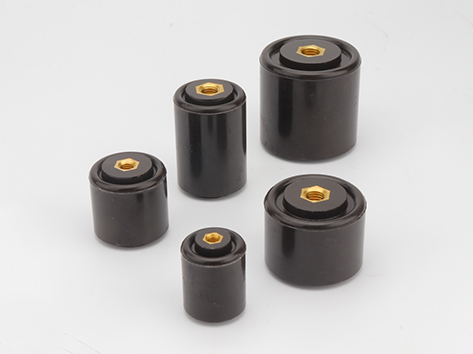
Understanding Critical Raw Materials in DMC Insulators
Before establishing traceability, it is essential to identify and control the most critical inputs:
Unsaturated Polyester Resin
Acts as the primary matrix, affecting curing behavior, mechanical strength, and electrical insulation properties.
Glass Fiber Reinforcement
Provides structural strength and dimensional stability. Fiber length, distribution, and surface treatment are key variables.
Fillers (e.g., calcium carbonate, alumina)
Improve dimensional stability, reduce shrinkage, and enhance thermal and electrical performance.
Additives (initiators, release agents, pigments)
Influence curing efficiency, surface finish, and processing stability.
Variations in any of these materials can lead to inconsistencies in the final insulator performance, making traceability essential.
Establishing a Raw Material Traceability System
A comprehensive traceability system ensures that every batch of DMC insulators can be traced back to its raw material origins.
Supplier Qualification and Coding System
Implement strict supplier evaluation criteria (quality certifications, process capability, consistency records)
Assign unique supplier codes and maintain detailed supplier profiles
Require suppliers to provide Certificates of Analysis (COA) for each batch
Batch Identification and Labeling
Assign unique batch numbers to all incoming raw materials
Label materials with:
Supplier code
Production date
Batch/lot number
Key technical parameters
Integrate barcode or QR code systems for digital tracking
Digital Traceability Platforms
Use ERP or MES systems to record:
Raw material intake
Storage conditions
Production usage records
Finished product linkage
Enable forward and backward traceability:
From raw material → finished product
From finished product → raw material source
Ensuring Batch-to-Batch Quality Consistency
Traceability alone is not enough—consistent quality requires systematic validation and control.
Incoming Material Inspection
Each batch of raw materials undergoes strict testing:
Resin: viscosity, reactivity, gel time
Glass fiber: length distribution, moisture content, tensile strength
Fillers: particle size, purity, moisture level
Only materials that meet predefined specifications are approved for production.
Standardized Formulation Management
Maintain fixed formulation ratios for DMC compounds
Use automated weighing and mixing systems to minimize human error
Lock critical parameters in the production system to prevent unauthorized changes
Process Monitoring and Control
Monitor key process variables:
Mixing temperature and time
Molding pressure and curing temperature
Cycle time
Apply Statistical Process Control (SPC) to detect deviations early
Retention Samples and Batch Records
Keep retention samples for each production batch
Maintain complete production records, including:
Raw material batch numbers used
Process parameters
Operator and equipment data
This ensures rapid root cause analysis if quality issues arise.
Closed-Loop Quality Feedback System
To further strengthen consistency, manufacturers establish a feedback loop:
Internal feedback: Production and QC teams analyze defects and trace them to raw material batches
Supplier feedback: Share performance data with suppliers to drive continuous improvement
Customer feedback: Link field performance data back to production and material records
This closed-loop system enhances both supplier reliability and internal process control.
Benefits of Supply Chain Transparency
Implementing traceability and consistency assurance delivers multiple advantages:
Improved product reliability
Stable electrical and mechanical performance across all batches
Faster issue resolution
Quick identification of root causes through backward traceability
Regulatory and certification compliance
Meets requirements for quality systems such as ISO standards
Enhanced customer trust
Demonstrates commitment to transparency and quality control
Reduced production risk
Minimizes variability and rejects caused by raw material fluctuations
Conclusion
In DMC insulator manufacturing, quality is not only built in the production process—it begins at the source. By implementing robust traceability systems and strict control over key raw materials such as resin and glass fiber, manufacturers can achieve true batch-to-batch consistency.
Supply chain transparency is no longer optional; it is a strategic capability that underpins product reliability, operational efficiency, and long-term competitiveness. Through systematic traceability and continuous quality monitoring, companies can ensure that every insulator delivered meets the highest standards of performance and safety.
FAQ
1. Why is raw material traceability important for DMC insulators?
Raw material traceability ensures that every finished insulator can be linked back to its source materials, such as resin and glass fiber. This enables manufacturers to quickly identify the root cause of any quality issue, maintain consistent performance across batches, and meet strict quality and compliance requirements.
2. Which raw materials require the most strict traceability control?
The most critical materials include:
Unsaturated polyester resin (affects curing and insulation performance)
Glass fiber (determines mechanical strength and stability)
Fillers (impact dimensional and thermal properties)
Additives (influence processing and surface quality)
Among these, resin and glass fiber typically require the highest level of monitoring due to their direct impact on core performance.
3. How can manufacturers implement an effective traceability system?
An effective system usually includes:
Unique batch numbering for all raw materials
Barcode or QR code tracking
ERP or MES system integration
Complete production records linking materials to finished products
This allows both forward (material → product) and backward (product → material) traceability.
4. What is batch-to-batch consistency, and why does it matter?
Batch-to-batch consistency means that each production batch of DMC insulators performs the same in terms of electrical, mechanical, and thermal properties. It is critical for ensuring reliability in real-world applications, especially in electrical systems where failure is not acceptable.
5. How do incoming inspections help ensure quality consistency?
Incoming inspections verify that raw materials meet predefined specifications before entering production. Testing parameters may include:
Resin viscosity and gel time
Glass fiber length and moisture content
Filler particle size and purity
This prevents substandard materials from affecting final product quality.
6. What role do suppliers play in quality assurance?
Suppliers are a key part of the quality chain. Reliable suppliers provide:
Stable material quality
Certificates of Analysis (COA) for each batch
Consistent production processes
Close collaboration and regular evaluation help maintain long-term consistency.
7. How does traceability improve problem-solving efficiency?
When a defect occurs, traceability systems allow manufacturers to quickly:
Identify the exact raw material batch used
Analyze production parameters
Isolate affected products
This significantly reduces investigation time and limits potential losses.
--- END ---
 E-mail: [email protected]
  No. 20 Lingyun Road, Dongfeng
Industrial Zone, Liushi Town, Yueqing
City,Zhejiang Province


© Copyright 2024 China Haitan Electromechanical Technology Co., Ltd. All rights reserved.SUPPORT BY:JUNJ Privacy Policy
 English (United States)
  English (South Africa)
  Arabic
  Belarusian
  Bengali
  Japanese
  Kazakh
  Korean
  Myanmar
  Russian
  Thai
Thai  Ukrainian
  Uzbek
Uzbek  Vietnamese
  Chinese