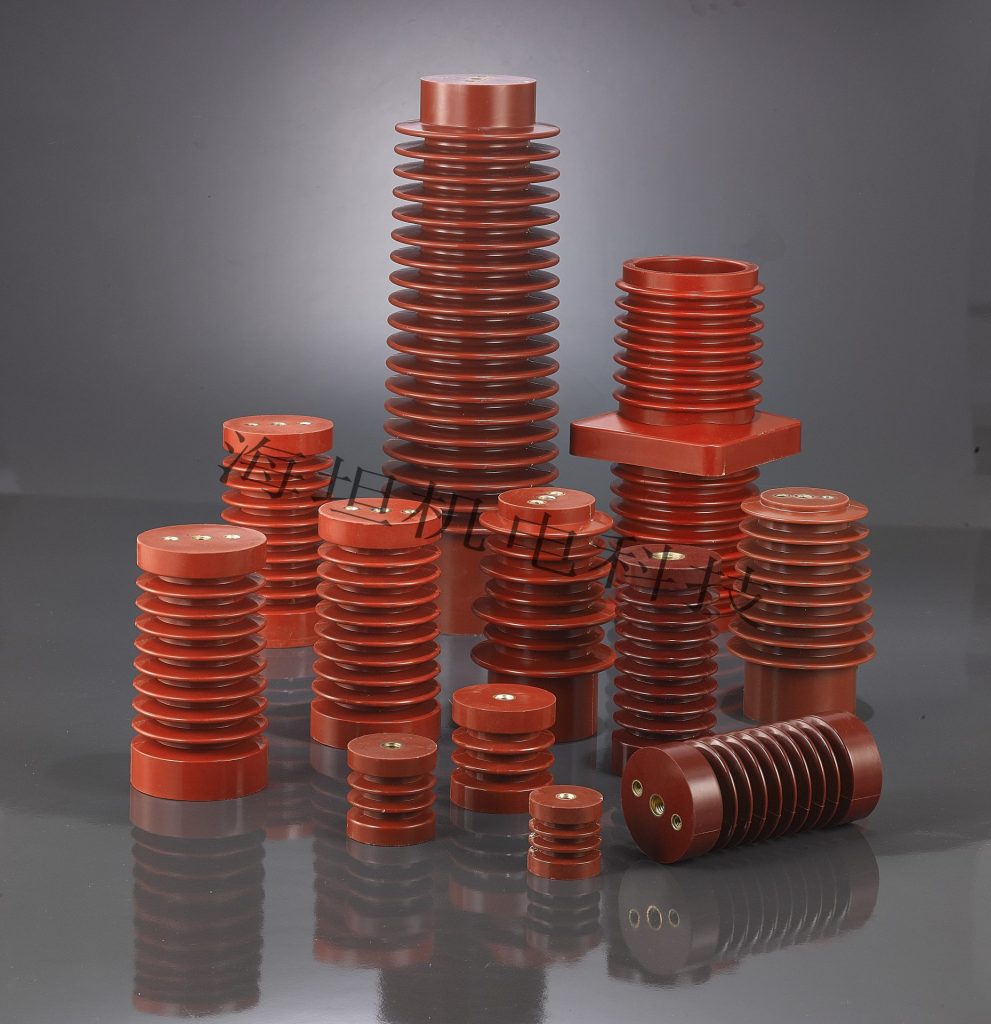
What Is an MG Insulator? The Ultimate Guide
Ever wondered what silently safeguards your low voltage electrical panels from catastrophic short circuits? Meet the MG Insulator – the unsung hero of reliable electrical distribution. Discover how these crucial components work and why engineers globally trust them for critical insulation challenges.
MG Insulator Explained: Core Definition & Function
An MG Insulator, specifically a Magnesium Oxide Insulator, is a specialized component designed for supporting electrical conductors and providing critical electrical insulation within switchgear, panel boards, and busway systems. Primarily used as a busbar support insulator in low voltage applications, its core purpose is twofold:
- Mechanical Support: Securely hold live conductors (busbars, cables) in place.
- Electrical Isolation: Prevent dangerous current leakage or flashover between conductors and grounded enclosures.
Why MG Insulators Dominate in Critical Applications
- Exceptional Dielectric Strength: Formulated magnesium oxide offers superior resistance to electrical breakdown, even in compact spaces common to modern panels.
- High Thermal Stability: Withstands significant heat generated by high currents without degrading (typically exceeding 1000°C capabilities).
- Superior Mechanical Rigidity: Provides robust physical support for heavy busbars, resisting deformation under load or fault conditions.
- Low Moisture Absorption: Magnesium oxide’s inherent resistance to moisture ingress minimizes risk of surface tracking and insulation failure in humid environments.
- Flame Retardant & Non-Tracking: Inherently non-combustible and resistant to conductive carbon path formation on its surface.
MG Insulator Technical Advantages
| Property | Benefit for Electrical Systems |
|---|---|
| High Dielectric Strength (>>15 kV/mm) | Ensures reliable insulation in tight spaces |
| High Compressive Strength (>250 MPa) | Safely supports heavy busbar loads |
| Volume Resistivity (>>10^14 ohm-cm) | Prevents dangerous leakage currents |
| Exceptional Thermal Stability (Continuous >1000°C) | Withstands high operating temperatures |
| UL94 V-0 / Glow Wire Compliance | Meets critical fire safety standards |
MG Insulators vs. Common Alternatives
| Feature | MG Insulator | Standard Epoxy | Thermoset Plastic | Porcelain |
|---|---|---|---|---|
| Thermal Stability | Excellent | Good | Moderate | Very Good |
| Dielectric Strength | Excellent | Good | Good | Excellent |
| Moisture Resistance | Excellent | Very Good | Good | Good* |
| Mechanical Strength | Excellent | Good | Moderate/Good | Good* |
| Flammability | Non-Burn | May Burn | May Burn | Non-Burn |
| Best Suited For | High-Current, Critical LV Support | General LV Support | Light LV Duty | HV Lines |
| *Porcelain susceptible to mechanical impact |
Crucial Applications Driving Demand
- Busbar Support Systems: The quintessential busbar support insulator, preventing phase-to-phase or phase-to-ground faults in LV assemblies.
- Switchgear & Panel Boards: Providing essential insulation and support for main and distribution circuits.
- Motor Control Centers (MCCs): Isolating starter components and power buses.
- Busway/Bus Duct: Supporting and insulating conductor bars within power distribution channels.
- Power Supplies & UPS Systems: Ensuring safe isolation in critical backup power infrastructure.
Selecting the Right MG Insulator: Key Considerations
- Voltage Class: Confirm rated voltage (e.g., 600V, 1000V AC) exceeds system requirements.
- Creepage Distance: Surface path length must be sufficient for the environment’s pollution degree.
- Mechanical Load: Verify Static/Dynamic withstand strength aligns with busbar weight and potential fault forces.
- Temperature Rating: Must exceed the max operating temp near the support point.
- Certifications: Look for relevant standards like UL 94, IEC 60695 (Glow Wire), or specific end-use standards.
- Physical Dimensions & Mounting: Must fit the assembly layout and mounting holes.
Busbar Support Key Parameters
| Parameter | Why It Matters | Impact on Selection |
|---|---|---|
| Nominal Voltage | Defines basic insulation | Must exceed system voltage |
| Creepage Distance | Prevents surface tracking | Critical for polluted/dusty/humid areas |
| Comparative Tracking Index (CTI) | Measures surface tracking resistance | Higher CTI (>600) needed for harsh conditions |
| Cantilever Strength | Ability to hold busbar weight | Must handle weight + safety margin |
| Short Circuit Strength | Resistance to magnetic forces | Critical for high-fault-current locations |
Proven Tactics to Extend MG Insulator Life
- Control Panel Environment: Minimize dust, moisture, and corrosive vapors entering enclosures. Dirty or humid conditions degrade surface insulation.
- Ensure Proper Ventilation: Overheating accelerates aging. Verify air flow around supports.
- Prevent Overtorquing: Cracking during installation is a common failure cause. Use calibrated tools.
- Conduct Thermal Imaging Scans: Detect localized overheating at supports indicating poor connections or overload.
- Regular Visual Inspections: Check for cracks, tracking marks, severe discoloration, or contamination build-up annually.
Are Generic “Low Voltage Insulator” Equals Enough? Why Brand Matters
While cheaper alternatives exist, authentic MG Insulators offer distinct advantages:
- Material Consistency: Reliable suppliers guarantee high-purity Magnesium Oxide composition.
- Rigorous Testing: Reputable brands provide validated performance data (dielectric, CTI, Glow Wire test).
- Long-Term Stability: Proven resistance to embrittlement/cracking over decades.
- Safety Certification: UL or IEC certification ensures recognized safety benchmarks are met.
The Bottom Line for Engineers & Procurement
Choosing the correct MG Insulator isn’t just component selection—it’s an investment in system resilience. As a critical busbar support insulator providing essential electrical insulation, its failure risks fire, shock, or catastrophic downtime. Specifying authentic, technically validated Magnesium Oxide Insulators ensures compliance, safety, and minimizes lifecycle costs through unparalleled durability and performance in demanding low voltage applications.
Need precise MG Insulator specs for your next panel design? Consult our engineering team today for application-specific electrical insulation support and get performance data sheets.
--- END ---
 E-mail: [email protected]
 No. 20 Lingyun Road, Dongfeng
Industrial Zone, Liushi Town, Yueqing
City,Zhejiang Province


© Copyright 2024 China Haitan Electromechanical Technology Co., Ltd. All rights reserved.SUPPORT BY:JUNJ Privacy Policy
 English (United States)
 English (South Africa)
 Arabic
 Belarusian
 Bengali
 Japanese
 Kazakh
 Korean
 Myanmar
 Russian
 Thai
 Ukrainian
 Uzbek
 Vietnamese
 Chinese