
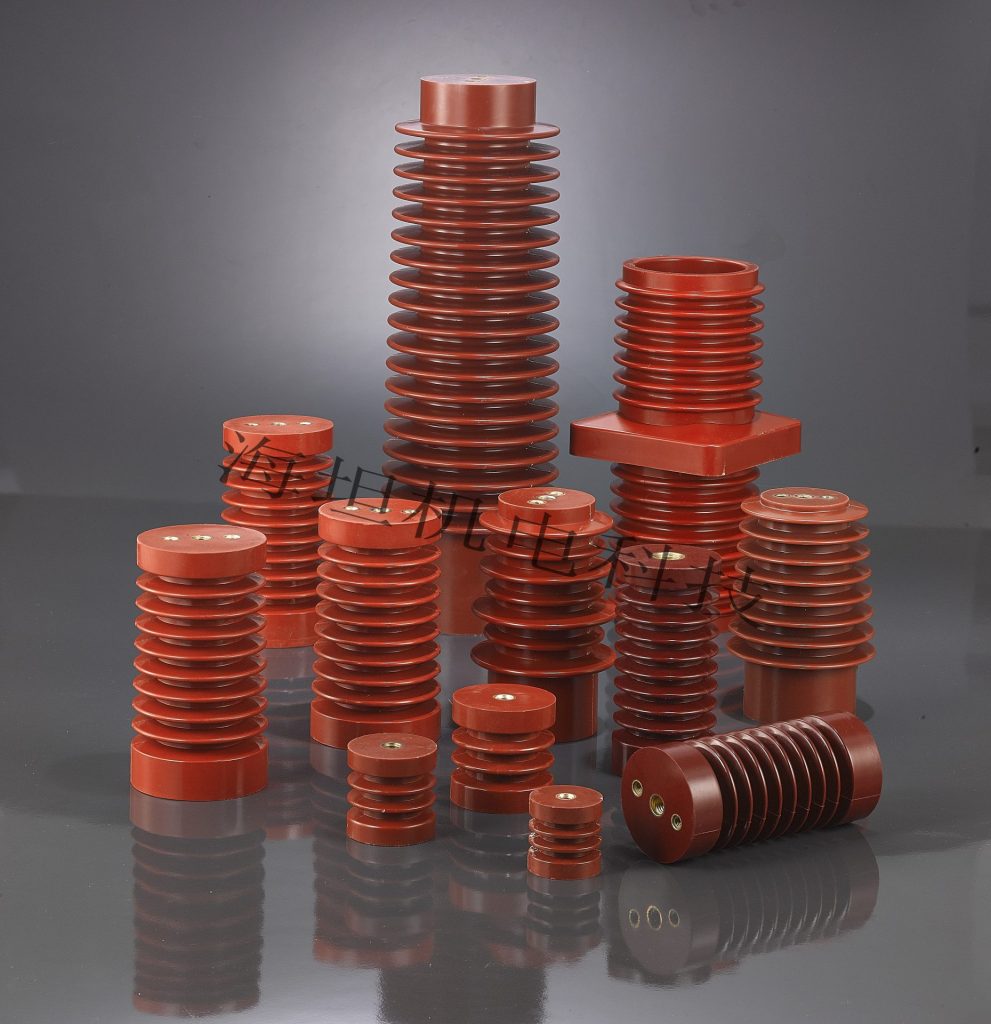
Why PT Insulators Are Suitable for Compact and High-Density Electrical Equipment
Introduction
As modern electrical distribution systems evolve, there is a growing demand for compact, high-density electrical equipment. Switchgear, distribution cabinets, and control panels are increasingly designed to accommodate more circuits, busbars, and control components within limited space. In these applications, PT insulators play a critical role in ensuring safety, reliability, and efficient layout.
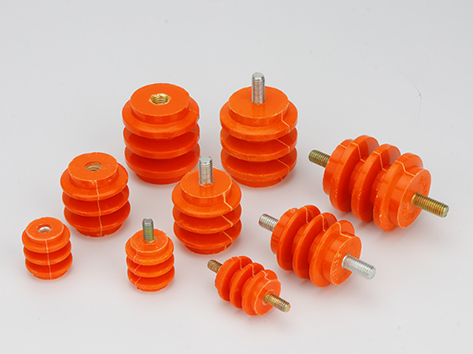
Optimized Design for Space-Constrained Layouts
PT insulators are engineered with compact geometric profiles that maximize insulation while minimizing occupied space. Their shape and dimensions are carefully designed to maintain required air and creepage distances between live components, even in tight cabinet layouts.
This allows designers to place more components in a smaller footprint without compromising electrical safety.
Reliable Electrical Insulation
Despite their compact size, PT insulators provide high dielectric strength and maintain excellent insulation properties. This ensures that even in densely packed systems, phase separation and protection against leakage currents are maintained, preventing short circuits or electrical faults.
Strong Mechanical Support in High-Density Environments
High-density electrical cabinets often contain closely spaced busbars and conductors, which may experience mechanical stress due to vibration, thermal expansion, or short-circuit forces. PT insulators are designed to bear significant mechanical loads, ensuring that busbars and other live components remain securely positioned.
This mechanical reliability is essential in compact designs where minor displacement can compromise safety or system performance.
Compatibility with Modular and Standardized Systems
PT insulators are available in standardized sizes and mounting interfaces, which simplifies installation in modular panels. This makes it easier to maintain uniformity across multiple units and enables rapid assembly of high-density systems without requiring custom solutions for every installation.
Enhanced Safety and Reduced Installation Errors
In high-density cabinets, the risk of accidental contact or wiring errors increases. PT insulators help visually and physically separate conductors, making it easier for technicians to identify circuits and perform safe installation or maintenance. This reduces human error and enhances overall system safety.
Long-Term Stability in Compact Systems
Compact and high-density equipment often operates in challenging environments, including temperature fluctuations and electrical load variations. PT insulators are made from high-quality insulating materials with excellent thermal and mechanical stability, ensuring consistent performance over the equipment’s lifespan.
Typical Applications in Compact and High-Density Equipment
Low-voltage and medium-voltage distribution cabinets
Modular switchgear systems
Control panels with multiple circuits
Busbar support in industrial electrical equipment
Their versatility and compact design make PT insulators ideal for modern power distribution systems where space optimization and safety are critical.
Conclusion
PT insulators are particularly suitable for compact and high-density electrical equipment because of their optimized design, strong mechanical support, reliable insulation, and compatibility with modular systems. By using PT insulators, engineers can design smaller, safer, and more efficient electrical panels without compromising performance or reliability.
As electrical systems continue to move toward higher integration and modularization, PT insulators will remain an essential component in high-density distribution equipment.
FAQ
Q1: Why are PT insulators suitable for compact electrical panels?
PT insulators are designed with compact geometries that maximize insulation while minimizing occupied space. This allows high-density layouts without compromising safety or required air and creepage distances.
Q2: Can PT insulators handle mechanical stress in high-density environments?
Yes. PT insulators are engineered to bear mechanical loads, vibration, and short-circuit forces, ensuring that closely spaced busbars and conductors remain securely positioned.
Q3: How do PT insulators improve safety during installation and maintenance?
PT insulators physically and visually separate conductors, reducing the risk of accidental contact and making circuit identification easier. This helps prevent wiring errors and enhances overall safety in high-density panels.
Q4: Are PT insulators compatible with modular or standardized systems?
Yes. PT insulators are available in standardized sizes and mounting interfaces, allowing easy integration into modular panels and uniform assembly across multiple units.
Q5: Do PT insulators maintain performance in demanding conditions?
Yes. PT insulators are made from high-quality insulating materials with excellent thermal and mechanical stability, ensuring long-term electrical insulation and structural support even in compact, high-density systems.
--- END ---
 E-mail: [email protected]
  No. 20 Lingyun Road, Dongfeng
Industrial Zone, Liushi Town, Yueqing
City,Zhejiang Province


© Copyright 2024 China Haitan Electromechanical Technology Co., Ltd. All rights reserved.SUPPORT BY:JUNJ Privacy Policy
 English (United States)
  English (South Africa)
  Arabic
  Belarusian
  Bengali
  Japanese
  Kazakh
  Korean
  Myanmar
  Russian
  Thai
Thai  Ukrainian
  Uzbek
Uzbek  Vietnamese
  Chinese