Types of High Voltage Insulators
What Are High Voltage Insulators?
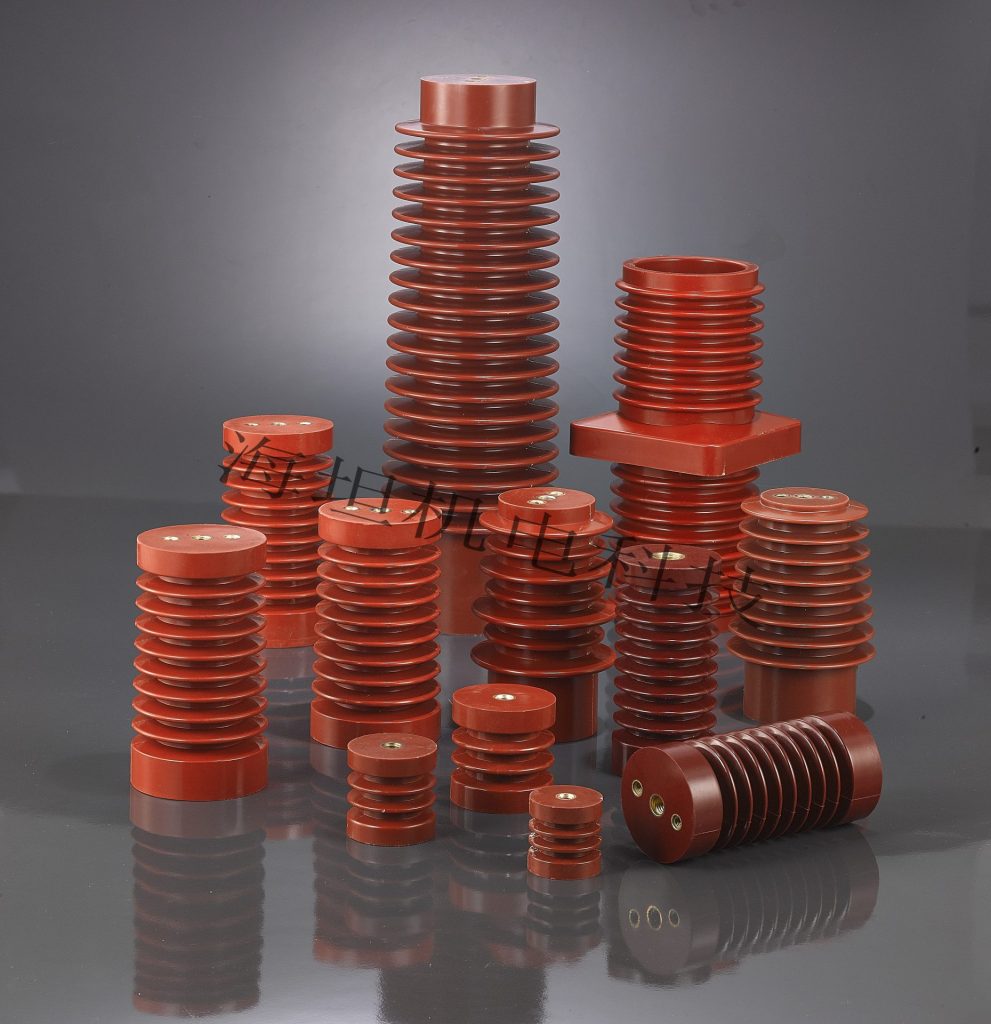
High voltage insulators are essential components in electrical power transmission and distribution systems. High-voltage insulators act as a barrier, preventing electrical current from passing between live wires, grounded structures, or other conductors. By preventing unwanted current flow, high voltage insulators protect equipment and ensure the safety and reliability of the power grid. Whether used on transmission lines, in substations, or industrial sites, they play a vital role in holding up electrical wires while preventing current from leaking.
These insulators are typically made from high-strength materials like porcelain, glass, or composite polymers. Each type of material has its own properties, strengths, and specific applications in the power system. The selection of the right insulator depends on voltage levels, environmental conditions, and system design.
Dielectric Strength and Voltage Ratings
Dielectric strength refers to an insulator’s ability to withstand high voltage without breaking down. It is a key parameter in electrical insulation coordination. High voltage insulators are designed to handle not just steady-state voltages, but also dielectric withstand voltage during lightning strikes or switching surges. This ensures robust electrical insulation and surge protection.
Mechanical Strength and Load Bearing
In addition to electrical properties, insulators must have excellent mechanical load capacity. They support heavy conductors and resist forces caused by wind, ice, and tension. Mechanical and electrical performance are equally critical for insulators used in overhead power line insulation.
Creepage Distance and Pollution Resistance
Creepage distance is the shortest path along the surface of an insulator between two conductive parts, and it plays a crucial role in preventing electrical leakage and flashover—especially under polluted or wet conditions. Extending the creepage distance helps reduce surface tracking and leakage currents. This is vital in preventing electrical flashover and ensuring long-term reliability. Pollution resistance in outdoor insulators is enhanced by design features like sheds and RTV silicone coatings.
Flashover Prevention Techniques (e.g., RTV Coatings)
Flashover occurs when voltage jumps across the surface of the insulator. This can lead to power outages and damage. Modern flashover prevention techniques include RTV silicone coatings that provide a hydrophobic surface, reducing the risk of surface contamination and arc formation. These coatings are widely used in composite polymer insulators and glass insulators exposed to harsh environments.
For a deeper understanding of their role in electrical systems and how to select the right type, check out this detailed article on what you need to know about high voltage insulators.
Importance of High Voltage Insulators in Power Transmission and Distribution Systems
Electrical insulation is fundamental to the operation of high voltage electrical equipment. Without reliable insulators, the risk of electrical insulation failure, arc flash, and corona discharge increases. Insulators contribute to electrical power system reliability by maintaining voltage isolation and supporting electrical conductor structures in overhead lines, substations, and industrial networks.
High Voltage Insulators Types
Based on Material of High Voltage Insulators
Porcelain Insulators
Material Properties and Glazing Techniques
Porcelain electrical insulators are made from clay, quartz, and feldspar, fired at high temperatures. The glazing process creates a smooth, non-porous surface that enhances hydrophobicity and pollution resistance. These insulators are robust and used in a variety of voltage classes.
Advantages and Typical Applications
Porcelain insulators offer high mechanical strength and thermal stability. They are suitable for transmission line insulator selection in both urban and rural environments. Due to their durability, they remain popular in traditional substations and high-voltage switchgear.
Glass Insulators
Historical Development and Modern Uses
Glass insulators have been used since the early 20th century. They are made of toughened glass and are favored for their transparency, which makes it easy to detect internal damage. Their use in suspension insulator discs is widespread due to their strength and dielectric performance.
Durability and Electrical Performance
High voltage glass insulators perform well under mechanical and electrical stress. Their smooth surface resists tracking and erosion, reducing the need for frequent maintenance. They are ideal for polluted and coastal areas.
Composite (Polymer) Insulators
Core Materials (Fiberglass, Silicone, EPDM)
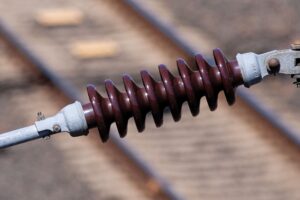
Composite polymer insulators consist of a fiberglass-reinforced resin rod, covered with a weather-resistant sheath made from silicone rubber or EPDM. These materials are lightweight, flexible, and have excellent dielectric properties, especially suited for long rod polymer insulators.
Hybrid Composite Designs (e.g., Porcelain Core + Silicone Housing)
Hybrid insulator design combines the mechanical strength of porcelain with the hydrophobicity of polymer housings. This approach enhances insulation performance in challenging environments.
Advantages Over Traditional Types
Compared to porcelain and glass, composite polymer insulators are lighter, more resistant to vandalism, and less prone to material degradation. They also have superior pollution flashover resistance and are easier to install, making them a preferred choice in electrical insulation in harsh environments.
Based on Application / Structure of High Voltage Insulators
Pin Insulators
Pin insulators are commonly used on low to medium voltage lines, typically up to 33kV. They are mounted directly on poles and provide sturdy support for the conductors.
Suspension Insulators
Suspension insulators are commonly used in high voltage transmission lines. They are made up of disc-shaped units connected in series, providing both voltage adaptability and mechanical strength.
Disc Insulators
These are modular units in suspension systems. Each disc provides insulation for a certain voltage level. The number of discs in a string determines the total voltage capacity.
Post Insulators
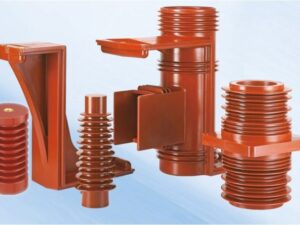
Post insulators used in substations are specifically designed to provide vertical support and electrical insulation for conductors. They are ideal for both indoor and outdoor applications, including switchgear assemblies and busbar systems, ensuring reliable performance under various environmental conditions.
Strain, Shackle, and Stay Insulators
Strain and shackle insulators are used at line ends or angle points to bear tensile loads. Stay insulators are often found in guy wires for pole support. All three are key to mechanical stability in distribution systems.
Long Rod Insulators
Used as an alternative to suspension disc strings, long rod polymer insulators offer high mechanical and dielectric strength in a compact form factor. They are widely used in modern transmission line insulation.
Applications of Different Insulator Types
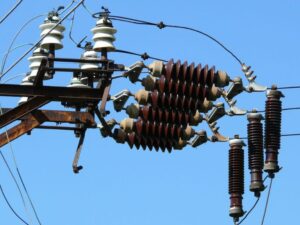
Transmission Lines
High voltage insulator types like suspension and long rod insulators are essential in transmission lines. They provide flexibility in voltage scaling and resist dynamic loads. These insulators are chosen based on voltage levels and environmental exposure.
Substations
In substations, post insulators and bushing insulators are used to support conductors and separate phases. These locations demand high dielectric strength and low surface contamination rates.
Distribution Networks
Pin and strain insulators are used in low and medium voltage networks. Their low cost and ease of replacement make them ideal for short-span, low-tension lines.
Industrial and Commercial Installations
Industrial installations benefit from composite polymer insulators due to their light weight and ease of handling. These environments often have space limitations and pollution risks, requiring insulators with high pollution resistance and low maintenance.
Comparison Between High Voltage and Low Voltage Insulators
| Aspect | High Voltage Insulators | Low Voltage Insulators |
| Design & Materials | Complex design with RTV-coated silicone, fiberglass. | Simple plastic or ceramic designs. |
| Voltage & Application | Above 1kV; used in transmission, substations, industry. | Below 1kV; used in homes, small businesses. |
| Cost & Durability | High cost; durable in harsh conditions. | Low cost; less durable under stress. |
Conclusion
Choosing the right high voltage insulator type is essential for ensuring power grid insulation solutions are reliable and long-lasting. Whether you’re working with porcelain insulator properties, the clarity of glass insulator advantages, or the innovation in composite polymer insulators, understanding their differences helps in better design and maintenance planning. Each insulator type offers unique benefits, and careful selection can prevent electrical insulation failure, reduce maintenance costs, and ensure overall electrical power distribution reliability.
From supporting electrical conductor structures to ensuring insulation coordination and protection from electrical arc flash, insulators are vital for safe and stable power systems. Adherence to international standards such as IEC 60383-1 (for ceramic and glass insulators), IEC 61109 (for composite insulators), and IEEE C29 (for insulator classifications and dimensions) is essential for compliance and performance assurance. Regular application of electrical insulation testing methods defined in ANSI/IEEE 4 and monitoring of aging, erosion, and corona discharge risks are key to maintaining the long-term reliability of power infrastructure.
Composite insulators excel in harsh environments where durable and reliable electrical insulation is critical. Proper selection and regular maintenance of insulators across all applications play a vital role in minimizing downtime and enhancing overall system reliability.
--- END ---
 E-mail: [email protected]
 No. 20 Lingyun Road, Dongfeng
Industrial Zone, Liushi Town, Yueqing
City,Zhejiang Province


© Copyright 2024 China Haitan Electromechanical Technology Co., Ltd. All rights reserved.SUPPORT BY:JUNJ Privacy Policy
 English (United States)
  English (South Africa)
  Arabic
  Belarusian
  Bengali
  Japanese
  Kazakh
  Korean
  Myanmar
  Russian
  Thai
Thai  Ukrainian
  Uzbek
Uzbek  Vietnamese
  Chinese