
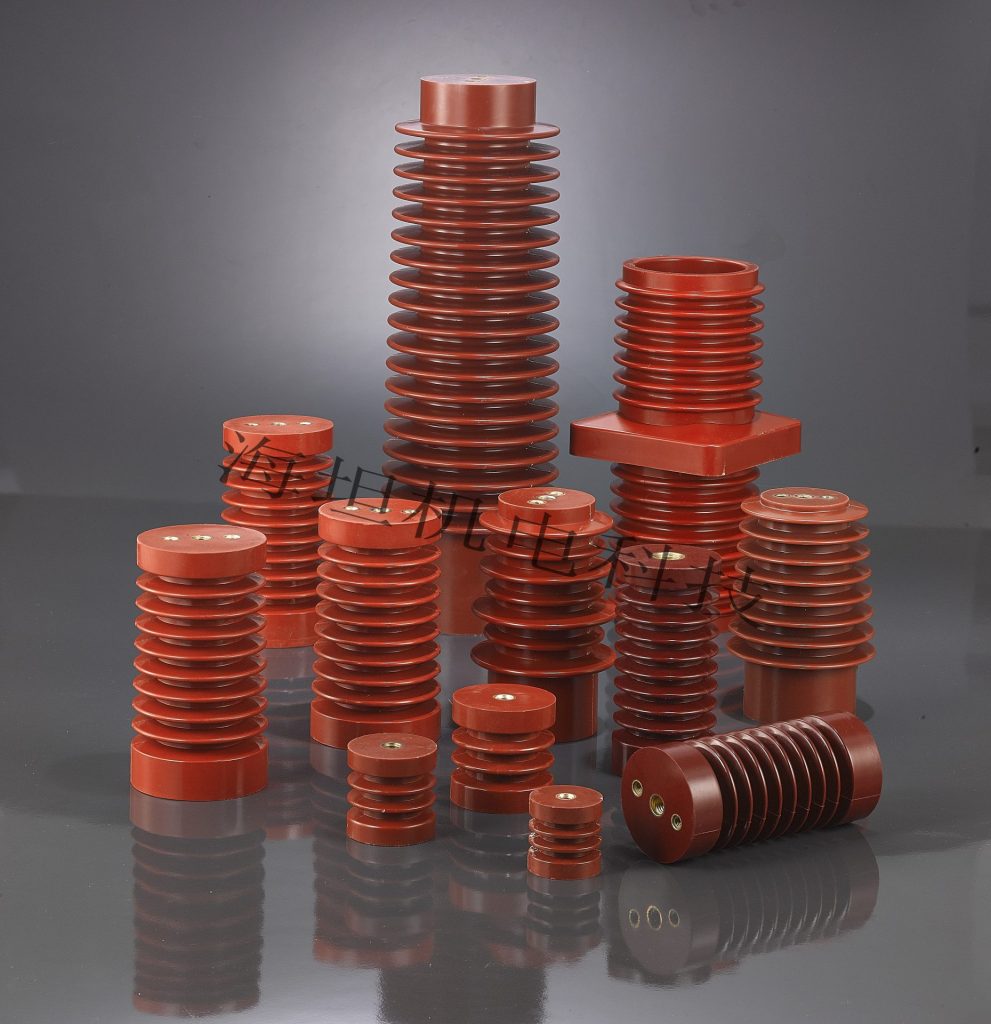
Application of Insulated Bus Bar Support Screws in EV Battery Modules and Power Distribution Units
Introduction
As electric vehicles (EVs) evolve toward higher voltages, larger battery capacities, and more compact designs, the components that ensure both mechanical stability and electrical safety become increasingly critical. Among these, insulated bus bar support screws play a vital role in EV battery modules and power distribution units (PDUs).
These screws not only fasten high-voltage busbars securely but also provide essential insulation to prevent short circuits, ensure proper creepage distances, and maintain long-term system reliability.
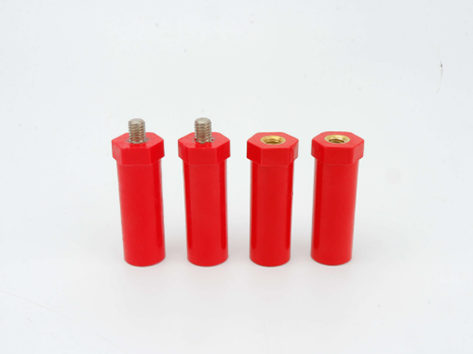
Understanding the Role of Insulated Bus Bar Support Screws
EV battery modules and PDUs are high-voltage environments where copper or aluminum busbars transmit energy between battery cells, modules, and vehicle power electronics. Improper fastening or insufficient insulation can lead to:
Electrical arcing
Partial discharge
Insulation breakdown
Reduced system reliability
Insulated bus bar support screws solve these issues by combining mechanical fastening with electrical isolation, ensuring both stability and safety.
Key Functions:
Mechanical Support – Secure busbars under vibration, shock, and thermal expansion.
Electrical Isolation – Maintain safe creepage and clearance distances between high-voltage conductors and grounded structures.
Thermal and Environmental Protection – Resist high temperatures, moisture, and corrosive environments.
Simplified Assembly – Reduce the need for additional insulating sleeves, washers, or brackets.
Application in EV Battery Modules
Battery modules consist of multiple cells connected in series and parallel, with busbars transmitting the aggregated current to the battery management system (BMS) and the vehicle’s DC bus.
Key Applications:
Busbar Fixation – Insulated screws hold busbars in place without the risk of shorting against the module enclosure.
Vibration Resistance – High-strength composite or overmolded screws prevent loosening in a high-vibration automotive environment.
Compact Design Compatibility – Moldable insulated screws fit tight battery pack layouts, optimizing space and reducing the need for additional components.
Moisture and Temperature Protection – Materials like DMC (Dough Molding Compound) or PPS resist condensation and maintain insulation in high-temperature operations.
Application in Power Distribution Units (PDUs)
PDUs manage the routing and distribution of high-voltage power between the battery, inverter, and motor. Busbars within PDUs carry significant currents and operate under switching and thermal stresses.
Key Applications:
High-Voltage Isolation – Insulated screws ensure that conductive busbars are isolated from the grounded PDU chassis.
Thermal Stability – Advanced composite screws maintain structural integrity under continuous thermal cycling.
Shock and Vibration Resistance – Automotive-grade fasteners withstand mechanical stress from vehicle movement or impact.
Simplified Manufacturing – Integrated insulation screws reduce assembly steps and enhance consistency, which is crucial for mass production.
Material Considerations
Selecting the right material is critical for screw performance in high-voltage EV systems. Common materials include:
| Material | Advantages | Typical Use |
| DMC (Dough Molding Compound) | High dielectric strength, flame-retardant, hydrophobic | Battery modules, compact busbar assemblies |
| PPS (Polyphenylene Sulfide) | High temperature, chemical resistance, dimensional stability | PDUs, inverter busbars |
| PA66 + GF | Lightweight, strong, good thermal performance | General insulated screw applications |
| PEEK | Ultra-high temperature and chemical resistance | Premium EV platforms, 800V systems |
Overmolding technology is often used to combine a metal core with insulating material for maximum torque capability and electrical isolation.
Benefits of Using Insulated Bus Bar Support Screws
Enhanced Safety – Prevents short circuits and electrical tracking.
Mechanical Reliability – Maintains busbar position under vibration, shock, and thermal expansion.
Space and Weight Efficiency – Integrated insulation reduces the number of parts, simplifies assembly, and supports lightweight design goals.
Durability – Resistant to thermal, chemical, and moisture-related degradation, ensuring long-term performance.
Conclusion
In EV battery modules and power distribution units, insulated bus bar support screws are more than just mechanical fasteners—they are critical components for electrical safety and reliability.
By combining mechanical strength, electrical insulation, thermal resistance, and design flexibility, these screws ensure that busbars remain securely mounted and electrically isolated, even in compact and high-voltage environments.
As EV platforms continue to advance toward higher voltage, larger capacity, and tighter packaging, the importance of reliable insulated bus bar support screws will only grow, making them a vital component in the safe and efficient design of modern electric vehicles.
FAQ
1. What is an insulated bus bar support screw?
An insulated bus bar support screw is a fastening component used in EV battery modules and PDUs to secure busbars while providing electrical insulation. It prevents direct contact between live busbars and grounded structures, ensuring safety and system reliability.
2. Why are insulated screws important in EV battery modules?
Battery modules operate at high voltages and currents. Insulated screws:
Maintain safe creepage and clearance distances
Prevent short circuits and arcing
Secure busbars under vibration and thermal expansion
Reduce the risk of insulation degradation over time
3. How are insulated screws used in PDUs?
In power distribution units, insulated screws:
Secure busbars to the chassis while maintaining electrical isolation
Withstand thermal cycling and mechanical stress
Simplify assembly by combining fastening and insulation functions
Improve long-term reliability in high-current, high-voltage environments
4. What materials are used for insulated bus bar support screws?
Common materials include:
DMC (Dough Molding Compound) – High dielectric strength, flame retardant, hydrophobic
PPS (Polyphenylene Sulfide) – High temperature, chemical resistance
PA66 + GF (Glass Fiber Reinforced Nylon) – Lightweight, strong, thermal resistant
PEEK (Polyether Ether Ketone) – Ultra-high temperature and chemical resistance for premium platforms
Overmolding technology often combines a metal core with insulating material for mechanical strength and electrical safety.
5. Can insulated screws withstand high temperatures in EV systems?
Yes. High-performance materials like PPS, DMC, and PEEK maintain structural integrity and insulation properties under continuous thermal exposure typical in battery modules and PDUs.
6. Are insulated screws vibration-resistant?
Absolutely. EV battery modules and PDUs experience constant vibration. Glass fiber reinforced composites and overmolded designs provide strong mechanical stability and prevent loosening or cracking.
--- END ---
 E-mail: [email protected]
  No. 20 Lingyun Road, Dongfeng
Industrial Zone, Liushi Town, Yueqing
City,Zhejiang Province


© Copyright 2024 China Haitan Electromechanical Technology Co., Ltd. All rights reserved.SUPPORT BY:JUNJ Privacy Policy
 English (United States)
  English (South Africa)
  Arabic
  Belarusian
  Bengali
  Japanese
  Kazakh
  Korean
  Myanmar
  Russian
  Thai
Thai  Ukrainian
  Uzbek
Uzbek  Vietnamese
  Chinese