
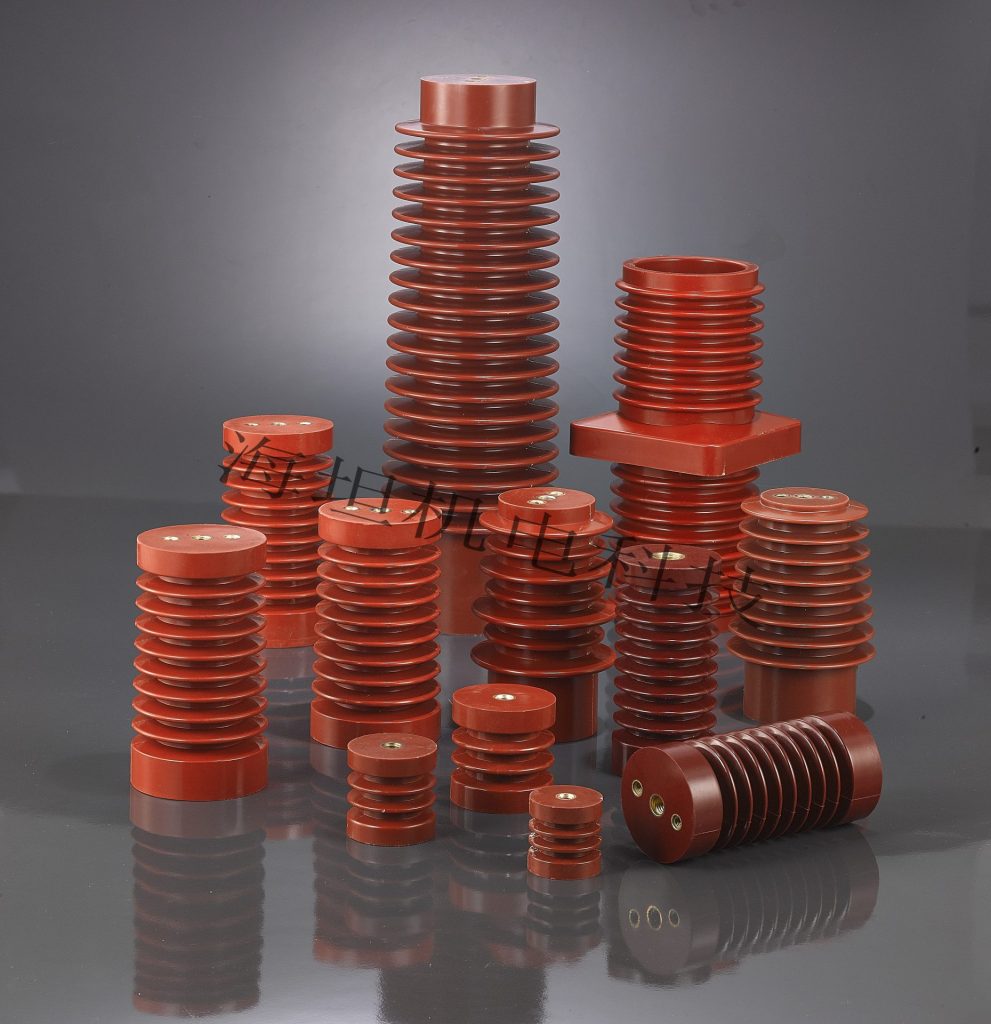
Material Innovations in Insulated Bus Bar Support Screws for High-Voltage EV Platforms
Introduction
As new energy vehicles (NEVs) transition from 400V to 800V and even higher voltage architectures, electrical system design faces stricter demands on insulation reliability, thermal stability, and mechanical performance.
One critical yet often overlooked component in this system is the insulated bus bar support screw. These fastening components not only secure high-voltage busbars mechanically but also provide essential electrical isolation within battery packs, power distribution units (PDU), and inverters.
Material innovation has become the key driver in improving safety, durability, and lightweight performance in high-voltage EV platforms.
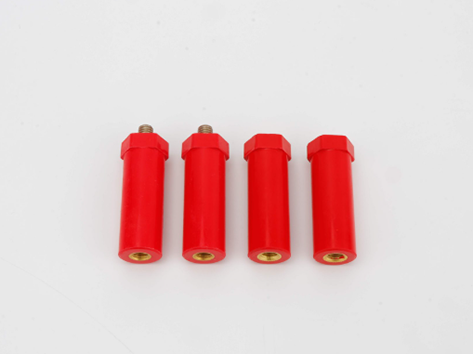
Why Material Selection Matters in High-Voltage EV Systems
In high-voltage EV environments, busbars carry large currents between battery modules, inverters, and charging systems. The support screws must withstand:
Continuous high voltage stress
High current thermal rise
Rapid temperature cycling
Strong vibration and mechanical shock
Strict creepage and clearance requirements
Automotive flame-retardant standards
Traditional metal screws alone cannot meet insulation requirements. Therefore, advanced insulated material solutions are now being widely adopted.
Evolution of Insulated Bus Bar Support Screw Materials
From Metal Fasteners to Hybrid Insulated Structures
Early EV systems relied on traditional metal screws combined with insulating sleeves or washers. However, this approach introduced risks such as:
Partial discharge at high voltage
Insulation aging
Reduced reliability under vibration
Modern designs increasingly use:
Fully insulated molded screw bodies
Overmolded metal cores with insulation coating
High-strength composite fasteners
These solutions improve system-level safety and reduce assembly complexity.
Key Material Innovations in Insulated Support Screws
High-Performance Thermosetting Composites (DMC / BMC)
DMC (Dough Molding Compound) and BMC (Bulk Molding Compound) materials are increasingly used in EV insulation support components due to:
High dielectric strength
Excellent arc resistance
Glass-fiber reinforced mechanical strength
Flame retardant capability (UL94 V-0 achievable)
Superior dimensional stability
These materials are ideal for high-voltage battery pack environments where both insulation and structural strength are critical.
High-Temperature Engineering Plastics
Advanced thermoplastics such as:
PPS (Polyphenylene Sulfide)
PEEK (Polyether Ether Ketone)
PA66 + GF (Glass Fiber Reinforced Nylon)
are used for lightweight insulated screw designs. These materials offer:
Continuous high temperature resistance
Chemical resistance to electrolytes
Strong vibration resistance
Reduced weight for EV lightweight strategy
In 800V platforms, high CTI (Comparative Tracking Index) materials are especially important to prevent electrical tracking.
Overmolding Technology
Overmolding combines a metal core for strength with an external insulation layer. This approach provides:
High torque capability
Stable clamping force
Reliable electrical isolation
Reduced risk of insulation displacement
It is widely adopted in power distribution units and inverter busbar fastening systems.
Performance Requirements in 800V EV Platforms
As EV systems move toward 800V architectures, insulated bus bar support screws must meet stricter criteria:
Higher Creepage and Clearance Distance
Material must support compact yet compliant insulation spacing.
Improved Thermal Resistance
Fasteners are exposed to heat generated by high current busbars and power electronics.
Stronger Vibration Resistance
EV battery packs are subject to continuous road vibration and mechanical shock.
Flame Retardant Performance
Automotive fire safety standards require V-0 flame-retardant materials.
Long-Term Aging Resistance
Materials must withstand thermal cycling, humidity, and electrical stress for over 10 years.
Material innovation directly influences these performance outcomes.
Lightweight and Integration Trends
Lightweight design remains a core goal in EV development. Advanced composite insulated screws:
Reduce overall system weight
Simplify assembly steps
Integrate mounting and insulation functions
Improve production efficiency
By replacing multi-component insulation structures with integrated insulated fasteners, manufacturers can reduce BOM cost and enhance reliability.
Future Development Directions
Looking ahead, material innovation in insulated bus bar support screws will focus on:
Higher CTI materials for ultra-high voltage platforms
Improved thermal conductivity with electrical insulation balance
Smart materials with condition monitoring capabilities
Eco-friendly and recyclable composite solutions
As EV platforms continue to evolve, fastening components will shift from simple structural parts to safety-critical engineered components.
Conclusion
In high-voltage EV platforms, insulated bus bar support screws are far more than mechanical fasteners. They are essential components ensuring:
Electrical isolation
Structural integrity
Thermal stability
Compliance with automotive safety standards
Material innovation — from thermosetting composites to high-performance engineering plastics and overmolding technologies — is enabling safer, lighter, and more reliable EV power systems.
As 800V and next-generation architectures become mainstream, advanced insulated fastening solutions will play an increasingly vital role in supporting the future of electric mobility.
FAQ
1. What is an insulated bus bar support screw in a new energy vehicle?
An insulated bus bar support screw is a fastening component designed to mechanically secure high-voltage busbars while providing electrical isolation. It prevents unintended electrical contact between conductive parts and grounded structures inside EV battery packs, power distribution units (PDU), and inverters.
2. Why are insulated support screws necessary in 800V EV platforms?
As EV systems move to 800V architectures, voltage stress increases significantly. Insulated screws help:
Prevent short circuits
Reduce the risk of electrical tracking
Maintain required creepage and clearance distances
Improve overall system safety
Higher voltage platforms demand materials with better dielectric strength and higher CTI performance.
3. What materials are commonly used for insulated bus bar support screws?
Common materials include:
DMC (Dough Molding Compound)
BMC (Bulk Molding Compound)
Glass fiber reinforced nylon (PA66 + GF)
PPS (Polyphenylene Sulfide)
PEEK (Polyether Ether Ketone)
These materials offer a combination of insulation performance, mechanical strength, thermal resistance, and flame retardancy suitable for automotive applications.
4. How do insulated screws improve EV safety?
Insulated screws reduce the risk of:
Electrical arcing
Insulation breakdown
Partial discharge
Thermal runaway caused by short circuits
By integrating insulation into the fastening structure, they enhance system-level electrical protection.
5. Can insulated bus bar support screws withstand high temperatures?
Yes. High-performance composite and engineering plastic materials are designed to withstand continuous elevated temperatures found in battery packs and inverters. Many materials can operate reliably above 120°C and maintain mechanical stability under thermal cycling.
6. Are insulated support screws suitable for vibration-prone environments?
Yes. EV battery systems experience constant vibration and mechanical shock. Glass fiber reinforced composites and overmolded structures provide high mechanical strength and crack resistance, ensuring long-term durability.
--- END ---
 E-mail: [email protected]
  No. 20 Lingyun Road, Dongfeng
Industrial Zone, Liushi Town, Yueqing
City,Zhejiang Province


© Copyright 2024 China Haitan Electromechanical Technology Co., Ltd. All rights reserved.SUPPORT BY:JUNJ Privacy Policy
 English (United States)
  English (South Africa)
  Arabic
  Belarusian
  Bengali
  Japanese
  Kazakh
  Korean
  Myanmar
  Russian
  Thai
Thai  Ukrainian
  Uzbek
Uzbek  Vietnamese
  Chinese