
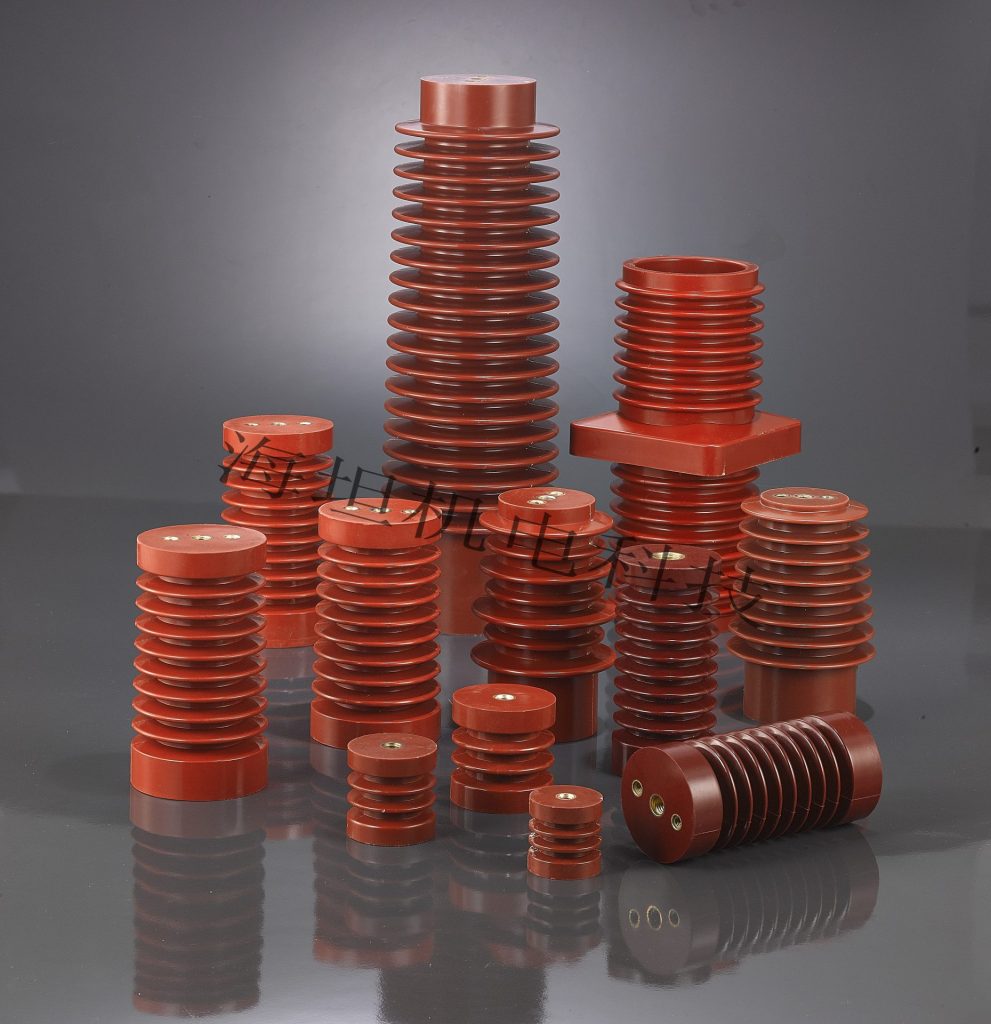
DMC Insulators Play a Crucial Role in Insulation Support in Battery Cabinets and PCS
Introduction
As global demand for renewable energy and energy storage systems (ESS) continues to grow, battery cabinets and PCS (Power Conversion Systems) are becoming more compact, higher in capacity, and more power-dense. In these systems, insulation support components are critical to ensuring electrical safety, mechanical stability, and long-term operational reliability.
Among various insulation materials, DMC (Dough Molding Compound) insulators stand out as a reliable and cost-effective solution for modern battery energy storage and power conversion equipment.
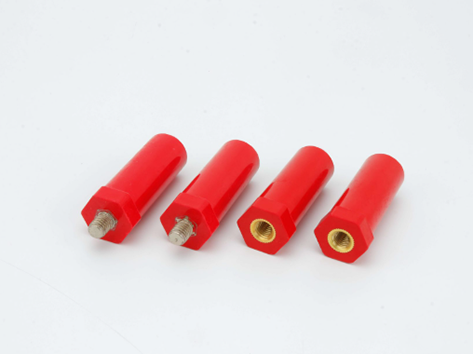
What Is DMC Material?
DMC (Dough Molding Compound) is a thermosetting polyester-based composite material reinforced with glass fibers and mineral fillers. It is widely used in low- and medium-voltage electrical equipment due to its excellent insulation and mechanical properties.
Key Properties of DMC:
High dielectric strength
Strong mechanical load capacity
Excellent arc resistance
Natural hydrophobicity (reduces continuous moisture film formation)
Flame retardant performance
Good thermal stability
Resistance to corrosion and salt spray
These features make DMC particularly suitable for high-density electrical environments such as battery cabinets and PCS units.
The Role of DMC Insulators in Battery Cabinets
Battery cabinets integrate battery modules, DC busbars, BMS wiring, protective devices, and structural components within a confined metal enclosure. This creates several technical challenges:
High DC current transmission
Limited internal space
Elevated operating temperatures
Condensation risk
Mechanical vibration during transportation or operation
Busbar Insulation and Support
DMC insulators are commonly used to support copper or aluminum busbars. They maintain proper creepage and clearance distances between live conductors and grounded metal parts, preventing short circuits and electrical breakdown.
Mechanical Strength Under Short-Circuit Forces
During fault conditions, busbars can experience significant electromagnetic forces. DMC’s glass fiber reinforcement provides high mechanical strength, ensuring structural integrity even under sudden stress.
Condensation and Humidity Resistance
Battery cabinets often experience temperature fluctuations, which can lead to condensation. DMC’s hydrophobic surface reduces the formation of continuous water films, improving insulation reliability compared to some traditional materials.
Adaptability to Compact Designs
With the trend toward high-density battery systems, space optimization is essential. DMC can be molded into customized shapes and integrated mounting structures, making it ideal for compact layouts.
The Importance of DMC Insulators in PCS (Power Conversion Systems)
PCS units convert DC power from battery systems into AC power for grid connection or load supply. They operate under demanding conditions:
High voltage stress
High-frequency switching
Continuous thermal cycling
Strong electromagnetic environments
High-Voltage Isolation
DMC insulators provide critical isolation between DC busbars, IGBT modules, capacitors, and AC output sections. Proper insulation support ensures system safety and compliance with electrical standards.
Thermal and Structural Stability
PCS cabinets generate significant heat during operation. DMC materials maintain dimensional stability and mechanical strength under long-term temperature exposure, reducing the risk of deformation or cracking.
Vibration and Impact Resistance
Industrial PCS equipment may experience vibration during operation. Compared with brittle ceramic insulators, DMC offers superior impact resistance and durability.
Resistance to Harsh Environments
For outdoor or coastal installations, humidity and salt spray can affect insulation performance. DMC’s corrosion resistance enhances system reliability in such environments.
Advantages Over Traditional Ceramic Insulators
While ceramic insulators have been used historically in power equipment, DMC offers several advantages in energy storage applications:
Lighter weight for easier installation
Higher impact resistance
Better suitability for compact, modular designs
Flexible customization options
Improved performance in condensation-prone environments
These characteristics make DMC a preferred insulation support material for modern ESS and PCS systems.
Customization for Energy Storage Applications
Energy storage projects often require:
Specific creepage distances
Non-standard dimensions
Integrated mounting holes or inserts
Flame-retardant grades (e.g., UL94 V-0)
High tracking resistance
DMC insulators can be engineered to meet these technical requirements, supporting OEM manufacturers and system integrators in developing reliable and efficient energy storage solutions.
Conclusion
In battery cabinets and PCS systems, insulation support components are essential to electrical safety, system durability, and operational stability.
DMC insulators provide a balanced combination of:
Reliable electrical insulation
Strong mechanical performance
Moisture and salt resistance
Flexible design adaptability
As energy storage systems continue evolving toward higher density and efficiency, DMC insulation solutions will remain a key factor in ensuring safe and stable power conversion and distribution.
FAQ
1. Why are DMC insulators preferred in battery energy storage systems?
DMC insulators combine high dielectric strength, strong mechanical support, and resistance to moisture and salt spray. This makes them ideal for enclosed, high-current environments like battery cabinets and PCS systems where reliability and safety are critical.
2. Can DMC insulators withstand high temperatures inside PCS cabinets?
Yes. DMC is a thermosetting material with good thermal stability. It can maintain structural integrity under long-term temperature rise conditions typical in PCS operation.
3. Are DMC insulators suitable for outdoor or coastal installations?
Yes. DMC materials offer strong resistance to humidity and salt spray, making them suitable for outdoor ESS containers and coastal environments where corrosion and condensation are concerns.
4. How do DMC insulators compare to ceramic insulators?
Compared to ceramic insulators, DMC is lighter, less brittle, and more customizable. It also performs better in vibration-prone and condensation-prone environments commonly found in battery and PCS systems.
5. Can DMC insulators be customized for specific projects?
Absolutely. DMC components can be molded into various shapes and sizes, with customized creepage distances, mounting holes, flame-retardant grades, and mechanical strength specifications to meet project requirements.
--- END ---
 E-mail: [email protected]
  No. 20 Lingyun Road, Dongfeng
Industrial Zone, Liushi Town, Yueqing
City,Zhejiang Province


© Copyright 2024 China Haitan Electromechanical Technology Co., Ltd. All rights reserved.SUPPORT BY:JUNJ Privacy Policy
 English (United States)
  English (South Africa)
  Arabic
  Belarusian
  Bengali
  Japanese
  Kazakh
  Korean
  Myanmar
  Russian
  Thai
Thai  Ukrainian
  Uzbek
Uzbek  Vietnamese
  Chinese