
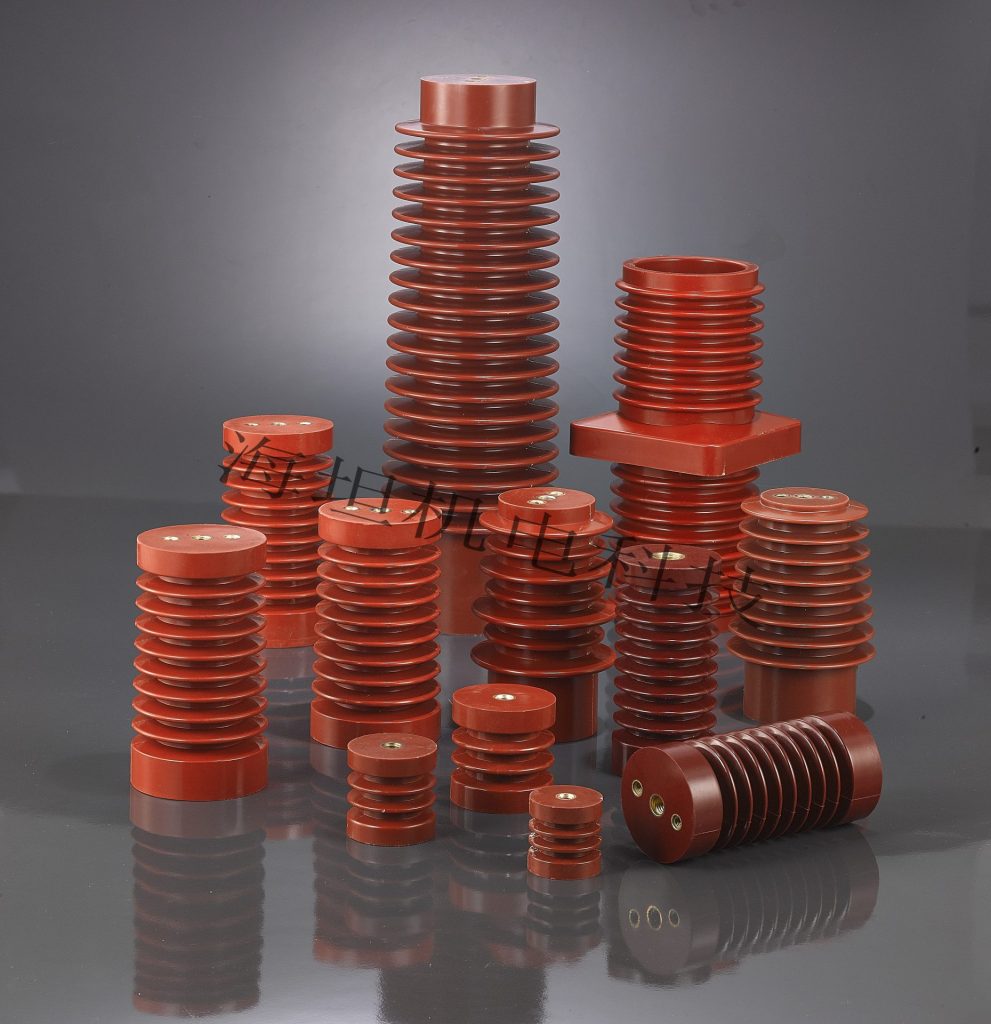
DMC Insulators: A Key Component for Improving the Performance and Reliability of Low-Voltage Power Distribution Systems
Introduction
In modern low-voltage power distribution systems, reliability, safety, and long-term performance are critical. As electrical systems become more compact and power demands increase, the quality of insulating components plays a decisive role. Among various insulating materials, DMC insulators (Dough Molding Compound insulators) have become a preferred solution due to their excellent mechanical strength, electrical insulation performance, and environmental resistance.
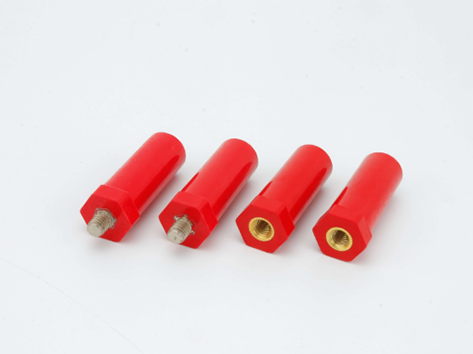
What Are DMC Insulators?
DMC insulators are electrical insulation components manufactured from Dough Molding Compound, a thermosetting composite material made of polyester resin, fiberglass reinforcement, fillers, and additives. Through compression molding, DMC insulators achieve high dimensional accuracy and consistent material properties.
They are commonly used as:
Busbar support insulators
Electrical mounting insulators
Structural insulation components in switchgear and distribution panels
DMC insulators are widely applied in low-voltage switchgear, distribution boards, control cabinets, and power panels.
Key Material Properties of DMC Insulators
DMC insulators offer a balanced combination of electrical, mechanical, and thermal properties:
High dielectric strength for safe electrical insulation
Excellent mechanical strength to support heavy copper or aluminum busbars
Low water absorption, maintaining insulation performance in humid environments
High heat resistance, suitable for continuous operation under electrical load
Good flame retardancy, enhancing system safety
Corrosion and chemical resistance, ideal for industrial environments
These properties make DMC an ideal insulating material for demanding low-voltage applications.
How DMC Insulators Improve System Performance
Enhanced Electrical Safety
DMC insulators effectively isolate live conductors, reducing the risk of short circuits, leakage currents, and flashovers. Their stable insulation performance ensures consistent electrical clearance and creepage distances.
Improved Mechanical Stability
In low-voltage power distribution systems, busbars carry high current and generate mechanical stress. DMC insulators provide strong structural support, preventing deformation, vibration, or misalignment of busbars.
Reliable Thermal Performance
DMC materials maintain their mechanical and electrical properties under elevated temperatures, helping systems operate safely during peak loads and preventing insulation degradation caused by heat.
Long-Term Operational Reliability
Thanks to their resistance to moisture, chemicals, and aging, DMC insulators deliver a long service life with minimal maintenance, reducing system downtime and replacement costs.
Typical Applications in Low-Voltage Power Distribution
DMC insulators are widely used across various power distribution scenarios, including:
Low-voltage switchgear assemblies
Power distribution cabinets and panels
Motor control centers (MCC)
Busbar systems in substations
Industrial electrical control systems
Their versatility allows them to meet the needs of both standard and customized power distribution designs.
DMC Insulators vs. Other Insulating Materials
Compared with traditional insulating materials, DMC insulators offer several advantages:
Better mechanical strength than plastic insulators
More stable electrical performance than standard thermoplastics
Higher temperature resistance than nylon-based insulators
Lower maintenance requirements than ceramic insulators
This balance of performance and cost makes DMC insulators a practical and reliable choice for modern low-voltage systems.
Choosing the Right DMC Insulator for Your System
When selecting DMC insulators, consider the following factors:
Rated voltage and current requirements
Mechanical load and busbar weight
Installation environment (temperature, humidity, chemicals)
Required mounting dimensions and standards
Compliance with relevant electrical safety standards
Working with an experienced manufacturer ensures proper material formulation, precise molding, and consistent quality.
Conclusion
DMC insulators play a vital role in improving the performance, safety, and reliability of low-voltage power distribution systems. Their excellent insulation properties, mechanical strength, and environmental resistance make them an essential component in modern electrical infrastructure.
As power distribution systems continue to evolve toward higher efficiency and compact design, DMC insulators remain a dependable solution for long-term, stable operation.
FAQ
What are DMC insulators used for?
DMC insulators are mainly used in low-voltage power distribution systems to provide electrical insulation and mechanical support. Typical applications include busbar support insulators, switchgear insulation components, distribution panels, and control cabinets.
Are DMC insulators suitable for high-current applications?
Yes. DMC insulators offer high mechanical strength and thermal stability, making them suitable for supporting copper or aluminum busbars carrying high current in low-voltage systems.
How do DMC insulators compare with BMC insulators?
Both DMC and BMC are thermosetting composite materials.
DMC has a dough-like consistency, allowing better fiber distribution and higher mechanical strength.
BMC has a bulk form and is often used for more complex shapes.
DMC insulators are commonly preferred for busbar supports and structural insulation parts.
Can DMC insulators be used in humid or harsh environments?
Yes. DMC insulators feature low water absorption, corrosion resistance, and good aging performance, making them suitable for humid, industrial, or chemically exposed environments.
Are DMC insulators flame retardant?
Most DMC insulators are designed with excellent flame-retardant properties and can meet common electrical safety standards for low-voltage applications.
What factors should be considered when selecting a DMC insulator?
Key factors include rated voltage, current load, mechanical strength requirements, installation dimensions, operating temperature, and compliance with relevant electrical standards.
Can DMC insulators be customized?
Yes. DMC insulators can be custom-molded to meet specific size, shape, mounting, and performance requirements, making them ideal for customized low-voltage power distribution systems.
--- END ---
 E-mail: [email protected]
  No. 20 Lingyun Road, Dongfeng
Industrial Zone, Liushi Town, Yueqing
City,Zhejiang Province


© Copyright 2024 China Haitan Electromechanical Technology Co., Ltd. All rights reserved.SUPPORT BY:JUNJ Privacy Policy
 English (United States)
  English (South Africa)
  Arabic
  Belarusian
  Bengali
  Japanese
  Kazakh
  Korean
  Myanmar
  Russian
  Thai
Thai  Ukrainian
  Uzbek
Uzbek  Vietnamese
  Chinese