
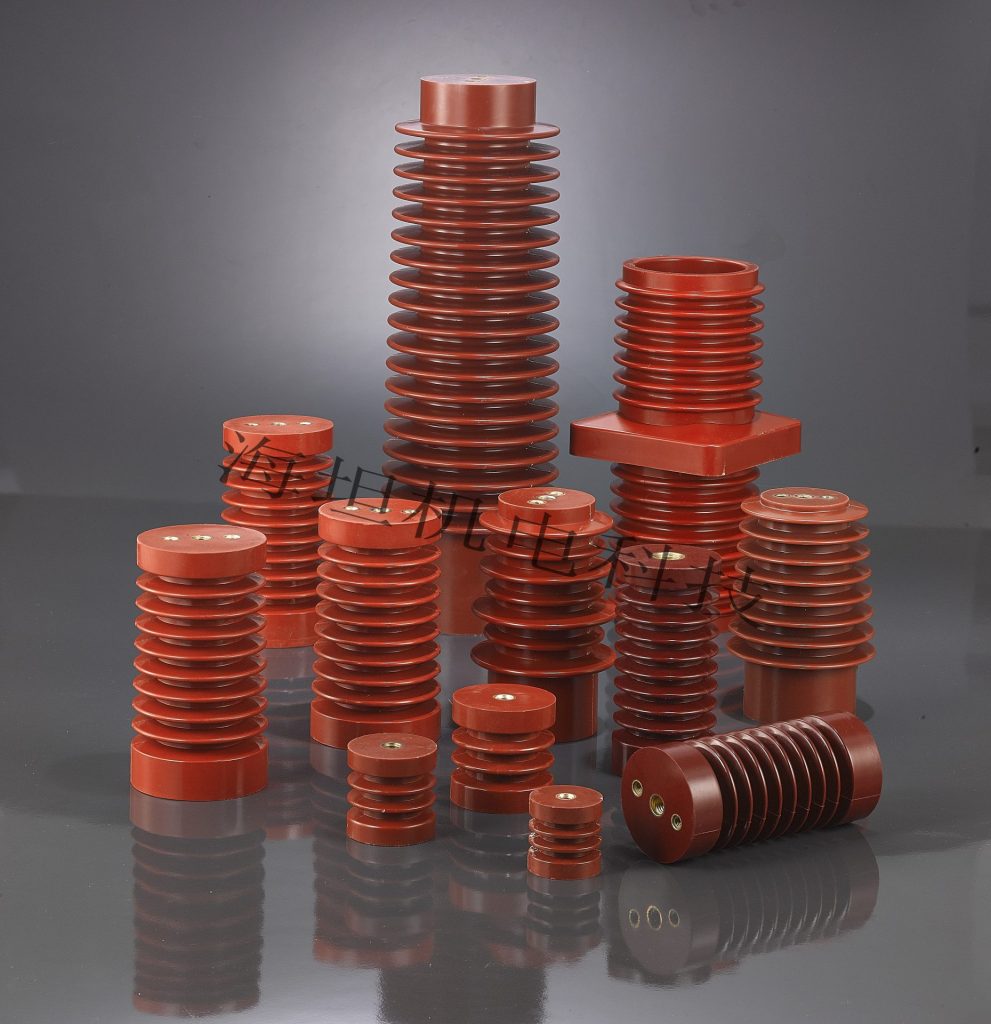
High-Strength DMC Molded Insulators for Switchgear Busbar Support
Introduction
In modern electrical distribution systems, especially in medium- and low-voltage switchgear, the reliability of insulation components is critical. Among these components, DMC (Dough Molding Compound) molded insulators play a vital role in ensuring safe and stable busbar support. With their excellent mechanical strength, superior insulation performance, and adaptability to harsh environments, high-strength DMC insulators have become a preferred choice across various industries.
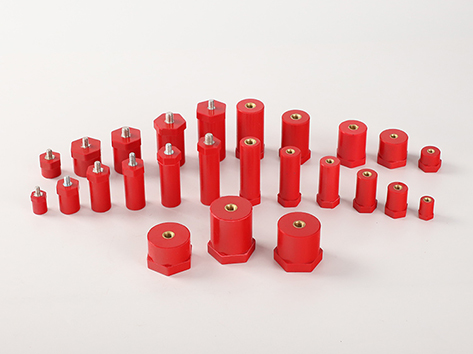
What Are DMC Molded Insulators?
DMC molded insulators are manufactured using thermosetting polyester resin reinforced with glass fibers and fillers, molded under high temperature and pressure. This process results in a rigid, durable insulating component with excellent dimensional stability and electrical properties.
They are widely used in:
Switchgear systems
Busbar support structures
Power distribution cabinets
Industrial control panels
Key Advantages of High-Strength DMC Insulators
Exceptional Mechanical Strength
High-strength DMC insulators are designed to withstand significant mechanical loads. In switchgear applications, busbars can experience vibration, thermal expansion, and electromagnetic forces during operation. DMC insulators provide reliable structural support, preventing deformation or displacement.
Excellent Electrical Insulation
DMC materials offer high dielectric strength and low electrical conductivity, ensuring effective insulation between conductive components. This minimizes the risk of short circuits and enhances overall system safety.
Superior Pollution Resistance
In environments with dust, moisture, or chemical contaminants, insulation performance can degrade over time. DMC molded insulators feature:
Smooth, non-porous surfaces
Strong resistance to tracking and leakage currents
These properties make them ideal for use in polluted or high-humidity environments, maintaining stable performance even under challenging conditions.
Outstanding Aging Resistance
Unlike some traditional materials, DMC insulators exhibit excellent resistance to:
UV radiation
Thermal aging
Environmental stress
This ensures a long service life, reducing maintenance costs and improving system reliability over time.
Flame Retardancy and Safety
Many DMC formulations are inherently flame-retardant, meeting stringent safety standards for electrical equipment. This adds an extra layer of protection in case of electrical faults or overheating.
Non-Standard Customization Capabilities
One of the key advantages of DMC molded insulators is their flexibility in design and manufacturing. Manufacturers can provide customized solutions based on specific project requirements, including:
Different shapes and sizes
Custom mounting hole configurations
Varying creepage distances
Color and surface finish options
Special performance requirements (e.g., higher strength, enhanced insulation)
This makes DMC insulators suitable for OEM applications and specialized electrical systems where standard components may not meet design constraints.
Applications in Switchgear Busbar Support
In switchgear systems, busbars carry high currents and require stable, insulated support. High-strength DMC insulators are used to:
Secure busbars in position
Maintain proper spacing between phases
Prevent electrical faults and flashovers
Withstand thermal and mechanical stresses
Their combination of strength, insulation, and environmental resistance ensures long-term operational stability in demanding power distribution environments.
Why Choose High-Strength DMC Molded Insulators?
Choosing the right insulation solution directly impacts the safety and efficiency of electrical systems. High-strength DMC molded insulators offer:
Reliable mechanical and electrical performance
Resistance to pollution and environmental aging
Long service life with minimal maintenance
Flexible customization for diverse applications
Conclusion
As power systems continue to evolve toward higher efficiency and reliability, the demand for durable and high-performance insulation components is growing. High-strength DMC molded insulators provide an ideal solution for switchgear busbar support, combining robust construction, excellent insulation, and adaptability to harsh environments.
Whether for standard installations or customized projects, DMC insulators deliver the performance and reliability needed to keep modern electrical systems running safely and efficiently.
FAQ
1. What does DMC stand for in molded insulators?
DMC stands for Dough Molding Compound, a thermosetting material reinforced with glass fibers for high strength and insulation.
2. Are DMC insulators suitable for outdoor use?
Yes, due to their UV resistance and pollution resistance, they can be used in certain outdoor or semi-outdoor environments.
3. Can DMC insulators be customized?
Absolutely. Manufacturers offer non-standard customization to meet specific design, size, and performance requirements.
4. How do DMC insulators compare to epoxy insulators?
DMC insulators typically offer better cost efficiency and faster production, while still maintaining strong mechanical and electrical performance.
5. What industries use DMC molded insulators?
They are widely used in power distribution, industrial automation, renewable energy, transportation, and infrastructure projects.
--- END ---
 E-mail: [email protected]
  No. 20 Lingyun Road, Dongfeng
Industrial Zone, Liushi Town, Yueqing
City,Zhejiang Province


© Copyright 2024 China Haitan Electromechanical Technology Co., Ltd. All rights reserved.SUPPORT BY:JUNJ Privacy Policy
 English (United States)
  English (South Africa)
  Arabic
  Belarusian
  Bengali
  Japanese
  Kazakh
  Korean
  Myanmar
  Russian
  Thai
Thai  Ukrainian
  Uzbek
Uzbek  Vietnamese
  Chinese